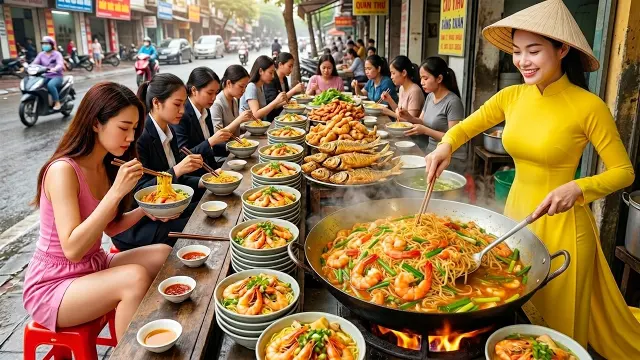
 Thai street food wok cooking master skills
#Thai Street Food
1 ideas
Thai street food wok cooking master skills
Get new #Thai Street Food ideas by email
Every Thursday: the week's best ideas, with the newest from #Thai Street Food.
Related tags
Thai Street Food: A Beginner's Guide
Thai street food is the everyday cooking of Thailand eaten outside the home: noodles stir-fried to order, grilled skewers, curries ladled from big pots, sweets folded into banana leaves. It grew out of a culture of eating out — markets, roadsides and small shop-houses where cooking is done fast, in front of you, over high heat. For many Thai families it is simply lunch, but it has become one of the country's best-known exports and a way for visitors to understand regional cooking.
Where it comes from
Street food in Thailand follows the rhythm of the day. Mornings belong to vendors selling rice porridge, omelettes and coffee; later come noodle carts and lunch stalls; in the evening, grilled meats, som tam and stir-fries take over. Each region has its own accent. In the north you find herby relishes and curries with a gentler bitterness; the northeast prefers sticky rice, fermented flavours, grilled chicken and papaya salad; the south leans on coconut milk, turmeric and seafood. Chinese migration shaped much of the noodle and stir-fry tradition, which is why so many stalls look like the wok kitchens of Southeast Asia's port cities.
The dishes and techniques worth knowing
- Wok cooking: street cooking depends on a hot flame and constant motion. Cooks work in batches, tossing rice or noodles briefly so they char rather than steam. That smoky note comes from the pan, not from spices.
- Noodle soups and dry noodles: both rice and egg noodles appear in dozens of combinations, seasoned at the table with fish sauce, sugar, chilli and lime.
- Grilled skewers: marinated meat, chicken or offal cooked over charcoal and served with a sticky, sweet-savoury glaze.
- Salads and relishes: papaya salad, larb and chilli dips are sharp, hot and fresh — built for sharing with sticky rice.
- Curries and one-plate rice dishes: a curry or stir-fry spooned over rice makes the most common everyday meal.
- Sweets: sticky rice with mango, coconut cakes and syrupy ices, often sold from their own carts.
What beginners should know
The sauce trays on the table are part of the meal, not decoration. Fish sauce, sugar and dried chilli let you adjust a dish to your taste, and vendors expect it. Ordering is usually visual: point at what someone else has, or look at what is already cooking. Food arrives when it is ready, not all at once.
Read more
If you are unsure where to eat, choose busy stalls — high turnover means fresh ingredients — and food that is cooked hot in front of you rather than sitting out. Carry small money, be patient, and be gentle about spice levels: "not spicy" in Thailand still means flavourful.
Practical tips
Going early gives you the widest choice; going late often means sold-out favourites. Reusable containers and a willingness to eat at a tiny plastic stool are part of the experience. Do not rush the cook — the whole point of Thai street food is that it is made on the spot, for you, in a few minutes.
#Thai Street Food: frequently asked questions
How should a beginner start with Thai street food?
Start by watching what is already being cooked — ordering is mostly visual, so point at a dish someone else is eating or at a pan on the flame. Because food arrives as each dish is finished rather than all at once, order a little, taste, and add more as you go. Use the sauce tray at the table to adjust fish sauce, sugar, chilli and lime to your own taste.
What makes street food in Thailand different from restaurant cooking?
It is built on a fierce flame, constant motion and small batches, so rice and noodles char instead of steaming — that smoky note comes from the pan, not from added spice. Dishes are made in front of you, to order, in a few minutes rather than prepped ahead. It also follows the rhythm of the day, with porridge and coffee in the morning, noodle carts at midday and grilled meats and salads at night.
What do I need to cook Thai street food at home?
The essentials are a very hot pan you can toss food in, a supply of rice and both rice and egg noodles, and the table seasonings — fish sauce, sugar, chilli and lime — that let eaters balance a dish themselves. Beyond that, a charcoal grill for skewers and a mortar for salads and relishes cover most of the repertoire. Fresh herbs, coconut milk and curry pastes fill in the regional accents.
Which regional style of Thai street food should I choose?
It depends on what you enjoy: the north leans toward herby relishes and gentler, slightly bitter curries, the northeast toward sticky rice, grilled chicken, fermented flavours and papaya salad, and the south toward coconut milk, turmeric and seafood. Pick by the flavours you already like rather than by what looks most familiar. Many stalls also trace back to Chinese wok and noodle traditions, which is why stir-fries appear everywhere.
How do I pick a good stall and order without stress?
Choose busy stalls, since high turnover means fresher ingredients, and favour food cooked hot in front of you over anything sitting out. Carry small money, be patient, and go early for the widest choice rather than late when favourites have sold out. Ask gently for less spice — it will still be flavourful — and don't hurry the cook, as the point is that your dish is made on the spot.
What mistakes do people make with Thai street food?
The most common one is treating the sauce tray as decoration and not adjusting the dish to their own taste, when vendors fully expect you to. Another is rushing the cook or expecting everything to land on the table together, and letting spice levels be decided for them instead of speaking up. Planning to eat only at the end of the day is also a mistake, since the best-loved stalls often sell out.
Videos come from YouTube and posts from Instagram; titles and summaries are our own. All rights belong to their creators.