 Five Thinking Habits That Make You Sound and Think Smarter
#Thinking Skills
2 ideas
Five Thinking Habits That Make You Sound and Think Smarter
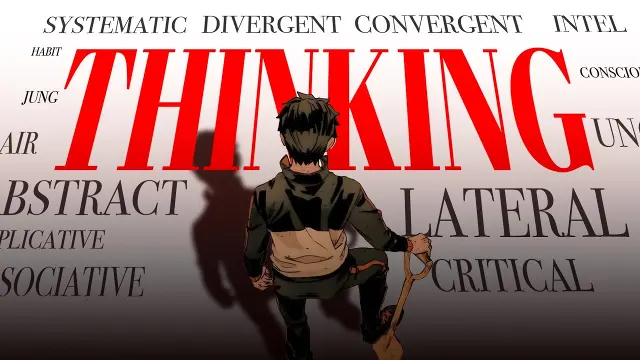 A Breakdown of Thinking Skills and How to Improve Each One
Get new #Thinking Skills ideas by email
Every Thursday: the week's best ideas, with the newest from #Thinking Skills.
Related tags
Thinking Skills: A Guide to Clearer, Better Thinking
Thinking skills are the mental habits you use to make sense of information, weigh possibilities and reach conclusions you can stand behind. They are not a single talent but a family of abilities: noticing what matters, asking good questions, spotting weak reasoning, imagining alternatives and deciding when you know enough. Unlike memorising, they cannot be handed to you. They are learned by practising on real problems, which is why they matter in school, at work and in ordinary decisions alike.
Where the idea comes from
Every culture has taught people to reason carefully, but the formal study of thinking goes back to the question-and-answer traditions of classical philosophy, where a claim was tested by probing it rather than accepting it. In the twentieth century, educators began mapping thinking as a ladder — recalling facts, then understanding, applying, analysing, evaluating and finally creating. That sequence still shapes how many courses are designed, and it captures something true: knowing something is only the first rung.
The main kinds of thinking
Read more
- Critical thinking: examining evidence, checking assumptions and asking whether a conclusion actually follows from what is claimed.
- Creative thinking: generating many possibilities, connecting distant ideas and tolerating the messy stage before a good answer appears.
- Analytical thinking: breaking a large question into parts small enough to examine one at a time.
- Systems thinking: seeing how parts influence one another, so that a fix in one place does not simply move the problem elsewhere.
- Reflective thinking: reviewing your own reasoning afterwards, noticing where you rushed or where a feeling did the deciding.
These overlap in practice. A useful decision usually needs at least two of them.
What beginners should know
Start with the assumption that your first reaction is a draft, not a verdict. Most thinking errors are not failures of intelligence but of speed: accepting a familiar claim, seeking only confirming examples, or treating a vivid story as stronger evidence than a dull summary. Slowing down for a moment catches a surprising amount.
Beware also of confusing confidence with correctness. Fluency feels like truth, and people who speak smoothly are not automatically right. Ask what would change your mind; if nothing could, you are not reasoning, you are defending.
Practical habits
Write the question down in one sentence before answering it. Vague questions produce vague thinking, and the act of sharpening the wording often does half the work. Then separate what you know from what you are assuming, and be honest about which is which.
Seek the strongest version of the opposing view before dismissing it. Read past headlines to the underlying claim. Give yourself time to be wrong in private, through notes and rough drafts, so that errors are cheap. And talk to people who think differently from you — not to win, but to find the edges of your own position.
Finally, treat thinking as a craft rather than a personality trait. Nobody is simply "a good thinker"; people are better at it in some domains and worse in others, and everyone improves with deliberate practice.
#Thinking Skills: frequently asked questions
How do I start improving my thinking skills?
Begin with a real problem you actually care about rather than an abstract exercise, because these habits only develop through practice. Write your question down in a single clear sentence before you try to answer it — sharpening the wording often does much of the work. Then separate what you genuinely know from what you are merely assuming, and be honest about which is which.
Do I need special training or tools to think better?
No equipment is required; the main requirement is a willingness to slow down and to be wrong on paper before you commit to a view. A notebook for rough drafts and questions is genuinely useful, since private errors cost nothing and sharpen the thinking you later share. Beyond that, conversation with people who reason differently from you is the most valuable thing you can practise with.
Which kind of thinking should I focus on first?
Critical and reflective thinking make the strongest starting point, because they catch the errors that every other kind of thinking inherits. Critical thinking asks whether a conclusion actually follows from the evidence, while reflective thinking reviews your own reasoning afterwards to spot where you rushed. Creative, analytical and systems thinking become far more useful once those two are in place, and most real decisions need a combination.
What are the most common mistakes people make when thinking something through?
The usual culprit is speed rather than intelligence: accepting a familiar claim, hunting only for examples that confirm what you already believe, or treating a vivid story as stronger evidence than a dull summary. Another frequent mistake is confusing confidence with correctness, since fluent delivery feels like truth but is not the same thing. A useful test is to ask what would change your mind — if nothing could, you are defending a position rather than reasoning about it.
How do I handle a decision where the options all seem reasonable?
Break the large question into parts small enough to examine one at a time, then look at how those parts affect one another so a fix in one place does not simply shift the problem elsewhere. Before dismissing an option, seek the strongest version of the case for it, not the weakest. Giving yourself time to draft an answer privately makes it much cheaper to discover you were wrong.
Are some people naturally good thinkers, or is it learned?
It is learned, and treating it as a personality trait is one of the most limiting assumptions you can make. Nobody is simply a good thinker; people tend to be stronger in some domains and weaker in others, and everyone improves with deliberate practice on real problems. The habits — noticing what matters, asking better questions, imagining alternatives — are built the same way any craft is.
Videos come from YouTube and posts from Instagram; titles and summaries are our own. All rights belong to their creators.