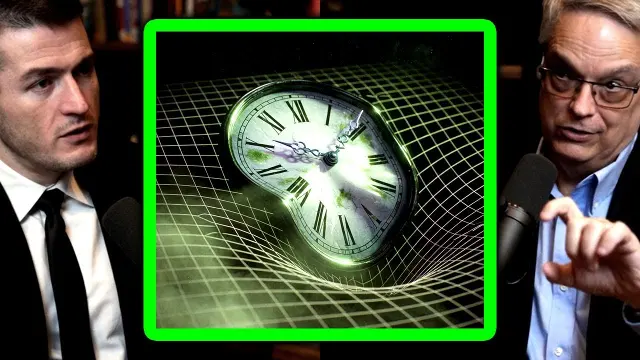
 Particle Physicist Explains Why Time Is a Mystery
#Time
2 ideas
Particle Physicist Explains Why Time Is a Mystery
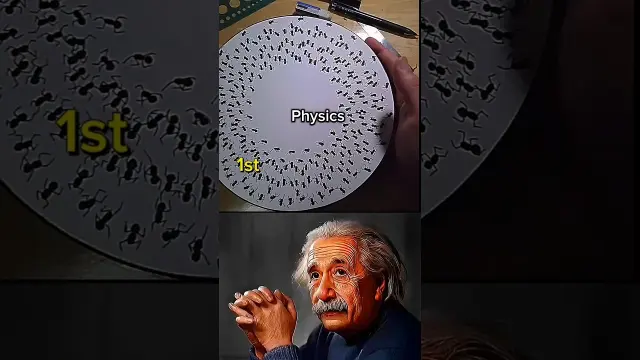 What Einstein Meant When He Called Time an Illusion
Get new #Time ideas by email
Every Thursday: the week's best ideas, with the newest from #Time.
Related tags
Time: How We Measure, Experience and Organise It
Time is the dimension in which change happens. We notice it because things are never quite the same from one moment to the next: a candle shortens, a child grows, a sound fades. Everything else in physics can be described as a position in space; time is what tells us when that position holds. That is why it is so hard to define without going in circles — we usually end up explaining time with words that already assume it, like "before", "after" and "duration".
The two faces of time
It helps to separate two things people mean by the same word. The first is physical time: something measured by clocks, treated in physics as a dimension woven together with space, and studied in terms of intervals, simultaneity and cause and effect. The second is experienced time: the stretch of an hour that flies by at a party and drags in a waiting room. These are not the same quantity, and much of the confusion in ordinary conversation comes from sliding between them.
How we measure it
Read more
Every clock, from a sundial to an atomic one, works the same way at heart: it counts repetitions of something regular, and we compare other events to those repetitions. The sun rising, water draining, a pendulum swinging, a quartz crystal vibrating — each was or is a way of turning repetition into a number. Because a clock is only as trustworthy as the rhythm it relies on, the history of timekeeping is a history of finding steadier rhythms.
Days, months and years come from the sky: the turning of the Earth, the phases of the Moon, the circuit around the Sun. These cycles do not divide neatly into one another, which is why calendars are such an old and fiddly problem, and why calendars around the world handle the leftover days in different ways. Hours, minutes and seconds, by contrast, are human divisions — useful conventions rather than things found in nature.
Living with time
Most of us meet time as a practical problem: too little of it, badly distributed. A few things genuinely help. Write down what you are actually doing for a few days, because estimates are unreliable and a written record is not. Notice which hours of your own day are sharp and which are foggy, and put demanding work where your attention already is rather than where the schedule says it should be. Leave gaps — a day planned to the minute collapses at the first delay. And distinguish tasks that take a fixed block of time from those that expand to fill whatever you give them.
If you are just starting out
Learn the basics of reading a clock face if you never did; it makes intervals visible rather than abstract. Keep one calendar rather than several, and put everything in it, including things you think you will remember. If the idea of time itself interests you, start with the difference between measured and perceived time — it is the doorway into both the physics and the philosophy, and it needs no equipment at all.
Time is the one resource nobody can store. Spending a little of it understanding how it works is rarely wasted.
#Time: frequently asked questions
What is the difference between time as it is measured and time as it is felt?
Measured time is the physical quantity a clock counts — a steady, comparable interval that physics treats as a dimension alongside space. Experienced time is how long something seems to take, which stretches or shrinks depending on attention, novelty and mood. Most everyday confusion comes from slipping between the two as if they were the same thing.
How do I start getting a realistic picture of how I spend my time?
Write down what you are actually doing for a stretch of ordinary days, as it happens rather than from memory afterwards, because estimates are famously unreliable. A written record shows where the hours really go and which tasks quietly expand to fill whatever room you give them. From there you can adjust what you have measured instead of what you assumed.
Should I keep a paper calendar or a digital one?
The medium matters far less than keeping a single one and putting everything into it, including things you are sure you will remember. The strongest argument for paper is that it is quick to glance at; the strongest for digital is that it travels with you and can remind you. Choose the one you will actually open every day, and abandon the others so nothing lives in two places at once.
Which kind of hours should I give my hardest work to?
Notice when in your own day your attention is naturally sharp and when it turns foggy, then place demanding work where your focus already sits rather than where a schedule says it should be. Energy is not evenly distributed, so fighting your own rhythm costs more than rearranging the day around it. Easier, mechanical tasks can fill the foggy stretches.
What are the most common mistakes people make when planning a day?
Planning to the minute is the big one: a schedule with no slack collapses at the first delay and takes the rest of the day with it. Another is treating every task as if it takes a fixed block of time, when some expand to fill whatever you allow. Leaving gaps and separating the two kinds of task makes a plan survive contact with an ordinary day.
Why do physicists and philosophers argue about what time actually is?
Time is hard to define without circularity, because the words we reach for — before, after, duration — already assume it. Physics describes time through what it does: intervals, simultaneity, cause and effect, and a dimension interwoven with space, which leads some thinkers to question whether its flow is fundamental or a feature of how we experience things. The measured and the perceived are separate questions, and keeping them apart is the doorway into both discussions.
Videos come from YouTube and posts from Instagram; titles and summaries are our own. All rights belong to their creators.