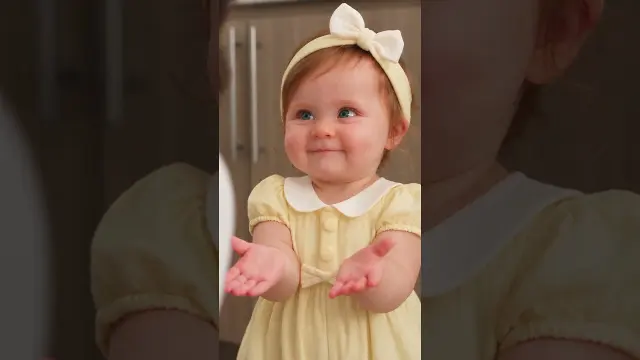
 Funny Toddler Hides Candy with Dad in Playful Family Moment
#Toddler Life
1 ideas
Funny Toddler Hides Candy with Dad in Playful Family Moment
Get new #Toddler Life ideas by email
Every Thursday: the week's best ideas, with the newest from #Toddler Life.
Related tags
Toddler Life: A Gentle Guide to the Early Years
Toddler life is the lively, changeable stage between babyhood and childhood, usually when a child is learning to walk, talk, assert independence, and make sense of the world with growing curiosity. It is a time of rapid development, but also of uneven progress: a toddler may be confident in one moment and overwhelmed in the next. That mix of joy, frustration, discovery, and repetition is part of what makes this stage so distinctive.
What toddler life is like
Toddlers learn through movement, repetition, and close connection with the people around them. They explore by touching, climbing, stacking, dropping, copying, and asking the same questions again and again. Their emotions can be intense because they are still learning how to express wants, manage disappointment, and wait for help.
A toddler’s world often revolves around familiar routines: meals, naps, dressing, play, and bedtime. Predictability helps children feel secure, even when they push against limits. For parents and caregivers, toddler life usually means balancing freedom with guidance.
Read more
Communication and language
Many toddlers understand far more than they can say. Early language can include single words, gestures, sounds, and short phrases, followed by long periods of rapid growth. It helps to speak clearly, use simple sentences, and name things and feelings as they happen.
Useful habits include:
- Talking through routines: “Now we wash hands.”
- Offering choices: “Do you want the blue cup or the red cup?”
- Reading aloud every day, even for a few minutes
- Responding to attempts at communication, not just perfect words
Patience matters here. Toddlers often need time to find words, and they may repeat phrases or stories as they practise language.
Play and learning
Play is how toddlers build many of their early skills. Through play, they develop coordination, problem-solving, imagination, and social understanding. Simple toys, household objects, songs, books, and outdoor time can all be part of healthy toddler play.
Common forms of play include:
- Pretend play, such as feeding dolls or imitating everyday chores
- Physical play, such as running, climbing, and dancing
- Sorting, stacking, and putting things in and out of containers
- Parallel play, where children play near others before they are ready to share or cooperate fully
For beginners in toddler care, the key idea is that play does not need to be complicated to be valuable.
Practical tips for everyday toddler life
Toddlers often do best with clear limits, calm repetition, and simple expectations. A few practical habits can make daily life easier:
- Keep routines steady when possible
- Offer small, manageable choices
- Use short instructions
- Redirect rather than argue when a child is overwhelmed
- Allow time for dressing, eating, and transitions
- Make the environment safe enough for exploration
It also helps to remember that difficult behavior often comes from tiredness, hunger, overstimulation, or frustration. Staying calm and consistent usually works better than long explanations.
Toddler life can be messy, noisy, and unpredictable, but it is also full of first steps, first words, and first big discoveries. If you approach it with patience and curiosity, you can support a child’s growing confidence while enjoying the small moments that make this stage so memorable.
#Toddler Life: frequently asked questions
How do I get started with toddler life as a first-time caregiver?
Start by settling into a steady rhythm of meals, naps, play, and bedtime, since predictability is what helps a toddler feel secure. Keep expectations simple and let the child explore a safe space while you stay close by. You learn most of it by paying attention to the child's cues rather than by preparing perfectly in advance.
What do I actually need for a toddler at home?
Less than most people expect: a safe place to move around, a few simple toys, everyday household objects, books, and time outdoors cover a great deal of what toddlers need. What matters more than equipment is a calm adult who talks, names things, and responds to the child's attempts to communicate. Rotating a small selection of playthings keeps interest higher than having a crowded room.
How do I choose activities or toys that suit a toddler's stage?
Look for things the child can handle independently and use in more than one way, such as stacking, sorting, filling and emptying, or pretend play that imitates daily life. Physical play like running, climbing, and dancing is just as valuable as quiet play, so a mix works well. If something frustrates a toddler repeatedly, it is usually better to set it aside for later than to push through.
How do I handle tantrums and difficult moments?
Difficult behavior in toddlers most often comes from tiredness, hunger, overstimulation, or frustration at not being understood. Keep instructions short, offer small choices, and redirect rather than argue when a child is overwhelmed. Staying calm and consistent tends to work better than lengthy explanations, which a toddler cannot follow in the middle of a meltdown.
What are common mistakes to avoid in everyday toddler life?
Over-scheduling and rushing transitions are frequent stumbling blocks, because toddlers need unhurried time to dress, eat, and shift between activities. Another common slip is expecting even progress, when in fact a toddler may master something one day and struggle with it the next. Explaining too much during a hard moment, or offering too many choices at once, also tends to backfire.
How can I encourage language and communication?
Talk through what you are doing together in simple sentences, name objects and feelings as they happen, and read aloud daily even for a short while. Offer choices between concrete things so the child has a reason to respond, and treat gestures, sounds, and partial words as real communication worth answering. Give plenty of time to find words instead of filling the silence.
Videos come from YouTube and posts from Instagram; titles and summaries are our own. All rights belong to their creators.