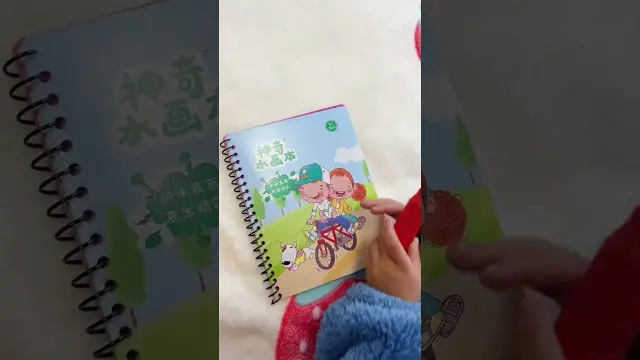
 Baby Water Painting Book for Mess Free Creative Play
#Toddler Toys
1 ideas
Baby Water Painting Book for Mess Free Creative Play
Get new #Toddler Toys ideas by email
Every Thursday: the week's best ideas, with the newest from #Toddler Toys.
Related tags
Toddler Toys: A Guide to Play, Learning and Safety
Toys for toddlers occupy a small window of childhood that everything else grows out of. Between roughly the first and third birthday, a child moves from mouthing objects to pretending with them, and the toys in the room either keep pace with that change or quietly stop being played with. Buying well for a toddler is less about quantity than about matching a toy to a stage.
What toddlers actually do with toys
Play at this age looks repetitious because it is work. A toddler fills and empties, stacks and knocks down, opens, hides, sorts and copies adults. Object permanence arrives, hand-eye coordination sharpens, and symbolic play begins — the wooden block becomes a phone, the doll needs feeding. Good toys leave room for these actions rather than doing the work for the child. A shape sorter that lights up and plays music when pressed may be a fine toy, but the simple one that requires the child to turn the shape and find the hole teaches more.
Kinds of toddler toys
Read more
- Blocks, nesting cups, sorting and stacking toys: early spatial reasoning and fine motor control.
- Shape sorters, simple puzzles and posting boxes: problem solving and patience.
- Ride-on toys, push toys and pull toys: gross motor movement and balance.
- Picture books, first crayons, and mess-free painting or colouring sets: early mark-making and vocabulary.
- Pretend-play basics — dolls, play food, small tool sets, a toy telephone: language and social understanding.
- Sand, water and play-dough type materials: sensory exploration, always supervised.
Battery-driven toys have their place, but the very busy ones tend to crowd out the quieter, self-directed sort — the child watches the toy instead of driving it. A balance of both is usually kinder to everyone in the house.
What beginners should know
Safety first, always. Toddlers still put things in their mouths, so avoid small parts, button batteries, magnets, long cords and loose ribbons. Check that toys are age-marked for toddler years, that seams and joints hold, and that nothing can be pulled off and swallowed. Secondhand toys are a reasonable choice but should be inspected, cleaned, and checked for missing pieces or cracked plastic.
Buy fewer things and swap them in and out. Toddlers play longer with a small selection than with a heap of options, and rotating toys every few weeks makes old ones feel new without spending anything.
Practical tips
Line a shelf with the items you want played with and leave the rest out of sight. Keep the set-up visible and reachable so your child can choose independently. Resist the strong pull of the toy shelves at the checkout — most toddlers enjoy a plain box, a set of wooden spoons or a pile of cloths as much as anything on display.
Choose toys that will survive several children and can be passed on. Wood, sturdy fabric and simple mechanisms hold up well and tend to be easy to mend. Spend your money on the toys your child returns to again and again, and let the rest go.
Above all, sit on the floor and play sometimes. A toy invites play, but a person makes it worth doing.
#Toddler Toys: frequently asked questions
How do I start choosing toys for a toddler?
Start from what your child is already doing rather than from the shelf — filling and emptying, stacking, hiding, sorting, copying you. Pick toys that leave those actions to the child instead of performing them, so a plain sorter that has to be turned and fitted teaches more than a noisy one that does the work itself. It also helps to keep the selection visible and reachable on a low shelf so your toddler can choose independently.
How many toys does a toddler really need?
Fewer than most of us own. Toddlers play longer and more deeply with a small, well-chosen set than with a heap of options, and the excess mostly becomes clutter underfoot. Put out a modest selection, keep the rest out of sight, and rotate the stored ones in regularly so familiar toys feel new again without buying anything.
Should I choose battery-powered toys or simpler ones?
Both have a place, but the balance matters. Very busy electronic toys tend to put the child in the audience, watching the toy rather than driving it, while simple open-ended things like blocks, play food or a set of wooden spoons invite the child to lead. Lean toward the quieter, self-directed sort and let the noisy ones be the occasional treat.
What safety mistakes should I watch for with toddler toys?
Toddlers still mouth things, so avoid small parts, button batteries, magnets, long cords and loose ribbons, and check that seams, joints and wheels hold firm and that nothing can be pulled off and swallowed. Look for age marking that covers the toddler years before you buy. Secondhand toys are perfectly reasonable, but inspect them, clean them and check for cracks or missing pieces first.
How do I care for toddler toys so they last?
Choose materials that survive several children — wood, sturdy fabric and simple mechanisms hold up and are easy to mend. Wipe and wash what can be washed, and regularly go through the box to pull out broken or incomplete pieces before they become a frustration. Storing toys in reachable baskets rather than a jumbled heap cuts down on both damage and daily mess.
What are good ideas for mess-free creative play?
Water-based painting books and colouring sets let a toddler make marks without paint on the walls, the table or themselves, which makes them easy to bring out on a whim. Pair them with first crayons, a roll of paper and picture books so mark-making and vocabulary grow together. Sand, water and play-dough style materials are wonderful sensory play but always need an adult close by.
Videos come from YouTube and posts from Instagram; titles and summaries are our own. All rights belong to their creators.