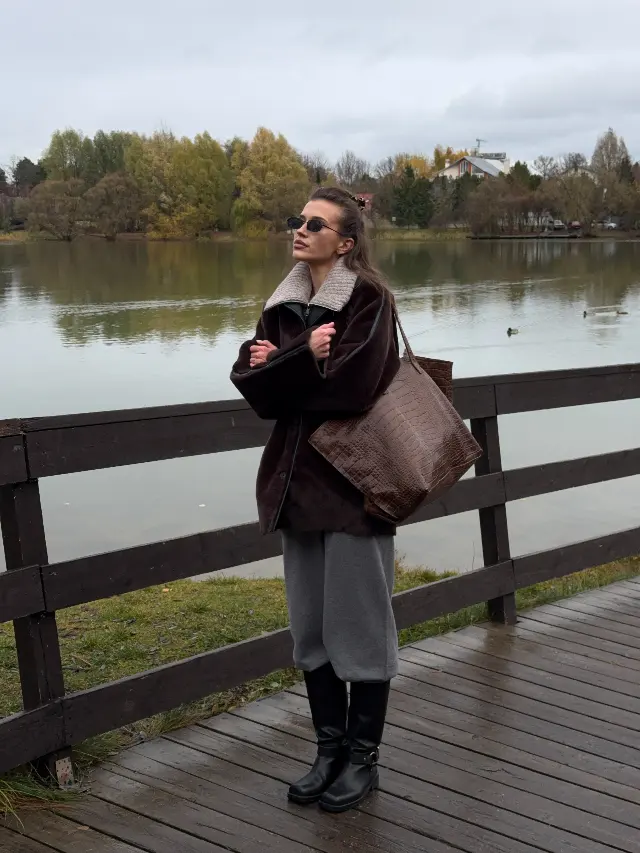
 Cozy Autumn Weekend Outfit With Jacquemus Scarf and Ankle Boots
#Total Look
1 ideas
Cozy Autumn Weekend Outfit With Jacquemus Scarf and Ankle Boots
Get new #Total Look ideas by email
Every Thursday: the week's best ideas, with the newest from #Total Look.
Related tags
Total Look: Dressing Head to Toe With Intention
A total look is an outfit conceived as a single idea rather than a collection of separate pieces chosen one by one. Shoes, bag, outerwear, jewellery and even the finish of the hair all answer to the same intention, so that nothing in the silhouette feels accidental. In fashion writing the phrase usually describes a head-to-toe ensemble designed as a whole, and it carries a quiet promise: that the person wearing it has thought about the picture, not just the garment.
Where the idea comes from
The total look has its roots in couture, where a house would dress a client from morning to evening and often from hat to shoe. When ready-to-wear grew into its own force, designers began presenting complete wardrobes on the runway, styling every element so the audience would read a single story. From there the notion travelled outward: magazines styled whole pages, boutiques learned to sell the outfit rather than the item, and the idea settled into everyday wardrobes as a way of thinking about coherence.
The main kinds
Read more
The total look is not one aesthetic, and it helps to recognise a few approaches.
- Monochrome: everything in one colour, letting texture and cut do the work instead of contrast.
- Matching sets: jacket and trousers, skirt and top, or knit and skirt cut from the same cloth, so the coordination is built in.
- Thematic or narrative: a period, a place, a mood carried through every piece, from the collar to the sole.
- Minimal uniform: a repeated personal formula, the same shapes and palette worn deliberately, day after day.
- Statement-led: one bold element at the centre, with everything else built quietly around it to support rather than compete.
What beginners should know
Start from a single anchor — a pair of shoes, a coat, a colour you love — and build outward, asking of each new piece whether it belongs to the same sentence. Proportion matters more than pattern: a long coat over a short hem, or a wide trouser under a close-fitting top, reads clearly because the shapes were decided together.
Pay attention to the joins, which is where total looks usually falter. Check how the trouser breaks over the shoe, how the sleeve meets the cuff, how the bag strap sits against the shoulder line. A small mirror check from a few steps back, or a photograph, reveals whether the pieces are truly speaking to each other.
Practical tips
Keep the palette to two or three tones and let texture create the variety. Repeat one material or one metal through the outfit so the eye finds a rhyme. If the look feels heavy, remove something rather than adding. Build a small set of neutral foundations that can anchor many different total looks, and treat accessories as part of the composition rather than an afterthought. Finally, remember that coherence should serve comfort: a total look that restricts how you move stops being elegant the moment you wear it.
#Total Look: frequently asked questions
What does a total look actually mean?
It means dressing from head to toe around one intention, so that shoes, bag, outerwear and accessories all read as parts of the same outfit rather than separate purchases. The point is not luxury or expense but coherence — the impression that the whole picture was decided at once. Worn well, a total look feels calm and deliberate instead of pieced together in a hurry.
How do I begin if I have never styled one before?
Pick one anchor you already love — a coat, a pair of shoes, a colour — and choose each additional piece by asking whether it belongs in the same sentence. Then look at the joins: the hem over the shoe, the sleeve at the wrist, the strap across the shoulder. A photo taken from a few steps back shows you quickly whether the outfit reads as one idea.
Which approach should I choose — monochrome, matching set, or something statement-led?
Choose according to how much decision-making you want each morning. Monochrome and matching sets carry the coordination for you and travel easily; a thematic look or a single statement piece asks for more styling and rewards occasions. A repeated personal uniform is the quietest option and the easiest to keep consistent over time.
How do I keep a total look working well over time?
Store pieces as outfits in your mind, not just as garments, and keep the shoes, bag and outerwear that belong to a look together so you can reach for them as one unit. Care for the smallest elements too — clean soles, tidy cuffs, polished metal — because they are what the eye reads last and remembers. Build around a small core of neutral foundations so several looks can share the same base.
What are the most common mistakes?
The usual one is adding instead of editing: when a look feels heavy, removing an element almost always improves it. Another is ignoring proportion, so that lengths and volumes fight each other rather than answering. And a total look that stops you moving freely stops being elegant the moment you wear it, so comfort has to be part of the composition.
Can a total look work for a casual occasion like a weekend out?
Yes — a relaxed version usually starts with comfortable footwear and a single outer layer, then repeats one colour or texture through the rest. A soft scarf, an ankle boot and a bag that echoes the same tone give the outfit a finished feel without looking formal. Keep the palette narrow and let the fabrics provide the interest.
Videos come from YouTube and posts from Instagram; titles and summaries are our own. All rights belong to their creators.