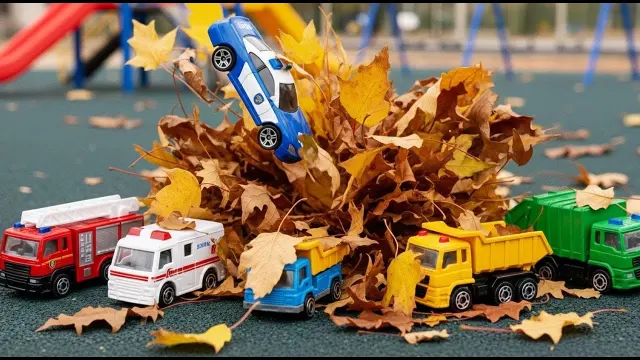
 Shape Hunt Adventure with Toy Cars and Trucks
#Toy Cars
1 ideas
Shape Hunt Adventure with Toy Cars and Trucks
Get new #Toy Cars ideas by email
Every Thursday: the week's best ideas, with the newest from #Toy Cars.
Related tags
Toy Cars: Play Ideas, Types and Simple Tips
Toy cars are miniature vehicles made for play, display, or collecting. They copy real cars, trucks, buses, and special vehicles in simple form, and they have been loved for generations because they invite open-ended play. A child can push them along a floor, line them up, build roads and garages, or use them in small-world scenes. For older children and adults, they can also be objects to collect, sort, and display.
What toy cars are
At their simplest, toy cars are small models designed to move by hand, by pull-back mechanisms, or with wheels that roll freely. Some are very basic and sturdy for everyday play. Others are detailed models that look more realistic and are meant to be handled carefully. You will also find sets that include roads, traffic signs, car parks, race tracks, and figures to create a fuller play scene.
Common kinds and styles
Read more
Toy cars come in many forms, and each one suits a different kind of play.
- Die-cast cars are usually made with a metal body and plastic parts. They often feel solid and detailed.
- Plastic cars are often lighter and more durable for younger children.
- Wooden cars have a simple, timeless feel and are often easy for small hands to hold.
- Pull-back cars move when you pull them backward and release them.
- Friction cars gain movement from being pushed forward.
- Model cars are made for display and often focus on realism and fine details.
- Character cars and themed vehicles are based on stories, jobs, or imaginative worlds.
Why children enjoy them
Toy cars are useful because they support many kinds of play at once. They help children practice hand-eye coordination, fine motor skills, and early understanding of movement, speed, distance, and direction. They also encourage language and storytelling. A child may create a rescue mission, a family trip, a busy city, or a race. Because the same toy can become many different things, toy cars are especially good for imaginative play.
Simple ways to play
You do not need a large setup to make toy cars interesting. A few items around the home can become part of the play world.
- Use masking tape to make roads on the floor.
- Create parking spaces with paper or cardboard.
- Add blocks, books, or cushions as bridges, tunnels, and hills.
- Sort cars by colour, size, type, or function.
- Use toy cars in counting games or simple storytelling.
What beginners should know
If you are choosing toy cars for a young child, look for sturdy construction, smooth edges, and a size that is easy to hold. Very small parts are not suitable for little children. For older children or collectors, detail, realism, and variety may matter more than durability alone. It also helps to store toy cars in a box, tray, or shelf so they are easy to find and less likely to be damaged.
Care and safety
Toy cars last longer when they are kept clean and dry. A quick wipe with a soft cloth is often enough. Check wheels from time to time to make sure they turn smoothly and that nothing is stuck inside them. For play with younger children, always choose age-appropriate toys and supervise as needed.
Videos come from YouTube and posts from Instagram; titles and summaries are our own. All rights belong to their creators.