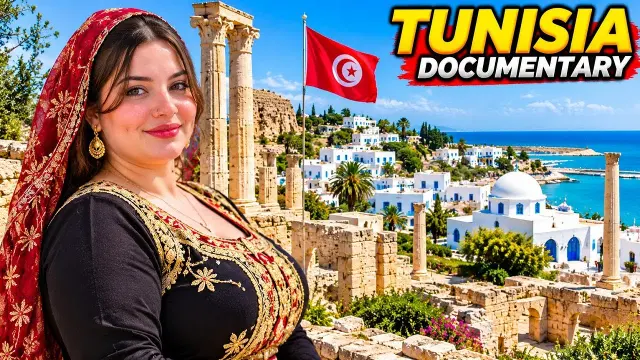
 Discovering the History, Culture, and Desert Landscapes of Tunisia
#Tunisia History
1 ideas
Discovering the History, Culture, and Desert Landscapes of Tunisia
Get new #Tunisia History ideas by email
Every Thursday: the week's best ideas, with the newest from #Tunisia History.
Related tags
A Short Guide to Tunisia's Layered History
Tunisia's history is easiest to read as a stack of layers. The country sits at the narrow waist of North Africa, with the Mediterranean along two sides and the Sahara pressing in from the south, so it has always been a place people passed through, traded with, settled and fought over. Each arrival left something behind, and much of it is still visible in the buildings, food and language you meet today.
The Amazigh Foundation
Long before any outside power arrived, the land was home to the Amazigh, often called Berbers, who farmed, herded and built in stone. Their languages, weaving patterns, pottery and distinctive architecture survive across the country, including the underground dwellings of the south. Everything that came later was built on top of this base, and it is worth keeping in mind while you look at ruins: the people who lived here were rarely simply replaced.
Carthage and the Classical Mediterranean
Phoenician traders from the eastern Mediterranean founded Carthage on the coast, and it grew into a formidable maritime power with its own empire, harbours and trading network. Rome eventually absorbed the region, and for centuries the province supplied grain and olive oil to the empire. Roman Tunisia left mosaics, bathhouses, cisterns and an amphitheatre that ranks among the largest in the Mediterranean world. National museums hold much of what was excavated, and they are the best place to make sense of the sites themselves.
Islamic Centuries
The Arab conquest brought Islam and a new written culture. Kairouan emerged as a holy city and a centre of scholarship, and its great mosque became a model for architecture across the region. Successive dynasties ruled from Tunis, Kairouan and other cities, and the medinas they built, with covered souks, courtyard houses and mosque schools, still set the shape of the old quarters. Craft traditions in ceramics, weaving and metalwork date from these centuries.
Read more
Ottoman Rule and the Beys
Under Ottoman authority, governors known as beys gradually won a large measure of independence, and the period left fortresses, mosques and a taste for intricate tilework. Mediterranean corsairs, coastal defence and trade all shaped the towns of the coast during this era.
Independence and the Modern State
A French protectorate brought roads, railways and schools, along with a nationalist movement that eventually won independence and turned the country into a republic. A popular uprising later ended decades of single-party rule and began a transition that reworked the country's politics.
Getting the Most From a Visit
- Read a little before you go; a site means far more when you know which layer you are standing on.
- Start early at archaeological sites, when the light is good and the heat is still gentle.
- Pair ruins with a museum visit, since finds are usually displayed far from where they were dug up.
- Walk old medinas slowly and on foot; the interesting details are in doorways, thresholds and shopfronts.
- Dress modestly away from the beach, and ask before photographing people.
- Hire a licensed local guide where you can; the stories are half the experience.
#Tunisia History: frequently asked questions
What is Tunisia's history best known for?
It reads as a set of layers rather than a single story: an indigenous Amazigh base, a Phoenician trading power on the coast, a Roman province, then Arab, Ottoman and modern phases on top. What makes it rewarding to explore is that each layer stayed visible — in stonework, pottery, weaving, food and the layout of old towns — instead of erasing the one before it.
How should I start learning about it before I travel?
Begin with an overview so you can recognise which layer you are looking at when you arrive, then pick one period that interests you and go deeper. Sites make far more sense once you know whether you are standing in something Amazigh, classical or later, so a little reading beforehand pays off more than a long list of stops.
Which part of the country's past should I focus on?
Choose by what you enjoy seeing: coastal ruins and mosaics suit classical history, while inland holy cities and medinas show the Islamic centuries through mosques, souks and courtyard houses. If craft and daily life interest you more than monuments, follow the ceramics, weaving and tilework traditions, which thread through several periods at once.
What are common mistakes when visiting historical sites?
The usual one is visiting ruins without the museum that holds what was excavated there, which leaves you looking at empty rooms with no context. Others are arriving at midday when heat and flat light make sites hard to enjoy, and rushing a medina by car instead of walking it slowly — the detail lives in doorways, thresholds and shopfronts.
How can I explore the old towns respectfully?
Walk rather than drive, dress modestly away from the beach, and ask before photographing people, since these are lived-in neighbourhoods and not open-air museums. A licensed local guide is worth considering too, because the stories behind the buildings are half of what you take away.
How do I make sense of the desert and underground dwellings in the south?
Treat them as part of the indigenous heritage rather than as scenery, since Amazigh communities built and farmed there long before any outside power arrived. Seeing that architecture alongside the pottery and weaving traditions helps explain that later arrivals usually layered onto local life rather than replacing it.
Videos come from YouTube and posts from Instagram; titles and summaries are our own. All rights belong to their creators.