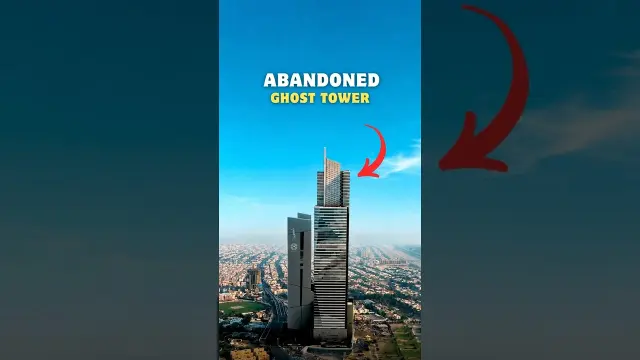
 Why Pakistan Abandoned Its Tallest Skyscraper Project
#Urban Exploration
2 ideas
Why Pakistan Abandoned Its Tallest Skyscraper Project
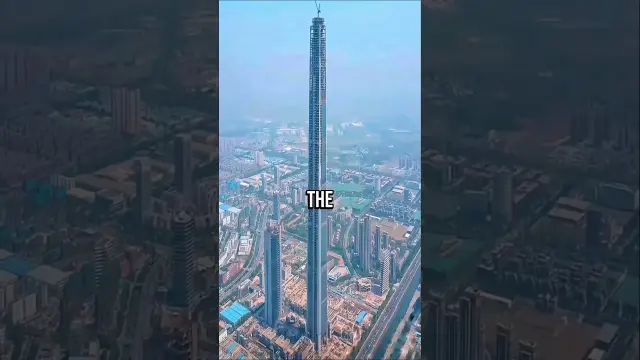 The Story of China Unfinished Giant Skyscraper
Get new #Urban Exploration ideas by email
Every Thursday: the week's best ideas, with the newest from #Urban Exploration.
Related tags
Urban Exploration: A Guide to Exploring Abandoned Places
Urban exploration, often shortened to urbex, is the practice of visiting places that people have left behind: empty factories, disused railway tunnels, closed hospitals, forgotten bunkers, drained reservoirs and the quiet upper floors of buildings nobody uses any more. The interest is not in trespassing for its own sake. At its heart it is curiosity about how the built world ages, and about the parts of a city that ordinary life passes by without noticing.
The pursuit has no single origin. It grew out of several habits at once: the nineteenth-century pastime of wandering a city for its own sake, the documentation work of industrial archaeologists, and the informal networks of people who began sharing photographs of derelict sites long before the internet made it easy. What ties these strands together is an attitude rather than a place. Explorers tend to value documentation over acquisition, and leaving a site exactly as they found it.
The main kinds of exploration
- Industrial sites: mills, mines, power stations and warehouses, usually valued for scale and machinery.
- Infrastructure: tunnels, storm drains, bridges and underground waterways, often called draining when water is involved.
- Institutional buildings: schools, hospitals, prisons and hotels, interesting for the traces of daily life left behind.
- Residential and recreational ruins: houses, holiday camps, cinemas and pavilions.
- Rooftopping, which is reaching high vantage points rather than entering buildings, and carries its own distinct risks.
Read more
People explore for different reasons. Some are photographers chasing natural light in empty rooms. Some are historians of industry and architecture. Some simply enjoy the calm of a place with no one else in it. Many keep written or photographic records, and there is a long tradition of researching a site's history before visiting, so that what is seen can be understood and later explained to others.
What beginners should know
The first thing to learn is not technique but judgement. Almost every interesting site belongs to somebody, and entering without permission may be a civil matter, a criminal one, or both, depending on where you are. Explored sites are frequently unsafe in ways that are not obvious: rotten floors, loose roofing, asbestos, sharp debris, unstable ground, standing water and poor air in sealed spaces. Lighting, footwear, a companion and a charged phone matter far more than a good camera.
Beyond safety, there is the question of care. The community's most durable principle is to take nothing and leave nothing: no souvenirs, no graffiti, no damage, and no precise public directions to fragile places, so that they are not ruined by crowds. Trespass aside, there are real hazards and legal consequences, and a site that is closed is usually closed for a reason.
A respectful approach
Research a place before you go, go with someone, tell a third person where you are, and turn back when something feels wrong. If you cannot get permission, consider whether the photograph is worth the risk to yourself or to the building. The best urban exploration is quiet, careful and leaves the place as though no one had come.
#Urban Exploration: frequently asked questions
How do I start urban exploration if I’m a beginner?
Start with research and caution rather than adventure alone. Learn the history of the place, go with another person, tell someone where you are, and choose sites where you can judge the risks clearly before you enter.
What do I need for a safe urbex visit?
The essentials are simple: good footwear, a reliable light source, a charged phone, and a companion. It also helps to wear practical clothing and avoid carrying much, since the real priority is seeing clearly and getting out safely.
Which kind of urban exploration should I try first?
Many beginners start with places that are easier to understand, like abandoned houses, old industrial buildings, or closed public spaces with visible traces of past use. If you prefer views over interiors, rooftopping is a different style, but it brings its own risks and demands extra caution.
How should I behave inside an abandoned place?
The main rule is to leave everything exactly as you found it. Do not take objects, write on walls, break anything, or share exact directions to fragile sites that could be damaged by crowds.
What are common mistakes people make in urbex?
A common mistake is treating it like a photo hunt and ignoring safety or permission. People also underestimate hidden hazards such as weak floors, sharp debris, unstable ground, and poor air in sealed spaces.
What kinds of places are most interesting to explore?
Urban explorers often look for industrial sites, tunnels and other infrastructure, old hospitals or schools, and empty homes or leisure buildings. Many people are also drawn to unfinished or abandoned tall structures because they show how a city changes over time.
Videos come from YouTube and posts from Instagram; titles and summaries are our own. All rights belong to their creators.