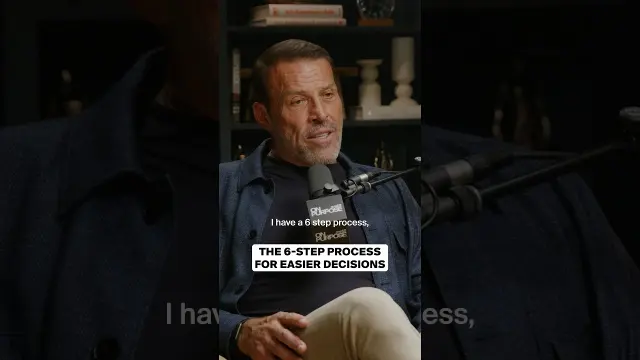
 Six Steps to Making Clearer and More Confident Decisions
#Values
1 ideas
Six Steps to Making Clearer and More Confident Decisions
Get new #Values ideas by email
Every Thursday: the week's best ideas, with the newest from #Values.
Related tags
Values: What They Are and How to Live by Them
Values are the things you consider most important in how a person should live. They are not rules handed to you from outside, and they are not tastes or moods. They sit underneath both: they are the standards you measure yourself against, the reasons you give when something feels right or wrong, worth doing or a waste of your one life.
What values actually are
A value is an abstract commitment that shows up in concrete choices. Honesty is a value; returning the extra change is what it looks like. Curiosity is a value; reading past the point where you already agree with the author is what it looks like. You can usually tell a real value from a stated one by watching what a person does when no one is paying attention. Values cost something, which is why they mean anything.
Where they come from
Read more
Your values grow out of several places at once. The family and community you were raised in supply a first draft, often without you noticing. So do school, faith, friendship, the work you do and the books and stories you love. Some arrive through difficulty: a hard experience can clarify, in one afternoon, what you thought you believed. Most people carry a mix, and the mix keeps changing as life does. That is not inconsistency. It is development.
Kinds of values
Values are usually grouped by what they are about. Moral values concern how you treat others: fairness, kindness, respect. Practical values concern how you work: diligence, order, reliability. Relational values concern closeness: loyalty, openness, forgiveness. Personal values concern the shape of your own life: freedom, creativity, security, growth. Some people hold values that point outward, towards community and service; others lean towards independence and self-direction. Neither set is better, but knowing which is yours saves you from a great deal of borrowed ambition.
Why naming them helps
Unnamed values still act on you, but vaguely, and vague values make for foggy decisions. When you know what you are protecting, choices narrow on their own. Two good offers stop feeling like a trap, because one of them clearly protects what you care about. Naming values also helps you say no without hostility, since a refusal grounded in something you believe is easier to explain and easier to live with.
Working out your own
- Look back rather than forward. Recall moments you felt proud, angry or quietly certain, and ask what was being honoured or trampled.
- Notice envy. It usually points at a value you have not permitted yourself.
- Write a short list, then cut it to five. A list of twenty guides nothing.
- Test each one by asking what you would give up for it.
- Revisit the list occasionally. Values are not a certificate you earn once.
Living with them
Values need practice, not perfection. A useful habit is a brief regular check: did this week contain anything that matched what I say matters? Where did I bend, and was it a considered trade or simple drift? Small repeated acts do more than dramatic resolutions. If you value generosity, the steady, unglamorous version of it will form you more than a single grand gesture.
When values collide
They will. Loyalty to a friend can pull against honesty; freedom can pull against security. There is no formula that resolves this cleanly. What helps is naming both sides out loud, deciding which one this situation truly asks of you, and accepting the cost rather than pretending there isn't one. Choosing deliberately and admitting the trade is very different from quietly letting one value win because it was more convenient.
If you are just starting
Don't wait for certainty. Begin with two or three values you can honestly claim, live them for a while, and let the list refine itself through experience. Values are not a test you pass. They are a direction you keep choosing.
#Values: frequently asked questions
How do I start figuring out what my values are if nothing comes to mind?
Begin with memory rather than imagination: recall moments when you felt proud, angry, or quietly certain, and ask what was being honoured or stepped on in each one. Envy is another good signal, since it often points at something you want but have not given yourself permission to pursue. Write down what surfaces, then narrow it to a short list you can actually hold in mind.
How many values should I settle on, and do I have to stick with them forever?
Fewer is better — a list so long it covers everything guides nothing, so aim for a handful you could honestly defend. Treat the list as something to revisit rather than a certificate you earn once, because values develop as your life and responsibilities change. Refining them over time is growth, not inconsistency.
What is the difference between a value I actually hold and one I have just absorbed from other people?
Watch what you do when nobody is looking and what you are willing to give up for it, since a real value costs something. Borrowed values tend to appear in what you say about yourself rather than in how you spend your time and attention. Noticing that gap is usually the first honest step.
What should I do when two of my values pull in opposite directions?
Name both sides out loud instead of letting the more convenient one quietly win. Then decide which one this particular situation genuinely asks for, and accept that the other is being sacrificed rather than pretending there is no cost. A deliberate trade you can explain to yourself sits very differently from drift.
How do I keep living by my values after the initial motivation wears off?
Rely on small repeated acts rather than dramatic resolutions, since steady ordinary practice shapes you far more than one grand gesture. A brief regular check helps: did this week contain anything that matched what you say matters, and where did you bend? If you did bend, ask whether it was a considered trade or simple drift.
What mistakes do people commonly make when working out their values?
Two stand out: building a list so long it stops being useful, and adopting ambitions that belong to someone else without noticing. Another is waiting for perfect certainty before starting, which usually means never starting at all. Beginning with a couple of values you can genuinely claim and letting experience refine them works better than getting it right in advance.
Videos come from YouTube and posts from Instagram; titles and summaries are our own. All rights belong to their creators.