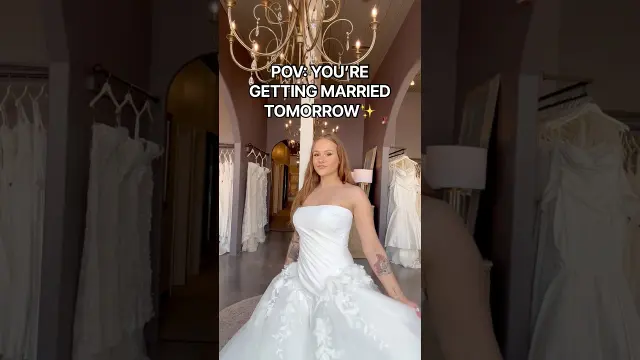
 Five Bridal Gown Finalists for a Last-Minute Wedding Dress Decision
#Wedding Dress Inspiration
1 ideas
Five Bridal Gown Finalists for a Last-Minute Wedding Dress Decision
Get new #Wedding Dress Inspiration ideas by email
Every Thursday: the week's best ideas, with the newest from #Wedding Dress Inspiration.
Related tags
Wedding Dress Inspiration: A Guide to Finding Your Gown
A wedding dress is more than a garment. It is the one outfit most people will remember wearing for the rest of their lives, and choosing it is as much an exercise in self-knowledge as in shopping. Inspiration helps you get there: looking at gowns gives you a vocabulary for what you love, and a way to tell the people helping you what you mean.
Why inspiration matters
Bridal fashion is a deep, old tradition. Across cultures, wedding dress has carried meaning through colour, cut and ornament: embroidered red in parts of Asia, layered white in Europe, hand-woven textiles, family heirlooms, borrowed veils. The white gown popularised in the nineteenth century became a global default, but it has never been the only option, and today the range of choices is wider than ever. Inspiration is how you find your own place in that tradition.
Know the silhouettes
Read more
Most dresses fall into a handful of shapes, and knowing them makes the search far less abstract.
- A-line: fitted at the bodice and gently flared, flattering on nearly everyone.
- Ball gown: a full, structured skirt for a formal, dramatic look.
- Sheath: narrow and column-like, close to the body from bust to hem.
- Mermaid or trumpet: fitted through the hips and flaring below the knee.
- Empire: a high waistline just under the bust, often light and flowing.
- Tea-length and midi: hemlines below the knee, suited to intimate or less formal weddings.
Necklines, sleeves and backs
Small details change a dress entirely. Sweetheart, illusion, halter, off-the-shoulder and high-neck cuts each frame the face and shoulders differently. Sleeves run from cap and flutter to long lace and full coverage. Backs, which guests see during the ceremony, can be buttoned, open, corseted or decorated. Save images of the details you keep noticing, not just whole dresses.
Fabrics and the feel of a gown
Light fabrics such as chiffon and tulle move and breathe; satin and mikado hold their shape and photograph with sheen; lace and embroidery add texture and narrative. Consider the season, the venue and how long you will be standing and dancing. A heavy beaded gown is glorious and tiring in equal measure.
What beginners should know
Start with a realistic budget and a flexible one, then decide the setting, time of day and level of formality. Try on a range of shapes before you commit to an idea: dresses look very different on a body than on a screen. Wear appropriate undergarments and shoes, bring one or two honest companions rather than a crowd, and expect alterations to be part of the process. Order in good time, and be cautious with ambitious changes to a finished design.
Finally, remember that inspiration is not imitation. Collect what moves you, notice the patterns, then choose what you actually feel comfortable and joyful in. The best dress is the one you stop thinking about once it is on.
#Wedding Dress Inspiration: frequently asked questions
How do I start looking for wedding dress inspiration when I have no idea what I want?
Begin by collecting rather than deciding: save images of dresses, necklines, fabrics and backs that catch your eye and let the patterns emerge on their own. Look at silhouettes you would not normally pick, and pay attention to specific details you keep noticing instead of only whole gowns. From there you can narrow things down by your venue, the time of day and how formal the wedding will be.
Which wedding dress silhouette should I choose?
Learn the main shapes first — A-line, ball gown, sheath, mermaid, empire and tea-length — because knowing the vocabulary makes the search concrete. Then try several of them on, since a dress that looks like the obvious choice on a screen can feel completely different against a real body. Choose the one you feel comfortable and joyful in rather than the one that photographs best on someone else.
What should I bring and prepare before my first dress appointment?
Wear appropriate undergarments and shoes, and bring only one or two honest companions instead of a large audience of opinions. Have a realistic budget in mind, plus a flexible amount for alterations, and be clear about your venue, season and level of formality. Expect that adjustments will be part of the process and order in good time.
How do I care for a wedding dress before and after the wedding?
Keep the gown hung or stored carefully in a cool, dry place away from direct light, and handle beaded or lace work by the lining rather than the ornament. Have it cleaned soon after the wedding, since stains and sweat can set with time, and store it in breathable material rather than sealed plastic. If you plan to keep it as an heirloom, ask about archival storage when it is cleaned.
How do I choose a dress that suits a less traditional or intimate wedding?
White has never been the only option: colour, cut and ornament have carried meaning across many cultures, so treat tradition as a starting point rather than a rule. For a smaller or less formal celebration, tea-length and midi hemlines, lighter fabrics such as chiffon or tulle, and simpler silhouettes often suit the mood better. Match the dress to the setting, the season and how long you will be standing and dancing.
What are the most common mistakes people make when choosing a wedding dress?
The usual missteps are shopping without a realistic budget, bringing too many conflicting opinions, and committing to a silhouette before trying anything on. Another is asking for ambitious structural changes to a finished design rather than choosing a gown that already works. And remember that inspiration is not imitation — the best dress is the one you stop thinking about once it is on.
Videos come from YouTube and posts from Instagram; titles and summaries are our own. All rights belong to their creators.