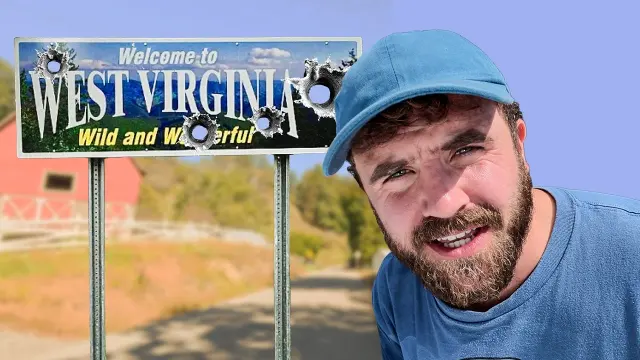
 Exploring Rural America in West Virginia
#West Virginia
1 ideas
Exploring Rural America in West Virginia
Get new #West Virginia ideas by email
Every Thursday: the week's best ideas, with the newest from #West Virginia.
Related tags
West Virginia: A Guide to the Mountain State
West Virginia is a state in the central Appalachian Mountains of the eastern United States, and its shape and character both come from the land itself. Ridges and river valleys decide where the borders run, roads twist around slopes instead of through them, and almost every view is layered with hills. People there call themselves Mountaineers, and the state's motto makes a simple promise: mountaineers are always free.
Where it comes from
The state separated from Virginia during the American Civil War and entered the Union as its own state, which is why its western counties, tied more to the Ohio Valley than to the plantation economy of the east, ended up with a government of their own. The result is a place that feels both Southern and Midwestern, rural and industrial, and proud of the difference.
The land
Read more
The Appalachian Plateau covers most of West Virginia, cut by deep rivers: the New, the Gauley, the Cheat, the Greenbrier, the Potomac in the east. Highlights that people travel for include the New River Gorge, a canyon bridged by a great steel arch; Seneca Rocks, a fin of quartzite popular with climbers; the high, windswept meadows of Dolly Sods; and the spruce forests and trails of Monongahela National Forest. There are limestone caves, waterfalls, and trout streams cold enough to hold native brook trout.
Culture and crafts
Settlers came largely from Scotch-Irish, German and English stock, and their descendants kept the older ways longer than most of America did. Appalachian music lives here — fiddle tunes, clawhammer banjo, unaccompanied ballad singing — along with storytelling, quiltmaking, basket weaving, woodworking and glassblowing. Handmade work is not a souvenir sideline; it is a living tradition, taught in families and shown at fairs and workshops across the state. Listen for the dialect too: "warsh" for wash, "hollow" for a small valley, turns of phrase carried over from Britain and Ireland.
Food worth knowing
The cooking is mountain food: hearty, thrifty, and built on what the land gives. Look for pepperoni rolls, a working lunch born of the coalfields; ramps, wild leeks foraged in early spring; soup beans with cornbread; apple butter cooked down in copper kettles; buckwheat pancakes, maple syrup, and fresh trout. Pawpaws, a native fruit tasting something like mango and banana, ripen in autumn.
Getting started
Distances here are measured in time, not miles. A short line on a map can mean an hour of switchbacks, so plan generously and drive in daylight if you can. Weather shifts with elevation: a warm valley can be cool and foggy on the ridge. Cell service disappears in many hollows, so carry a paper map. Respect posted land, stay on marked trails, and pack out what you bring. And whatever you do, leave room for the unplanned stop at a roadside overlook — in West Virginia, the drive is usually the point.
#West Virginia: frequently asked questions
What is West Virginia best known for?
It is known for its mountain scenery, with ridges and river valleys shaping nearly every view, and for a culture that has kept older Appalachian traditions alive. Music, storytelling, quilting, basket weaving and glassblowing are still practiced as living crafts rather than souvenirs, and the state's motto promises that Mountaineers are always free.
When is a good time to visit West Virginia?
Spring brings wild leeks and blooming hillsides, summer is the season for rivers, trails and high meadows, and autumn is when the hardwood ridges turn and the native pawpaw fruit ripens. Winter suits travelers who want quiet spruce forests and don't mind cold ridges. Because weather changes with elevation, a mild valley day can be foggy and cool up top, so pack in layers.
How do I plan a driving trip through the mountains?
Measure distance in time rather than miles, since a short stretch on the map can mean an hour of switchbacks. Drive in daylight where you can, carry a paper map because cell service drops out in many hollows, and build slack into each day. Leave room for an unplanned stop at a roadside overlook, because the drive itself is usually the point.
What food should I try while I'm there?
The cooking is hearty and thrifty, built on what the land gives: soup beans with cornbread, buckwheat pancakes with maple syrup, apple butter, and fresh trout from cold streams. Look for pepperoni rolls, a working lunch with coalfield roots, and for ramps, the wild leeks foraged in early spring. In autumn, try pawpaws, a native fruit that tastes somewhere between mango and banana.
What are common mistakes visitors make in West Virginia?
Underestimating travel times and setting out too late in the day is the big one, along with relying on phone navigation in places where there is no signal. Others walk off marked trails, cross posted land, or leave litter behind instead of packing it out. Treat the land with respect and the trip tends to go well.
What can I do outdoors besides hiking?
The state offers climbing on fins of hard quartzite, paddling and rafting on deep rivers, cave exploring in limestone systems, and fly fishing for brook trout in cold streams. Higher elevations have windswept meadows and spruce forest trails that feel like another climate entirely. Many travelers mix a short walk with scenic drives and small-town stops.
Videos come from YouTube and posts from Instagram; titles and summaries are our own. All rights belong to their creators.