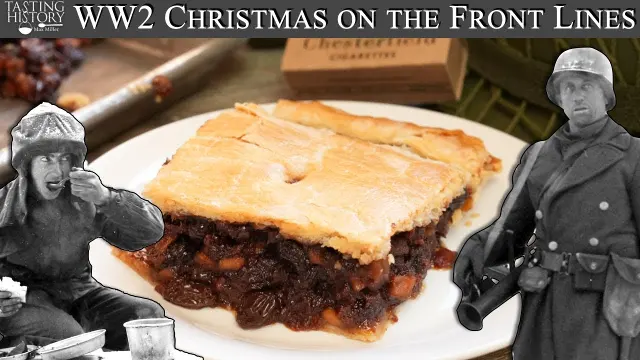
 World War 2 Mincemeat Pie for the Battle of the Bulge
#World War 2
1 ideas
World War 2 Mincemeat Pie for the Battle of the Bulge
Get new #World War 2 ideas by email
Every Thursday: the week's best ideas, with the newest from #World War 2.
Related tags
World War II: A Guide to the Global Conflict
World War II was the largest armed conflict in history, fought across Europe, Asia, Africa, the Atlantic, and the Pacific. It involved many of the world’s nations and reshaped politics, borders, technology, and daily life for decades afterward. If you want to understand modern history, this war is one of the most important places to start.
What World War II was
The war began in 1939 and ended in 1945. It grew out of unresolved tensions after World War I, economic hardship, aggressive expansion by authoritarian governments, and the failure of diplomacy to stop conflict early. At its core, it was a struggle between the Axis powers, led by Germany, Italy, and Japan, and the Allied powers, which included the United Kingdom, the Soviet Union, the United States, China, and many other countries.
Unlike earlier wars, World War II was truly global. Fighting happened on land, at sea, and in the air, and civilians were deeply affected. Cities were bombed, food was scarce, families were displaced, and entire populations were targeted by persecution and genocide.
Read more
The main fronts and campaigns
In Europe, the war began with Germany’s invasion of Poland, followed by rapid expansion into much of the continent. The fighting later turned through major campaigns in France, the Soviet Union, North Africa, Italy, and eventually Germany itself. The Allied landings in western Europe helped force Germany back on both fronts.
In the Pacific, war expanded after Japan’s attacks across Asia and the Pacific islands. This theatre involved long naval battles, island fighting, and the difficult challenge of moving men and supplies across great distances. The war in Asia was also marked by severe suffering among occupied civilian populations.
What made the war different
World War II is remembered not only for its scale, but also for the way it transformed warfare. Air power became central, tanks and mechanized armies changed battlefield tactics, and aircraft carriers became more important at sea. Intelligence, codebreaking, logistics, and industrial production all played major roles. Victory depended not just on soldiers in combat, but on factories, transport systems, and civilian endurance.
Why it matters
The war ended with the defeat of the Axis powers, but its effects continued long after the fighting stopped. It led to the founding of international institutions, the redrawing of borders, the division of Europe during the Cold War, and major changes in colonial empires. It also left a deep moral legacy because of the Holocaust and other wartime atrocities.
If you are learning about it
A good way to study World War II is to follow a simple path:
- Start with the causes: the aftermath of World War I, economic instability, and aggressive expansion.
- Learn the main theatres: Europe, North Africa, and the Pacific.
- Pay attention to civilians, not only armies, because the war touched every part of society.
- Keep the timeline clear, since events in different regions happened at the same time.
World War II is a vast subject, but its basic shape becomes easier to understand when you look at it as a global conflict driven by power, ideology, and survival.
Videos come from YouTube and posts from Instagram; titles and summaries are our own. All rights belong to their creators.