 How to Build Mental Models and Actually Keep Using Them
#Writing
2 ideas
How to Build Mental Models and Actually Keep Using Them
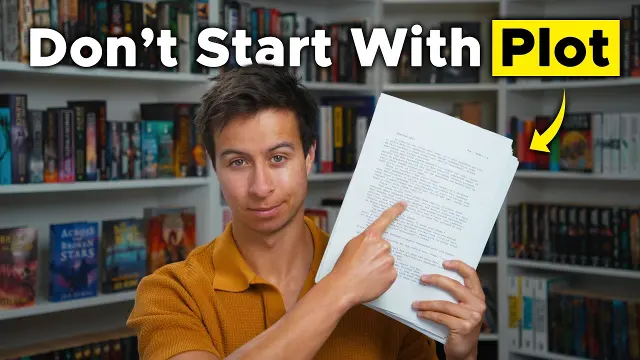 Essential Writing Tips for Your First Fantasy Novel
Get new #Writing ideas by email
Every Thursday: the week's best ideas, with the newest from #Writing.
Related tags
Writing: A Beginner's Guide to Finding Your Words
Writing is the practice of putting language down so it can be read, kept and returned to. That sounds obvious, but it holds the whole thing: unlike speech, writing stays still. You can shape a sentence, leave it, come back, and change your mind. Everything else about the craft grows from that simple fact.
People write for many reasons. Some write to remember, some to persuade, some to make a story that did not exist before, and some simply because a thought will not settle until it is on paper. Diaries, letters, essays, reports, poems, novels, songs, instructions, messages: they all share the same basic materials, words and order, and the same basic problem, which is getting what is in your head into someone else's.
The main kinds
Broadly, writing falls into a few families.
Read more
Narrative writing tells what happened: stories, memoirs, accounts of events. It depends on sequence, character and detail that lets a reader see the scene.
Descriptive writing slows down and makes a person, place or thing vivid through the senses.
Expository writing explains: articles, guides, textbook chapters. Its virtue is clarity, and its enemy is anything that makes the reader work harder than the idea deserves.
Persuasive writing argues a position and answers objections. It needs evidence and structure more than it needs strong feeling.
Reflective writing, from journals to personal essays, turns experience over to see what it means. Many writers use it privately, with no reader in mind at all.
What beginners should know
Start smaller than you think. A page finished teaches more than a chapter imagined. Write a rough first version without judging it, then revise separately, because creating and correcting use different parts of your attention and are miserable to do at the same time.
Read your work aloud. Your ear catches what your eye forgives: a sentence that runs too long, a word repeated, a place where you lost the thread.
Prefer concrete nouns and active verbs. "The dog chewed the shoe" is clearer than "the shoe was damaged by the animal". Specificity is not decoration; it is how a reader gets a grip.
Cut what does not earn its place. Most first drafts are longer than they need to be, and most edits are subtractions. If a sentence can go without damage, it probably should.
Habits that hold up
Write at a regular time, even briefly. Frequency matters more than length. Keep a notebook or a file for lines, observations and questions, since ideas tend to arrive when you are not at your desk.
Keep what you write. Looking back at older work is uncomfortable and useful in equal measure; it is the clearest proof that you have moved.
Read widely and notice how it is done. When a passage stays with you, go back and look at the mechanics, the sentence lengths, the order of information, where the writer chose to slow down.
Finally, accept that the first version is meant to be imperfect. Writing is not typing what you already know; it is how you find out what you think. Give yourself permission to do it badly, and then, patiently, make it better.
#Writing: frequently asked questions
How do I start writing when I don't know what to say?
Begin with something small and concrete rather than a grand plan, because finishing a single page teaches you more than imagining a whole book. Write a rough first version without judging it as you go, then revise it in a separate sitting, since creating and correcting pull your attention in different directions. If you are stuck for a subject, start from a moment you remember clearly and describe it until it becomes vivid.
Which kind of writing should I choose?
It depends on what you want the reader to do: narrative tells what happened, descriptive writing makes a person or place vivid, expository writing explains, persuasive writing argues a position, and reflective writing turns experience over to find meaning. Many pieces mix several of these, so pick the one that carries the main job and let the others support it. If you have no reader in mind, reflective writing is a comfortable place to begin.
What do I actually need to begin writing?
Very little: something to write with, a regular slot of time, and a place to keep lines and observations that arrive when you are away from your desk. Frequency matters more than length, so short sessions repeated often will take you further than rare long ones. Beyond that, reading widely is part of the toolkit, because noticing how other writers build a sentence is how you learn to build your own.
What are the most common mistakes beginners make?
Two stand out: trying to create and edit at the same time, and holding on to sentences that are not doing any work. Most early drafts are longer than they need to be, and most improvements come from cutting rather than adding. Reading your work aloud exposes the rest, since your ear catches the long-winded sentence or the repeated word that your eye skips over.
How do I care for a writing habit so it doesn't fade?
Anchor it to a fixed time of day, even if you only manage a few lines, and treat the notebook as part of the practice rather than an accessory. Keep what you write, including the parts you would rather not reread, because older work is the clearest evidence that you have moved forward. Accepting that a first version is meant to be imperfect removes the pressure that usually stops a habit before it forms.
How do I get ideas for a story or a piece?
Collect rather than invent: keep a running file of overheard lines, questions and small observations, and ideas will start arriving while you are doing something else. When a passage you read stays with you, go back and study its mechanics, the sentence lengths and where the writer chose to slow down, then borrow the technique rather than the content. Concrete detail is what gives a reader a grip, so build outward from something specific.
Videos come from YouTube and posts from Instagram; titles and summaries are our own. All rights belong to their creators.