 Mental Models That Changed My Life: It Is All About the Next Step
#Mental Models
13 ideas
Mental Models That Changed My Life: It Is All About the Next Step
 Think Like an Executive: Mental Models Behind Great Decisions, Part 1
 Three CEO Mental Models for Better Critical Thinking and Decisions
 How Executives Think: Mental Models for Direction and Leverage
 Mohnish Pabrai on Mental Models for Exceptional Capital Allocation
 The Great Mental Models of Artificial Intelligence: Series Introduction
 Mohnish Pabrai on the Latticework of Mental Models for a Great Life
 How to Build Mental Models and Actually Keep Using Them
 Four Mental Models from Charlie Munger Explained with Examples
 Bill Gurley on Mental Models: Systems Thinking and Second-Order Effects
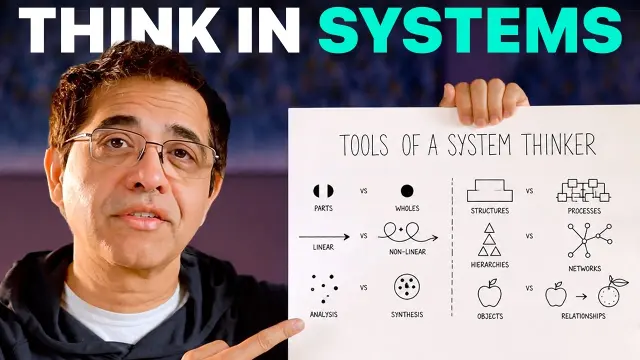 Systems Thinking: A Framework for Seeing Hidden Forces
 Six Mental Models to Improve Your Thinking and Problem Solving
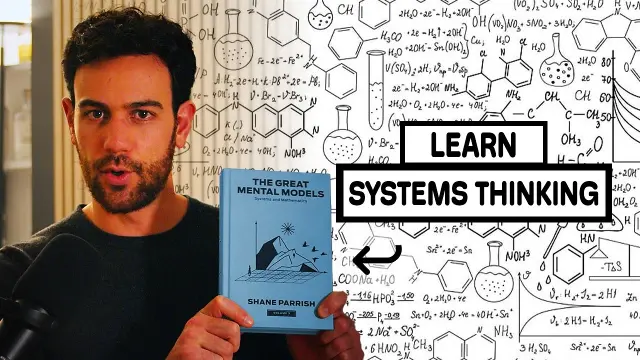 Four Mental Models to Fix Broken Systems, From Equilibrium to Margin of Safety
Get new #Mental Models ideas by email
Every Thursday: the week's best ideas, with the newest from #Mental Models.
Related tags
Mental Models: A Beginner's Guide to Thinking Clearly
A mental model is a simplified picture of how something works. You cannot hold the full complexity of the world in your head, so you carry around compressed versions of it instead: a rough idea of how prices respond to demand, how habits form, how a team's incentives shape its behaviour, how interest compounds over time. These internal shortcuts let you reason quickly, predict what might happen next, and explain your conclusions to other people.
The idea sits at the meeting point of cognitive science and systems thinking. Psychologists use the phrase to describe the internal representations people build of external reality, which are never complete and always shaped by experience. Systems thinkers use it to describe a set of transferable concepts, drawn from many fields, that help make sense of complex situations. The underlying insight is old and simple: you think with the models you happen to have, so the quality of your thinking depends on the quality of your models.
The main kinds
Mental models come from many disciplines, and most are portable far beyond the field that produced them.
Read more
- First principles: stripping a problem down to what you actually know and rebuilding from there, rather than reasoning by analogy.
- Second-order thinking: asking what happens after the obvious consequence, and after that.
- Inversion: instead of asking how to succeed, asking what would reliably cause failure, then avoiding it.
- Opportunity cost: everything you choose costs you the best alternative you gave up.
- Base rates: starting from how often something generally happens before weighing the specifics of your case.
- Feedback loops: recognising that effects circle back and become causes, which produces growth, decay or oscillation.
- Margin of safety: leaving room for error, because your estimates will sometimes be wrong.
- Compounding: small consistent effects accumulating into large ones over long periods.
- Incentives: people respond to what they are rewarded for, often more than to what they say they believe.
What beginners should know
The most important thing to grasp is that a model is a tool, not a truth. Every model leaves something out, and each one is useful in some situations and misleading in others. A model that explains a market poorly may explain an ecosystem well.
Two failure modes catch people early. The first is having only one model and applying it to everything, which is how expertise in one field becomes blindness in another. The second is collecting models as decoration, learning the names without practising the reasoning.
Practical habits
Keep your working set small, perhaps a dozen models you genuinely use, and add slowly. When facing a real decision, write down your reasoning and note which model you are leaning on and why. Ask what evidence would change your mind; if nothing would, you are not reasoning, you are defending. Read outside your own field, because that is where unfamiliar models live. And check your motives: models are easy to shop with, and you will always find one that supports what you already wanted to do.
Used honestly, a good set of mental models does not make you certain. It makes you harder to fool, including by yourself.
#Mental Models: frequently asked questions
How do I start learning mental models without getting overwhelmed?
Begin with a small handful of ideas you can actually use in your own life, such as opportunity cost, inversion or second-order thinking, and practise them on real decisions rather than reading about them in the abstract. Write down your reasoning for a genuine choice and name the model you are leaning on, so the concept becomes a habit instead of a vocabulary word. Add new models slowly, only when you find a situation your current set handles badly.
Do I need a background in psychology or systems thinking to use them?
No. The underlying insight is plain: you reason with whatever simplified pictures of the world you happen to carry, so better pictures mean better thinking. Most useful models are portable concepts picked up from ordinary experience, reading and conversation, and they become sharper through use rather than formal study.
Which mental model should I choose for a particular problem?
Match the model to the shape of the problem rather than to whatever you know best. A decision with delayed consequences calls for second-order thinking, an uncertain estimate calls for a margin of safety, and a situation where effects circle back calls for looking at feedback loops. If two models point in different directions, that disagreement is information worth examining rather than a nuisance to resolve quickly.
How do I keep using mental models instead of just collecting them?
Treat them as tools rather than trophies: keep a small working set you genuinely apply and resist the urge to memorise long lists of names. Before a real decision, write out your reasoning, note which model is doing the work, and state what evidence would change your mind. Reading outside your own field is the surest way to meet models you would not otherwise encounter.
What mistakes do beginners make most often?
The common one is having a single favourite model and applying it to everything, which turns expertise in one area into blindness in another. The other is gathering models as decoration, learning what they are called without practising the reasoning behind them. A subtler trap is shopping for whichever model supports what you already wanted to do, which is why checking your own motives matters as much as checking your logic.
Can mental models ever make my thinking worse?
Yes, because every model leaves something out and is misleading outside the situations it was built for. Using one confidently beyond its range produces the illusion of understanding rather than the thing itself. Used honestly, a good set does not make you certain; it makes you harder to fool, including by yourself.
Videos come from YouTube and posts from Instagram; titles and summaries are our own. All rights belong to their creators.