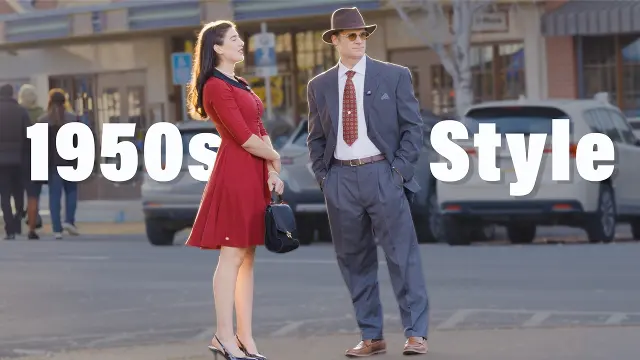
 What Happened When I Dressed Like a 1950s Man for a Week
#1950s Fashion
1 ideas
What Happened When I Dressed Like a 1950s Man for a Week
Get new #1950s Fashion ideas by email
Every Thursday: the week's best ideas, with the newest from #1950s Fashion.
Related tags
A Beginner's Guide to 1950s Fashion
The 1950s are remembered as a decade of deliberate dressing. After years of rationing and utility clothing, clothes became fuller, brighter and more openly decorative. Fashion moved away from the narrow, boyish lines of the wartime years and returned to a clearly defined waist, softer shoulders and a generous skirt. For many people it was the first time in a long while that clothing was simply allowed to be pleasurable.
The shape of the decade
The defining silhouette is easy to describe: shoulders that sit softly, a waist that is clearly marked, and hips that widen out below it. Dresses were often fitted to the waist and then flared into a full skirt, sometimes supported by layers of stiffened petticoats. Alongside this came the opposite extreme — the narrow pencil skirt and the close-fitting "wiggle" dress, which hugged the figure from waist to knee. Both versions relied on the same principle: a strong waistline.
Everyday wardrobes were built from separates. A shirtwaist dress worked for housework and for visiting; a cardigan over a slim knit top and a skirt made a practical outfit; cropped trousers, worn with flat shoes and a neat blouse, became a casual favourite. Tailored suits with short, boxy jackets gave women a smart option for town.
Read more
Menswear and the rise of the teenager
Men's clothing was restrained by comparison. Suits were cut fairly straight, with natural shoulders, and worn with a soft-collared shirt and a modest tie. Younger men pushed against that calm: in Britain, a flamboyant style with long draped jackets and narrow trousers appeared, while in America the college look — button-down shirts, sweaters, chinos — set a relaxed tone that outlasted the decade.
What truly changed was age. Young people began to dress for themselves rather than copying their parents, with denim, leather jackets and simple T-shirts becoming symbols of a separate youth culture.
Fabrics and the home sewing boom
Cotton, wool and rayon dominated. Sewing at home was extremely common, and commercial paper patterns let anyone reproduce a fashionable dress at home, adjusting it to her own measurements. Accessories did much of the work: gloves, a hat, a slim belt, a string of pearls or a bright scarf could transform an otherwise plain outfit.
Getting started today
If you want to wear the look, begin with the waist. Choose one garment that defines it — a belted dress, a high-waisted skirt, a fitted cardigan — and keep the rest simple. Pay attention to fabric: crisp cotton and firm wool hold a shape that flimsy modern jersey cannot. Look at sleeve length and hemline together; mid-calf skirts usually want a slightly shorter sleeve. Vintage pieces are worth examining closely for worn seams and faded colour, and original garments often run small, so measure rather than trust a label size.
Above all, the decade's charm lies in its care. Clothes were pressed, shoes were polished, and a small detail was always intended to be noticed.
#1950s Fashion: frequently asked questions
How do I start wearing 1950s fashion without looking like I'm in costume?
Start from the waist and build outward: pick one piece that marks it clearly, such as a belted dress, a high-waisted skirt or a fitted cardigan, and keep everything else plain. Sticking to crisp cotton, firm wool or a good rayon rather than soft stretchy jersey is what makes the silhouette read as deliberate instead of dressy-up.
Which 1950s silhouette should I choose?
There are really two directions: the fitted waist with a full, flared skirt, or the narrow pencil skirt and close-fitting wiggle dress. Both depend on a strong waistline, so try each and keep the one that feels easiest to move and sit in, since the decade's look only works when you can wear it comfortably.
What pieces do I actually need for a 1950s wardrobe?
Everyday dressing in the decade was built from separates, so a shirtwaist dress, a cardigan with a slim knit top and skirt, and cropped trousers with a neat blouse cover most occasions. A short boxy tailored jacket gives you a smarter option, and gloves, a hat, a slim belt, pearls or a bright scarf finish a plain outfit.
How should I care for vintage 1950s clothing?
Look closely at seams, underarms and colour before you buy, because worn stitching and fading are hard to undo. Original garments were cut for different measurements and often run small, so measure the piece against something that fits you rather than trusting the label size. Once it's yours, press it after wearing and polish the shoes you pair with it — the decade's charm came from that level of care.
What mistakes do people make when recreating this look?
The usual slip is ignoring proportion, especially pairing a mid-calf skirt with a long sleeve when a slightly shorter sleeve balances the length better. Another is choosing flimsy modern fabric that collapses where the shape should hold, and a third is over-accessorising instead of picking one detail meant to be noticed.
What kind of occasion suits a 1950s outfit?
A full-skirted dress with a petticoat underneath works well for parties, weddings and anything photographed, while a pencil skirt or shirtwaist dress is better for a working day or a lunch out. For casual plans, cropped trousers with flat shoes and a neat blouse capture the decade's relaxed side without feeling like dress-up.
Videos come from YouTube and posts from Instagram; titles and summaries are our own. All rights belong to their creators.