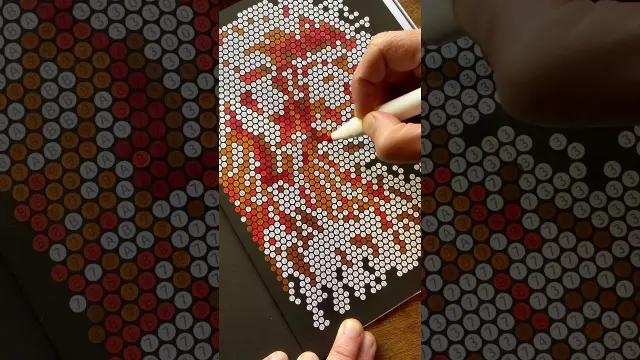
 Coloring a Black Paper Mystery Dot Grid Page
#Adult Coloring
2 ideas
Coloring a Black Paper Mystery Dot Grid Page
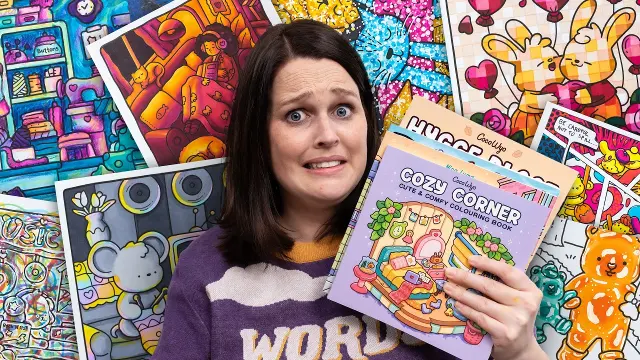 Trying Out Popular Adult Coloring Book Trends
Get new #Adult Coloring ideas by email
Every Thursday: the week's best ideas, with the newest from #Adult Coloring.
Related tags
Adult Colouring: A Beginner's Guide for Grown-Ups
Adult colouring is exactly what it sounds like: colouring books, pages and prints made for grown-ups rather than children. The drawings are usually more intricate than a child's picture — mandalas, botanical studies, animals, architecture, abstract patterns, even famous artworks redrawn as line work — and the point is not to finish quickly but to slow down. Many people pick it up as a way to unwind after work, others as a gentle creative habit that doesn't demand talent or training. You don't need to be good at drawing, because the drawing is already done.
Where it comes from
Line drawings made to be filled in with colour have been printed for a very long time, and patterned books aimed at adults are not a new idea. What changed is how widely the format spread: bookshops, stationery shops and supermarkets now all stock them, and the range of subjects has grown enormously. Alongside that, a whole culture of sharing finished pages grew up online — people photograph their work, post it, and encourage each other — which is why colouring has such a visible, sociable side for a hobby you do alone at a table.
The main kinds of page
Read more
- Mandalas and geometric patterns: repeating shapes that reward neat, even colouring.
- Nature and botanical pages: flowers, leaves, birds, forests.
- Animals: from realistic wildlife to decorative, patterned creatures.
- Architecture and city scenes: buildings, interiors, doors and windows.
- Fantasy and whimsical illustrations: gardens, creatures, imagined worlds.
- Quote and lettering pages: words to fill in and decorate.
- Black paper pages: printed on dark stock so light colours and metallics stand out.
Choosing your materials
Coloured pencils are the easiest starting point. They're clean, portable, easy to control and can be layered to build depth. Water-based markers give bold, flat colour but can bleed through thin paper, so place a spare sheet behind the page. Gel pens and metallic pens are lovely for small details and for dark paper. Crayons and pastels are less precise but forgiving on large areas. Whatever you choose, test it somewhere inconspicuous first, especially if the paper is thin.
Techniques worth learning
The difference between a flat page and a striking one usually comes down to two habits: shading and restraint. Instead of one solid colour per shape, try using two or three pencils of the same family — a light tone, a mid tone and a slightly darker one — and blend them where the shapes meet. Keep your pencil sharp for small areas and blunt for soft blending. Choosing a limited palette, perhaps three to five colours, often looks more harmonious than using everything in the box.
Practical tips for beginners
Work on a flat, well-lit surface and give yourself a comfortable chair; you may be sitting for a while. Start with a page that doesn't intimidate you rather than the most detailed one in the book. Colour in one direction to keep the texture even, rotate the page as you go, and don't rush the edges. If you make a choice you regret, most coloured pencil can be lifted slightly with an eraser, and few mistakes are visible once the surrounding area is filled in.
Above all, colouring is a practice rather than a performance. There's no wrong palette, no score to beat, and no deadline. Put on something to listen to, take your time, and let the page fill in.
#Adult Coloring: frequently asked questions
Do I need to know how to draw before I start adult coloring?
Not at all — the line work is already done for you, so your only job is deciding where the colour goes. Adult coloring is a practice in slowing down and choosing, not a test of drawing skill. People with no art background pick it up comfortably, and the pages themselves teach you what works as you go.
What should I buy to get started without overspending?
A single book or a few loose prints plus one set of coloured pencils will take you a long way. Pencils are clean, portable and easy to control, and they layer nicely if you want depth later. Add markers, gel pens or pastels only once you know which subjects and papers you actually enjoy working on.
Which kind of coloring page should I choose first?
Pick a subject you genuinely like looking at — flowers, animals, buildings, patterns — rather than the most intricate page on the shelf. Detailed mandalas and dense botanicals are rewarding but demanding, so a moderately open design is a kinder place to begin. You can always move to busier pages once your hand settles into the rhythm.
How do I make a finished page look less flat?
The usual trick is layering: instead of one solid colour per shape, build a light tone, a mid tone and a darker shade from the same colour family and blend them where the shapes meet. Keeping to a limited palette also helps, since a few harmonious colours usually read better than everything in the box at once. A sharp pencil for small areas and a blunt one for soft blending makes a real difference.
What are the common beginner mistakes with adult coloring?
Rushing the edges, filling every area with a different colour, and starting with an overwhelming page are the usual ones. Colouring in one direction keeps the texture even, and rotating the page as you work helps your hand stay comfortable. Most choices you regret can be softened with an eraser or hidden once the surrounding areas are filled in.
How should I look after my materials and finished pages?
Keep pencils sharpened and stored flat so the leads don't crack, and cap markers so they don't dry out. Slip a spare sheet behind a page when using markers on thin paper to stop colour bleeding through. Finished work is best kept flat or in a folder away from direct sunlight, which fades colour over time.
Videos come from YouTube and posts from Instagram; titles and summaries are our own. All rights belong to their creators.