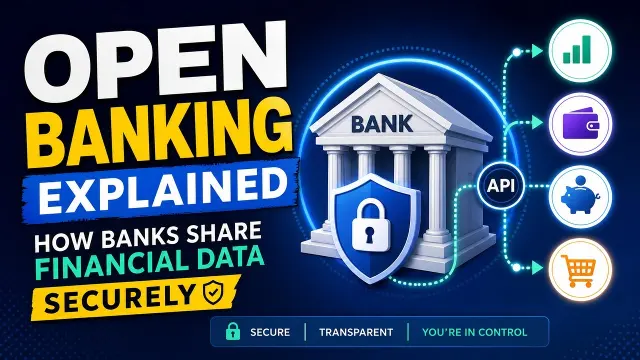
 How Open Banking Enables Secure Financial Data Sharing
#APIs
1 ideas
How Open Banking Enables Secure Financial Data Sharing
Get new #APIs ideas by email
Every Thursday: the week's best ideas, with the newest from #APIs.
Related tags
APIs: What They Are and How They Work
What an API is
An API, or application programming interface, is a way for different pieces of software to communicate with each other. You can think of it as a set of rules that lets one program ask another program for information or action without needing to know how the other one is built.
APIs are used everywhere in digital life. They help websites show maps, apps log you in, payment tools process purchases, and services share data in a controlled way. Instead of rebuilding everything from scratch, developers can use APIs to connect systems more efficiently.
Where APIs come from
Read more
The idea behind APIs has been part of computing for a long time. As software systems became more complex, there was a growing need for a standard way to connect them. APIs became the answer: they define what requests can be made, what data is returned, and how different programs should speak to each other.
Today, APIs are a basic part of modern software architecture. They are used in web services, mobile apps, cloud platforms, and many internal business systems.
What APIs are used for
APIs are useful whenever one system needs to access another system’s features or data. Common uses include:
- Showing content from another service inside an app or website
- Signing in with an existing account
- Sharing data between tools and platforms
- Automating tasks between systems
- Connecting front-end interfaces with back-end databases and services
For example, when a travel site shows a live flight status or a map inside a page, it often relies on an API to retrieve that information.
Common types and styles
There are different kinds of APIs, depending on how they are designed and used. Some are meant for public use, while others are private and only used inside a company.
You may also hear about different architectural styles, such as:
- REST APIs, which use standard web methods and are widely used
- SOAP APIs, which follow a stricter message structure
- GraphQL APIs, which let the client ask for specific data
- Internal APIs, used between services within one system
Each style has its own strengths. The best choice depends on the kind of data being shared, the complexity of the system, and how much control is needed.
What beginners should know
If you are new to APIs, it helps to understand a few basic ideas:
- An API usually has endpoints, which are specific addresses for requests
- A request asks for data or action
- A response sends back the result, often in a format a computer can read easily
- Authentication may be needed to prove who is making the request
- Good documentation is important because it explains how to use the API correctly
You do not need to be highly technical to understand the purpose of an API. At its core, it is simply a structured way for systems to interact.
Practical tips
If you are learning to use APIs, start small. Read the documentation carefully, test one request at a time, and pay attention to the data returned. It also helps to keep requests simple and to check for errors when something does not work as expected.
For anyone building with APIs, clarity and security matter. Keep access controlled, share only the data that is necessary, and make sure the interface is consistent and easy to understand. A well-designed API makes software easier to connect, maintain, and expand.
#APIs: frequently asked questions
How do I get started with APIs if I have never used one?
Start with something small and concrete: pick one service you already understand, read its documentation from beginning to end, and try a single request to see what comes back. Testing one endpoint at a time makes it much easier to notice what changed and why. The goal early on is understanding the rhythm of request and response, not building anything ambitious.
What do I actually need before I can start using an API?
At minimum you need the documentation, an endpoint address to send your request to, and whatever credentials the provider requires to identify you. A tool that lets you send requests and inspect the responses is genuinely useful, because seeing the raw data explains more than any tutorial. Reading how errors are reported before you hit one saves a lot of confusion.
Which kind of API should I choose for my project?
Let the shape of your data and how much control you need decide it rather than picking whatever is currently popular. Styles that let the client request exactly the fields it wants suit interfaces with varied needs, while stricter, more standardized styles suit systems where consistency and formal contracts matter most. If the API is only connecting parts of your own system, a simpler internal approach is often the right call.
Do I need to be a developer to use APIs?
Not to understand them. The core idea is just a set of agreed rules that lets one system ask another for information or perform an action, and that concept is easy to grasp without writing anything. Building with them is a different matter, but knowing what they do helps you follow how the software you use every day is put together.
What mistakes do people commonly make when working with APIs?
The most frequent ones are skipping the documentation, sending several untested changes at once, and ignoring the error responses that explain what went wrong. Another common slip is requesting more data or broader access than the task actually requires, which makes a system harder to secure and to maintain. Keeping requests simple and checking each result as you go avoids most of this.
How do I keep an API connection secure and well maintained?
Treat credentials as secrets, grant only the access that is genuinely needed, and share only the data the job requires. A consistent, clearly documented interface is also a security measure in practice, because people use it correctly instead of working around it. Reviewing what you have connected and removing anything no longer in use keeps the whole system easier to reason about.
Videos come from YouTube and posts from Instagram; titles and summaries are our own. All rights belong to their creators.