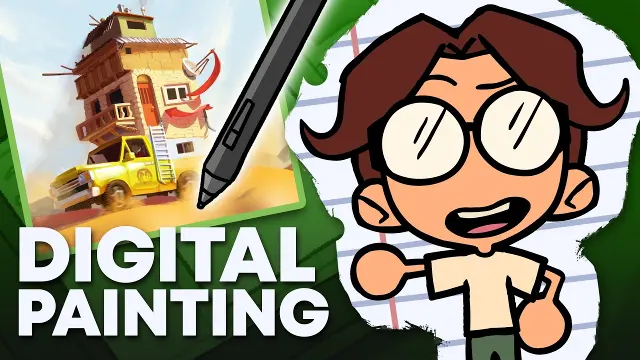
 Overview of Assignments from a Digital Painting Class
#Art Class
1 ideas
Overview of Assignments from a Digital Painting Class
Get new #Art Class ideas by email
Every Thursday: the week's best ideas, with the newest from #Art Class.
Related tags
Art Classes: A Beginner's Guide to Learning to Make Art
An art class is a structured setting where people learn to draw, paint, sculpt, print or make things with their hands. It can happen in a school studio, a community centre, a rented workshop or online, and it welcomes complete beginners as often as experienced makers. What sets it apart from simply making art alone is guidance: someone who can explain why a shape looks wrong, demonstrate a technique, and give you feedback on work you cannot judge objectively yet.
The tradition reaches back to the workshop systems of medieval and Renaissance Europe, where apprentices learned by copying and assisting masters, and to the academies that later formalised drawing from plaster casts and live models. Modern classes mix that inheritance with something looser, closer to the studio workshop where you experiment and learn by doing. Most courses sit somewhere between the two: some instruction, plenty of practice.
The main kinds of class
Drawing classes usually start with line, proportion and observational skills. Life drawing, working from a live model, is a traditional way to sharpen both eye and hand.
Read more
Painting classes divide by medium. Watercolour rewards planning and patience because it is hard to correct; acrylic dries quickly and forgives; oil allows slow blending and reworking over days.
Beyond those, you will find printmaking, ceramics and sculpture, textiles, calligraphy, illustration, and digital painting, where the same fundamentals of composition and light apply through a tablet and software.
Approaches to teaching
Some classes are technique-led: the tutor sets an exercise, you follow a method, and the goal is mastering a specific skill. Others are project-led, where you develop your own piece with guidance along the way. A third kind is exploratory, offering materials and prompts with little instruction, useful for loosening up but frustrating if you want clear direction. Knowing which you are signing up for matters more than the subject.
What beginners should know
Skill in art is largely learned, not innate. Expect the first attempts to look unlike what you imagined; that gap is the normal starting point, not evidence of a lack of talent.
Choose a class that matches your patience as well as your interest. A medium that frustrates you early may discourage you from continuing, so start with something forgiving if you are unsure.
Practical tips
Bring less than you think you need, and ask ahead whether materials are provided. Keep a sketchbook for class notes and quick studies. Ask specific questions rather than "is this good?" — a tutor can do much more with "does this shadow make sense?" Accept critique as information about the work, not about you. Finish pieces even when you have lost enthusiasm; the last third is usually where you learn the most. And keep your early work — it becomes the most useful measure of how far you have come.
#Art Class: frequently asked questions
How do I start an art class if I have never made art before?
Look for a beginner-level class that states it welcomes people with no experience, and pick a medium known for being forgiving, such as acrylic or drawing with pencil. Turn up with an open mind rather than a finished idea, since the first sessions are about learning to see and to handle tools. Being new is the normal starting point, not a disadvantage.
What do I actually need to bring to my first session?
Ask the tutor beforehand whether materials are supplied, because many studios provide paper, paint and brushes while others expect you to bring your own. Pack lighter than you think you need, and add a sketchbook for notes and quick studies. Anything missing can almost always be borrowed or bought nearby once you know what the class really uses.
Which kind of art class should I choose?
Decide first whether you want a technique-led class with set exercises, a project-led one where you build your own piece with guidance, or an exploratory session with loose prompts. Then match the subject to your temperament: watercolour demands planning and patience, acrylic dries fast and tolerates mistakes, and oil lets you rework slowly over several sessions. Choosing something that suits your patience matters more than choosing a fashionable medium.
How should I look after my finished work and my materials?
Keep drawings and paintings flat, dry and out of direct sunlight, and store brushes clean and reshaped after each session so they keep their point. Early pieces are worth keeping carefully, since they become the clearest record of how your hand and eye have developed. Ask your tutor about the specific needs of whichever medium you settle into, as care differs quite a bit between them.
Can an art class be a good gift or a shared outing?
Yes, a single workshop or a short course works well as a present or as something to do with a friend, since the shared making takes the pressure off and gives you something to talk about afterwards. Choose a subject the person is genuinely curious about rather than one that sounds impressive. Confirm what is included so the recipient does not arrive empty-handed.
What mistakes do beginners most often make?
The common ones are bringing far too many supplies, asking only whether a piece is good instead of asking a specific question about one part of it, and abandoning work the moment enthusiasm dips. Treat critique as information about the piece rather than a verdict on you, and finish what you start, because the final stretch is usually where the real learning happens.
Videos come from YouTube and posts from Instagram; titles and summaries are our own. All rights belong to their creators.