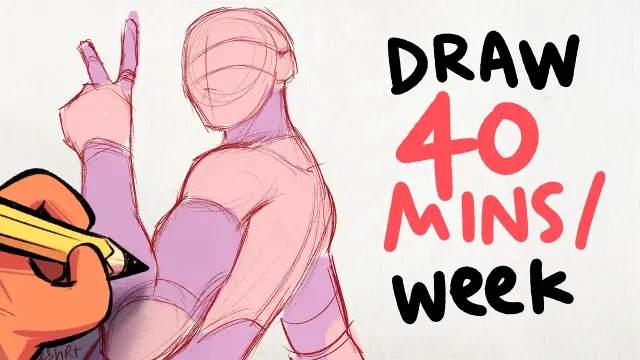
 A Simple 20 Minute Drawing Routine for Beginners
#Art Habit
1 ideas
A Simple 20 Minute Drawing Routine for Beginners
Get new #Art Habit ideas by email
Every Thursday: the week's best ideas, with the newest from #Art Habit.
Related tags
Art Habit: How to Build a Steady Creative Practice
An art habit is simply the practice of making something creative on a regular basis — a few minutes of sketching with your morning coffee, a page of a sketchbook before bed, a small watercolour each weekend. It is less about producing finished work than about showing up often enough that making things becomes a natural part of your days rather than a rare event that requires an occasion.
The idea borrows from wider habit-building: small, repeated actions attach themselves to existing routines and gradually stop requiring willpower. What makes an art habit distinct is that the reward is not a tidy outcome but the practice itself. Skill grows quietly in the background, and the real gain is a familiar, unpressured relationship with your own creativity.
Why frequency matters more than duration
Drawing is a physical skill as much as a visual one. Your hand learns through repetition, and short sessions spread across a week teach it more reliably than one long, exhausting effort. Twenty minutes several times a week will carry you further than a single afternoon a month, partly because you return to the work with fresh eyes and partly because the habit itself stays alive.
Read more
Common approaches
- Daily sketchbook: one page a day, undated and unjudged, kept purely for practice.
- Time-boxed sessions: a fixed short block, with a timer, so the commitment always feels finishable.
- Themed weeks: a subject or material you return to for several days, such as hands, plants or buildings.
- Challenge series: a structured run of prompts that gives you something to follow on days when choosing feels hard.
- Studio days: a longer, protected stretch for bigger projects, backed by shorter sessions in between.
What beginners should know
Start smaller than feels ambitious. A habit you can keep on a bad day is worth more than an impressive one you abandon. Keep your materials within reach — a pencil and a small book on the table will be used far more often than supplies packed in a cupboard. Let go of the idea that every page must be good; practice work is allowed to be awkward, and much of it will be.
It also helps to remove decisions. Choosing what to draw can consume more energy than drawing itself, so keep a running list of subjects or follow a set of prompts when your mind is blank.
Practical tips
- Attach the habit to something you already do, such as a commute, a lunch break or the minutes before sleep.
- Keep a small kit with you so waiting time becomes drawing time.
- Track your sessions loosely, for encouragement rather than for a streak you must not break.
- Missed a day? Resume the next one without making up for lost time.
- Look back at older work occasionally; it is the clearest evidence that the habit is working.
#Art Habit: frequently asked questions
How do I start an art habit when I barely have any spare time?
Begin with a session short enough that it still feels possible on a busy or tiring day, and tie it to something you already do, like a coffee break, a commute or the moment before sleep. A small commitment you actually keep builds far more than an ambitious one you drop after a week. Once the routine feels normal, you can let sessions stretch on their own.
What supplies do I really need to begin?
Very little — a pencil and a small sketchbook are enough to start, provided they stay within easy reach rather than packed away in a cupboard. A tiny portable kit is useful too, because it turns odd pockets of waiting time into drawing time. Fancy materials do not build the habit; accessibility does.
Which approach to an art habit should I choose?
Pick the one that matches the obstacle you actually struggle with: a plain sketchbook page if you need consistency, a timed block if starting is the hard part, or a themed set of prompts if deciding what to draw drains you. A longer protected session works well for bigger projects as long as shorter sessions keep the rhythm going in between. Whichever you choose, it should feel finishable.
How do I keep the habit going after missing a few days?
Simply pick it up again the next day instead of trying to catch up on what you skipped. Track your sessions loosely, as encouragement rather than a chain you are afraid to break. Looking back at older work now and then is a good reminder that the practice is quietly accumulating.
What mistakes do beginners usually make with an art habit?
The common ones are starting too big, keeping materials out of sight, and expecting every page to be good — practice work is allowed to look awkward. Another is burning energy on deciding what to draw, which is why a running list of subjects or a set of prompts helps. None of these are fatal; they just make the habit harder to sustain than it needs to be.
Does every session need to end in a finished piece?
No. The point of a regular practice is the showing up, not the output, and much of what you make is deliberately unfinished or unpolished. Skill builds in the background while you are simply getting used to spending time with your own creativity.
Videos come from YouTube and posts from Instagram; titles and summaries are our own. All rights belong to their creators.