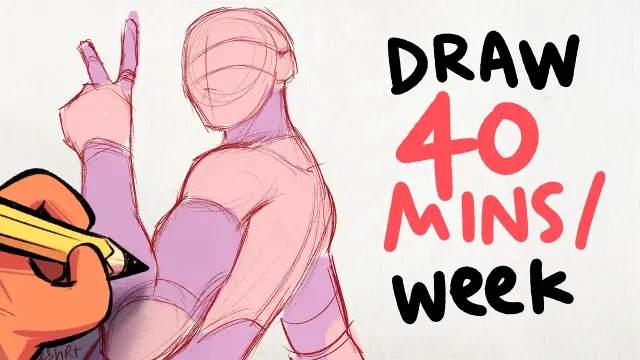
 A Simple 20 Minute Drawing Routine for Beginners
#Drawing Routine
1 ideas
A Simple 20 Minute Drawing Routine for Beginners
Get new #Drawing Routine ideas by email
Every Thursday: the week's best ideas, with the newest from #Drawing Routine.
Related tags
How to Build a Drawing Routine That Sticks
A drawing routine is a repeatable plan for when, where and what you draw. It is less about talent than about repetition: instead of waiting for inspiration or a free afternoon, you decide in advance that a certain part of your day belongs to drawing, and you show up for it. The point is not to produce a masterpiece every time. The point is to keep your hand moving and your eye looking often enough that drawing stops feeling like an event and starts feeling like a habit.
Regular practice has been at the heart of artistic training for centuries, from workshop apprenticeships to the sketchbook habit that artists have kept for their own eyes only. What has changed is who does it. Drawing is no longer reserved for people training for a profession, and the routine has become a tool for anyone who wants to improve, unwind or simply look at the world more closely.
The main kinds of routine
- The daily sketch. A small, fixed amount of drawing every day, often fifteen to thirty minutes. Consistency matters more than length.
- The timed session. You set a clock and draw until it rings, which removes the temptation to fiddle and stop early.
- The warm-up drill. A few minutes of lines, circles, boxes or quick gesture sketches before the real work, the way a musician plays scales.
- The project routine. A routine built around one longer goal, such as filling a sketchbook or studying a single subject over several weeks.
- The weekly deep session. Short sessions during the week, plus one longer sitting when you have more time and attention.
Read more
What beginners should know
Start smaller than you think you need to. Ten minutes you actually do beats an hour you keep postponing. Keep your materials where you can reach them without a search: a pencil, a small sketchbook and something to lean on are enough to begin.
Decide what you will draw before you sit down. Choosing a subject and then drawing it is one task; choosing a subject while drawing is two, and the second one is where routines fall apart. Keep a short list of things you want to study, and pick from it.
Practical tips
- Anchor the routine to something you already do, such as a morning coffee or the last half hour before bed.
- Keep a spare sketchbook and pencil in your bag so waiting time becomes drawing time.
- Draw the same object or view several days running and notice how much more you see each time.
- Separate practice from finished work. If every page must be good, you will stop filling pages.
- Judge the routine by whether you kept it, not by whether you liked the results.
- Miss a day without turning it into a decision to quit, and pick it up at the next session.
A routine is a support, not a rule. Adjust the length, the time of day and the subject until it fits the life you actually have, and it will keep carrying you for years.
#Drawing Routine: frequently asked questions
How do I start a drawing routine when I barely have free time?
Begin with a block of drawing time so short it feels almost too easy, and attach it to something already fixed in your day, like your morning coffee or the last few minutes before bed. Doing a little consistently beats planning a long session you keep postponing, so let the routine grow only once the small version has become automatic.
What do I actually need to begin drawing regularly?
A pencil, a small sketchbook and something flat to lean on are enough to get going, and the real requirement is that they stay within arm's reach rather than packed away. Keep a spare set in your bag so waiting time turns into drawing time instead of scrolling time.
Which type of drawing routine should I choose?
Pick based on what usually derails you: a timed session helps if you tend to fiddle and stop early, a warm-up drill helps if you feel stiff when you sit down, and a longer weekly sitting suits people whose weekday attention is fragmented. If you like having a goal, build the routine around one subject or one sketchbook rather than around a daily quota.
How do I keep the routine going when I miss days or lose motivation?
Treat a missed session as a gap rather than a decision, and simply resume at the next one instead of restarting the whole plan. Judge yourself on whether you showed up, not on whether you liked the page, and adjust the length or time of day until it fits the life you actually have.
What should I draw during a routine so I don't freeze up?
Decide the subject before you sit down, keeping a short list of things you want to study and picking from it, because choosing and drawing at the same time is where routines collapse. Drawing the same object or view several days running is a good fallback, since you notice more each time and spend less energy deciding.
What mistakes make a drawing routine fall apart?
The usual culprits are starting too big, needing every page to be good, and having to hunt for materials before you can begin. Separating practice from finished work matters most, because if each drawing has to succeed you will stop filling pages.
Videos come from YouTube and posts from Instagram; titles and summaries are our own. All rights belong to their creators.