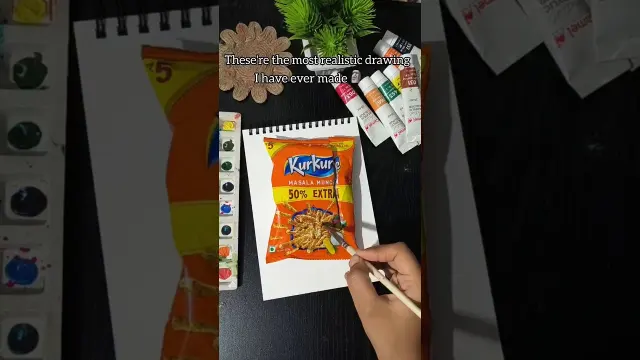
 Hyperrealistic Drawings That Look Just Like Real Objects
#Art Illusion
1 ideas
Hyperrealistic Drawings That Look Just Like Real Objects
Get new #Art Illusion ideas by email
Every Thursday: the week's best ideas, with the newest from #Art Illusion.
Related tags
Art Illusion and Trompe L’oeil
What illusion art is
Illusion art is artwork that plays with how you see. Its goal is to make a flat surface, a simple shape, or an ordinary image seem deeper, stranger, or more real than it is. Sometimes it creates a convincing sense of three-dimensional space. Sometimes it makes objects appear to float, move, bend, or disappear. The effect can be subtle or dramatic, but it always depends on the viewer’s eye being gently fooled.
This kind of art has a long history. Artists have used illusion for centuries in painting, decoration, architecture, and drawing. One of the best-known forms is trompe l’oeil, a French term that means “deceive the eye.” In that tradition, artists paint objects so realistically that they seem to exist in the physical world rather than on a wall or canvas.
Common kinds of illusion art
Read more
Illusion art can take many forms:
- Trompe l’oeil, which imitates real objects, surfaces, or architectural details
- Hyperrealistic drawing and painting, which aim for extremely detailed realism
- Optical illusion art, which uses patterns, perspective, and contrast to create visual tricks
- Anamorphic art, which appears distorted until viewed from a certain angle
- Forced perspective, which makes objects seem larger, smaller, closer, or farther away than they are
Each style uses the same basic idea: the artist guides your perception so you do not see the image in the usual way.
How it works
Most illusion art depends on a few visual tools. Perspective helps create depth. Shadows and highlights suggest form. Sharp edges can make a surface seem solid, while soft transitions can make it look rounded or distant. Careful color choices also matter, because slight shifts in tone can make an object appear to recede or come forward.
In realistic illusion work, texture is especially important. A glossy surface, a crumpled paper edge, a reflective metal bowl, or a transparent glass can all be suggested through small changes in value and detail. The closer the artist pays attention to light, proportion, and placement, the stronger the illusion becomes.
What beginners should know
If you are starting out, begin with simple objects. A spoon, an apple, a folded cloth, or a box can teach you a lot about shape and shadow. Try to observe real objects carefully before drawing them. Look at where the light hits, where the darkest shadows fall, and how edges change from one side to another.
A few practical tips can help:
- Use a clear light source so shadows make sense
- Work slowly and build detail in layers
- Compare proportions often
- Step back regularly to check whether the illusion still reads from a distance
- Keep the background simple when you want the object to stand out
Why people love it
Illusion art is compelling because it invites a second look. It rewards close attention and can turn an ordinary surface into something surprising. Whether it is highly realistic or playfully deceptive, this kind of art reminds you that seeing is not always as simple as it seems.
#Art Illusion: frequently asked questions
How do I start with illusion art if I've never drawn before?
Start with a single ordinary object rather than a complicated scene — a spoon, an apple, or a small box gives you plenty to study. Spend time looking before you draw: notice where the light lands, where the shadow deepens, and how the edges shift. Building up detail in layers and stepping back often will teach you more than trying to finish something quickly.
What supplies do I actually need to make illusion art?
You need very little to begin — paper, a pencil, and an eraser are enough to explore shape and shadow. A single clear light source helps enormously, because consistent shadows are what make a flat drawing read as solid. As you grow more comfortable you can add softer pencils, blending tools, or color for tone and depth.
Which kind of illusion art should a beginner choose?
Realistic drawing of everyday objects is usually the friendliest way in, since you can check your work against the real thing in front of you. Trompe l'oeil and hyperrealism build on those same observation skills, while anamorphic work and forced perspective ask for more planning and are easier once the basics feel natural. Pick the style whose final effect excites you most, and let that pull you through the practice.
Does illusion art need any special care or framing?
Treat it like any fine drawing: keep it out of strong direct sunlight and away from damp, since light fades tone and moisture warps paper. Handle the surface by the edges where you can, and store work flat between sheets so smudging and creasing stay minimal. If you display it, glass or a frame with a mat keeps dust off and protects the delicate shading.
What are good ideas for a gift or a wall piece built around an illusion?
Objects with familiar textures work beautifully — a draped cloth, a glass, a stack of folded paper, or a corner of a room that seems to continue past the frame. Something personal to the person receiving it, drawn as if it were real, tends to land better than a showy trick. Small pieces on a shelf or beside a doorway make the second glance happen naturally.
What mistakes do people make most often when trying illusion art?
The usual culprit is inconsistent lighting — shadows falling in different directions instantly break the effect. Rushing the detail is another, because realism comes from patient layering rather than heavy marks. And forgetting to step back is common; an illusion can look convincing up close and fall apart at viewing distance, so check it from where it will actually be seen.
Videos come from YouTube and posts from Instagram; titles and summaries are our own. All rights belong to their creators.