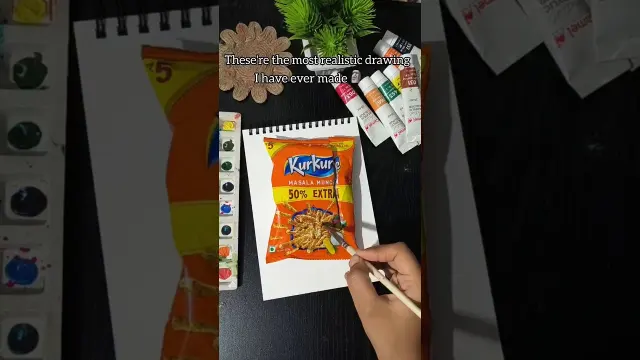
 Hyperrealistic Drawings That Look Just Like Real Objects
#Hyperrealism
1 ideas
Hyperrealistic Drawings That Look Just Like Real Objects
Get new #Hyperrealism ideas by email
Every Thursday: the week's best ideas, with the newest from #Hyperrealism.
Related tags
Hyperrealism: Art That Mirrors Reality
What hyperrealism is
Hyperrealism is an art style that aims to represent subjects with striking precision, often so closely that the result can be mistaken for a photograph or a real object. It appears in drawing, painting, sculpture, and mixed media. The goal is not just to copy what is seen, but to recreate texture, light, reflection, and detail with extraordinary care.
Although hyperrealism is often compared with realism, it usually goes a step further. Realism focuses on truthful representation, while hyperrealism heightens the visual effect by sharpening details, smoothing surfaces, and emphasizing tiny shifts in tone, shadow, and reflection. The result can feel both familiar and uncanny.
Where it comes from
Read more
Hyperrealism developed from realist traditions and from the influence of photography on art. As artists began to work from photographic references, they were able to study subjects in a new way: freezing fleeting expressions, fine surface details, and exact lighting conditions. Over time, this led to a style that values precision, patience, and technical control.
It is closely related to photorealism, though the two are not always identical. Photorealism often begins with a photograph as a direct source, while hyperrealism may also bring out emotional intensity, atmosphere, or heightened detail beyond the source image.
What makes it distinctive
Hyperrealist work often focuses on subjects that reward careful observation:
- Faces and eyes
- Skin, hair, and fabric textures
- Food, glass, metal, water, and reflective surfaces
- Everyday objects seen in unusual detail
The appeal comes from contrast: a familiar subject becomes almost astonishing when rendered with such exactness. In sculpture, hyperrealism can create lifelike figures with visible pores, wrinkles, or fabric folds. In painting and drawing, it may capture reflections, shadows, and surface sheen so precisely that the image seems to have depth of its own.
Techniques and approaches
Hyperrealism usually depends on close observation and slow, layered work. Artists may use:
- Careful sketching or underdrawing to map proportions
- Layering to build tone gradually
- Blending and smoothing to avoid obvious marks
- Fine tools for tiny details and crisp edges
- Strong attention to light, reflection, and contrast
A common mistake for beginners is to rush into details too early. It helps to establish the larger shapes, values, and composition first. If the underlying structure is wrong, even perfect details will not create a convincing result. Start broad, then refine.
What beginners should know
If you want to try hyperrealism, patience matters more than speed. Choose clear reference images with strong lighting and visible detail. Work in stages, checking proportions often. Keep your edges varied: not everything should be equally sharp, or the image can look flat.
It also helps to practice one texture at a time. A smooth surface like glass requires different handling from hair, skin, or fabric. Studying these separately can build confidence before you combine them in one finished piece.
Hyperrealism is demanding, but it rewards close looking. It teaches you to notice how light falls, how surfaces change, and how much beauty exists in ordinary things.
#Hyperrealism: frequently asked questions
What is the easiest subject to start hyperrealism with?
Begin with something small, matte, and clearly lit, such as a single piece of fruit or a folded cloth, because soft surfaces forgive minor errors in blending. Shiny materials like glass or metal demand confident handling of reflections, so save them until you feel comfortable building tone gradually. Whatever you pick, choose a reference photo with crisp focus and one clear light direction.
What materials and tools do I need to try hyperrealism?
At its core you need a good reference image, paper or a surface suited to slow layered work, and a range of fine tools for small details and clean edges. Add blending tools and a soft brush for clearing dust, plus a light source you can rely on so your values stay consistent. You do not need an expensive kit to begin; control and patience matter far more than the equipment.
Should I work from a photograph or from life?
A photograph is the more practical starting point because it freezes lighting, expression, and detail so you can study them at length. Working from life trains your eye differently, but true hyperrealists usually rely on references and then heighten the detail and atmosphere beyond what the image shows. Try both and notice which teaches you more about how light behaves.
Why do my hyperrealist pieces look flat even though I added lots of detail?
The usual cause is rushing into details before the larger shapes, proportions, and values are settled, which means the structure underneath cannot support them. Resist the urge to make every edge equally sharp; varying softness and sharpness is what creates a sense of depth. Step back often and check your reference at a reduced size to see whether the big shapes still read correctly.
How do I handle different textures without getting overwhelmed?
Practice one textur…attempting skin, hair, fabric, and glass all in the same piece. Each material demands its own rhythm of layering and blending, and studying them separately builds confidence you can later combine. Keep the reference close and study how light moves across the surface before you commit to marks.
Is hyperrealism the same as photorealism?
They are closely related, but photorealism tends to treat a photograph as the direct source and reproduce it faithfully. Hyperrealism often goes further, pushing detail, mood, and atmosphere past what the source image contains, so the finished work can feel more intense than the reference. Think of hyperrealism as widening the gap between the visible world and the image.
Videos come from YouTube and posts from Instagram; titles and summaries are our own. All rights belong to their creators.