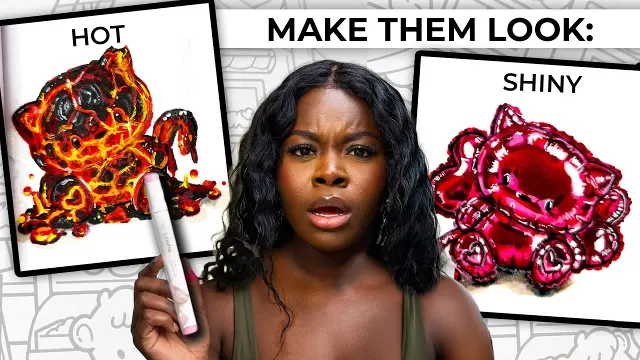
 Testing Advanced and Challenging Coloring Techniques
#Art Techniques
1 ideas
Testing Advanced and Challenging Coloring Techniques
Get new #Art Techniques ideas by email
Every Thursday: the week's best ideas, with the newest from #Art Techniques.
Related tags
Art Techniques: A Guide to Creative Methods
Art techniques are the methods artists use to make images, build surfaces, and express ideas. They include everything from drawing and painting to collage, printmaking, sculpture, and mixed media. Some techniques focus on control and precision, while others invite looseness, texture, and chance. Whatever the medium, technique is the way you turn an idea into a finished work.
What art techniques are
At the simplest level, a technique is a set of skills or procedures used to create art. In drawing, that might mean hatching, shading, or blending. In painting, it could mean layering, glazing, or wet-on-wet application. In three-dimensional work, techniques include carving, modeling, building, or assembling materials. Many artists combine several methods in one piece.
Art techniques have developed over a long history, shaped by available materials, cultural traditions, and personal experimentation. Some are highly traditional, while others come from artists mixing materials in new ways. Learning techniques gives you a foundation, but it also helps you understand when to follow rules and when to break them.
Read more
Main kinds of techniques
Drawing techniques are often the starting point for beginners. These include line drawing, contour drawing, shading, cross-hatching, stippling, and gesture drawing. They help you study shape, light, and movement.
Painting techniques vary by medium. With watercolor, artists often use washes, layering, and lifting. With acrylic or oil paint, techniques may include blending, dry brushing, impasto, glazing, and scumbling. Each paint behaves differently, so the same method can create a very different result depending on the material.
Printmaking techniques make repeated images from a carved, etched, or prepared surface. Common forms include relief printing, monotype, screen printing, and block printing. These methods are useful for bold shapes, pattern, and strong contrast.
Mixed media combines materials such as paint, paper, fabric, ink, pastels, or found objects. This approach is especially good if you like experimenting with texture and layering.
What beginners should know
If you are just starting out, focus on learning a few techniques well instead of trying everything at once. Practice the same method on simple shapes before moving on to complex subjects. That helps you see how the materials behave and gives you more control.
It also helps to keep a sketchbook or sample sheet. Test marks, brushes, tools, and surfaces there before using them in a finished piece. Many techniques look different on rough paper, smooth paper, canvas, or board, so small tests can save frustration.
Practical tips
Start with basic tools and simple exercises. Watch how pressure, speed, and water or paint load affect the result. Try to notice whether a technique creates sharp edges, soft transitions, texture, or depth.
Do not expect every method to suit every subject. A technique that works beautifully for atmosphere may not be ideal for detail. Part of becoming an artist is learning which approach supports your idea best.
Most importantly, give yourself room to experiment. Technique is not only about accuracy; it is also about discovering your own visual language.
#Art Techniques: frequently asked questions
How do I start learning art techniques if I've never made art before?
Pick one medium and a small handful of methods within it, then practice those on simple shapes before tackling complex subjects. Drawing skills such as line, shading and gesture translate to almost every other medium, so they are a sensible place to begin. Repetition on easy forms teaches you how the materials behave and builds control faster than jumping between many techniques.
What supplies do I actually need to practice art techniques?
Basic tools are enough to start: a few drawing tools, some paint or ink if you are working in colour, and a surface to work on. A sketchbook or loose sample sheets matter more than fancy equipment, because testing marks and surfaces there saves you from ruining a finished piece. Add specialized tools only once you know which technique you want to pursue.
How do I choose which art technique to focus on?
Think about what you want the work to do — precise detail, loose atmosphere, bold pattern, or layered texture — and pick the method that supports that goal. Try a short test of two or three candidates on scrap material and notice which one you enjoy controlling and which results you like looking at. A technique that suits an expressive subject may be poor for fine detail, so match the method to the idea rather than to fashion.
Do different art techniques need different care or storage?
Yes — surfaces and materials behave differently over time, so store work flat and dry, away from damp and direct light, and let paint or ink cure fully before stacking anything. Tools need attention too: brushes last much longer when cleaned promptly and dried bristle-up, and printmaking or carving tools stay sharp and safe when kept clean and covered. Small habits like these protect both your equipment and the work you have already made.
What are common mistakes beginners make with art techniques?
The biggest ones are trying too many methods at once, skipping test marks, and expecting one technique to handle every subject. Another frequent slip is judging a method by a single attempt on the wrong paper, canvas or board, when the surface was the real problem. Slow down, test first, and treat uneven results as information about the material rather than a verdict on your ability.
Can I combine several art techniques in one piece?
Absolutely — mixed media deliberately layers paint, paper, ink, fabric or found objects, and many artists move between drawing, painting and printmaking within a single work. The key is knowing what each layer does for the image, and letting earlier layers dry or set so they stay stable under the next. Combining methods is where a lot of personal style develops.
Videos come from YouTube and posts from Instagram; titles and summaries are our own. All rights belong to their creators.