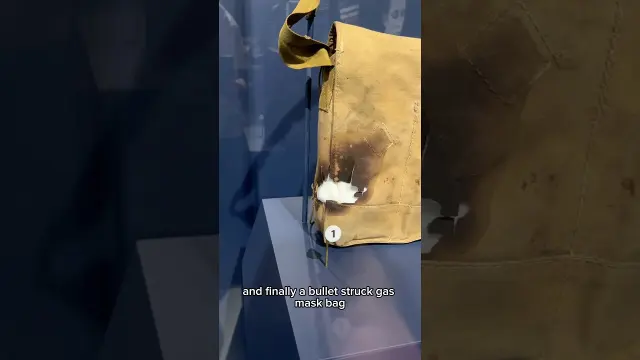
 My Favorite Artifacts from the National Museum of the Marine Corps
#Artifacts
1 ideas
My Favorite Artifacts from the National Museum of the Marine Corps
Get new #Artifacts ideas by email
Every Thursday: the week's best ideas, with the newest from #Artifacts.
Related tags
Artifacts: How Objects Carry the Human Story
An artifact is any object that people have made or deliberately altered. A shaped stone, a fired clay cup, a bent coin, a stitched sleeve, a carved beam — all of these are artifacts, and all of them are evidence. The word also has a looser everyday sense, meaning simply a thing of historical interest kept and displayed. Both uses point the same way: an artifact is matter that has been touched by human intention and survives as proof of it.
Archaeologists separate artifacts from two neighbours. Ecofacts are natural remains that people did not modify — seeds, bones, shells — yet they often say as much about a site as the objects do. Features are traces that cannot be lifted out intact, such as a hearth, a ditch, a posthole or a floor. Together these three make up most of what is recovered from a place where people once lived.
What Makes an Object Worth Studying
The single most important thing about an artifact is not its beauty but its context: where it lay, what surrounded it, how deep it was buried, what it was found beside. An object torn from its setting loses much of its meaning, which is why careful recording matters more than the object itself. A plain potsherd with a known position in a stratified deposit can teach more than a spectacular piece bought from a dealer.
Read more
How Specialists Read Objects
Analysis tends to move through several questions. What is it made of, and where did that material come from? How was it shaped, and with what tools? Was it used, worn, repaired, reused? Typology groups similar objects so that forms can be compared and dated relatively. Laboratory methods — examining microscopic wear, residues, and the composition of materials — extend what the eye alone can tell.
The Main Kinds
- Stone tools, the oldest and most durable traces of human craftsmanship.
- Ceramics, whose styles and fabrics change enough to be useful for dating.
- Metalwork, from tools and weapons to fittings and jewellery.
- Objects of bone, antler and shell, often small and easily overlooked.
- Textiles, leather and wood, which survive only in unusual conditions.
- Personal and ornamental items: beads, pins, rings, buttons, amulets.
- Inscribed material — coins, seals, tablets, gravestones — which can carry names and words.
Beginning to Look
Start with museum collections and their catalogues, and get into the habit of reading labels closely: material, place, period, function. Compare objects rather than admiring them one by one; patterns emerge quickly. If you find something yourself, resist the urge to clean or rub it, note exactly where it lay, and report it to the relevant heritage authority rather than digging further. Disturbing a site destroys information that cannot be recovered.
Caring for Old Objects
Handle with clean hands, and gloves for metals and textiles. Keep pieces away from direct sun, damp, and sharp swings in temperature. Store them supported rather than compressed, avoid household adhesives and tape, and photograph anything fragile before you move it. Where an object matters, ask a conservator before intervening.
What artifacts offer is not just rarity but proximity: the wear on a handle, the mend in a bowl, the small error in a casting. Ordinary things usually tell us more about how people actually lived than precious ones do.
#Artifacts: frequently asked questions
What exactly counts as an artifact?
An artifact is anything people made or deliberately changed, from a chipped stone tool to a stitched sleeve or a carved beam. The defining point is human intention: the object survives as evidence that someone shaped, used or altered it. Natural remains that people never touched, like seeds or shells, sit in a separate category, even though they tell us plenty about a site.
How do I start learning about artifacts if I have no background in it?
Begin with museum collections and their online catalogues, and read the labels closely rather than drifting past the objects. Look for material, place, period and function, then compare pieces side by side instead of admiring them one at a time, because patterns show up fast that way. If you come across something yourself, leave it where it lies, note the exact spot, and tell the local heritage authority rather than digging.
Which kinds of artifacts should I focus on first?
Pick whatever medium keeps your attention, since the skills of looking transfer between them. Stone tools and ceramics are the most durable and the easiest to study through museum collections, while metalwork, bone, shell, textiles, leather and wood either survive less often or need more specialist care. Inscribed pieces such as coins and seals are worth extra attention because they can carry words and names.
How should I care for an old object I already own?
Handle it with clean hands, and use gloves for metals and textiles, then store it supported rather than squashed in a box. Keep it out of direct sun, away from damp and away from sharp swings in temperature, and never reach for household adhesives or tape to hold a break together. Photograph anything fragile before you move it, and if the piece genuinely matters to you, ask a conservator before doing anything.
What are the common mistakes beginners make?
The big one is prizing an object for its looks while ignoring its context, because where it lay and what sat beside it carry much of the meaning. Cleaning, rubbing or digging further destroys information that cannot be recovered, and an object stripped from its setting loses most of what it could teach. Buying a showy piece with no recorded origin is a related trap: a plain fragment with a known position often says more.
How can I display or share a small collection at home?
Keep the display simple and stable, away from windows and radiators, with each piece resting on a soft support rather than hanging from a fixing. Label what you show with whatever you genuinely know about material and origin, and keep those notes separate from the objects so nothing is written on the pieces themselves. Rotate items out of the light periodically, and photograph the collection as a record you can consult without handling anything.
Videos come from YouTube and posts from Instagram; titles and summaries are our own. All rights belong to their creators.