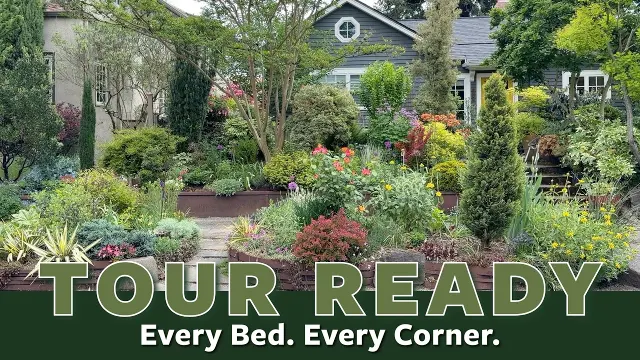
 Full Property Garden Tour in Portland, Oregon Zone 8b
#Backyard Tour
1 ideas
Full Property Garden Tour in Portland, Oregon Zone 8b
Get new #Backyard Tour ideas by email
Every Thursday: the week's best ideas, with the newest from #Backyard Tour.
Related tags
Backyard Tour: Ideas for Planning and Sharing a Garden Walkthrough
A backyard tour is exactly what it sounds like: a guided walk through someone's private outdoor space, either in person with friends, neighbours or a garden club, or recorded and shared online so anyone can follow along. It sits somewhere between a garden visit and a design lesson. The point is not a perfect showpiece but a real space, with its compromises, its experiments and its work in progress.
Where the idea comes from
Open garden schemes, allotment walks and neighbourhood garden weekends have long given people a reason to step past the hedge and see how others handle the same patch of ground. Video changed the scale. Once a phone could film a slow walk down a path, backyard tours became a format of their own, and gardeners began documenting their plots season by season rather than only at their peak.
What a good tour shows
Read more
The most useful tours are structured, not random. A walk usually opens with a wide view of the whole space so the viewer understands the shape and the boundaries, then narrows into smaller areas: a border, a vegetable bed, a seating corner, a shed, a difficult strip of shade. Along the way the host explains decisions as much as plants. Why this tree sits here. What the soil is like. What was tried and abandoned.
Good tours also show the unglamorous parts. Paths, edges, storage, watering, compost. These are the details people actually want, because they are the parts that solve problems in their own garden.
Kinds of tour
Tours differ in purpose. Some are ornamental, focused on planting combinations and colour. Others are practical, built around growing food or managing a small space. Some are seasonal, following the same garden through the year. Some are honest case studies of a garden being made, filmed in stages and with mistakes left in. Choose the approach that matches what you actually have.
If you are planning one
- Walk your garden first and decide the route. A tour needs a beginning and an end.
- Pick a calm, evenly lit time of day rather than full midday sun.
- Film or walk slowly, pausing at each area instead of sweeping past.
- Say what you are doing and why, not only what the plant is called.
- Mention the conditions: light, soil, climate, the space you are working with.
- Leave out identifying details of your home if you are sharing publicly.
Beginners often assume a good tour requires a mature, finished garden. It does not. A young plot, a rented yard, a narrow city strip or a container collection can be more instructive than an established one, because the audience can still see how it is done.
Watching with purpose
When you follow someone else's tour, watch how they handle the awkward corners and the limits of their site. Copy the thinking rather than the planting list. What grows in one climate may sulk in another, and a layout that suits a long narrow plot rarely fits a square one. Take the principles and leave the specifics.
#Backyard Tour: frequently asked questions
How do I get started planning a backyard tour?
Walk your own space first and mark out a route with a clear beginning and an end, so visitors are not left wandering. Pick a calm, evenly lit part of the day, then decide what each stop is meant to show. Practising the walk once out loud is the quickest way to find the parts that need explaining.
What should I actually show on a backyard tour?
Open with a wide view so people understand the shape and boundaries of the space, then move into smaller areas one at a time. Explain your decisions as much as your plants — why something sits where it does, what the soil and light are like, what you tried and gave up on. Include the unglamorous parts too, like paths, edges, storage and compost, because those are what solve problems in other people's gardens.
Which kind of backyard tour should I choose?
It depends on what your garden actually is rather than what you wish it were. An ornamental garden suits a tour built around planting combinations, a productive one suits a tour about growing food, and a space still being made suits an honest, staged case study. Seasonal tours that follow the same garden through the year are another option if you want to show change over time.
Is a backyard tour only worth doing once the garden is finished?
No — assuming a tour needs a mature, polished garden is one of the most common misconceptions. A young plot, a rented yard, a narrow strip or a collection of containers can teach more than an established garden, because viewers can still see how it is being done. Mistakes and unfinished corners are part of what makes a tour useful.
What mistakes do people make when giving or following a backyard tour?
Hosts often sweep past areas too quickly and name plants without explaining the thinking behind them, which leaves the audience with a shopping list instead of an idea. When watching someone else's tour, the trap is copying the planting rather than the reasoning — a plant that thrives in one climate may struggle in another, and a layout for a long narrow plot rarely fits a square one. Take the principles and leave the specifics.
What occasion suits a backyard tour?
Neighbourhood garden weekends, garden club visits and allotment walks have long given people a reason to look over the hedge at how someone else handles the same patch of ground. For a smaller gathering, a simple open afternoon with friends or neighbours works just as well. If you would rather not host, filming a slow walk and sharing it online lets people follow along at their own pace.
Videos come from YouTube and posts from Instagram; titles and summaries are our own. All rights belong to their creators.