 Introduction to Natural Numbers and Integers in Basic Mathematics
#Basic Arithmetic
6 ideas
Introduction to Natural Numbers and Integers in Basic Mathematics
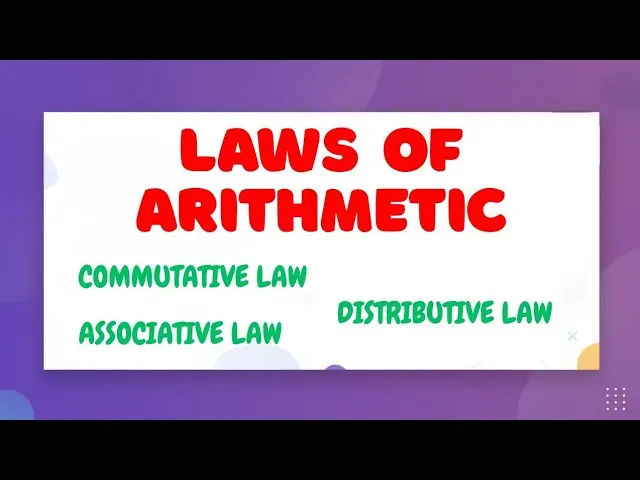 Understanding the Three Core Laws of Basic Arithmetic Operations
 O Level and IGCSE Arithmetic Syllabus Coverage of Fractions and Decimals
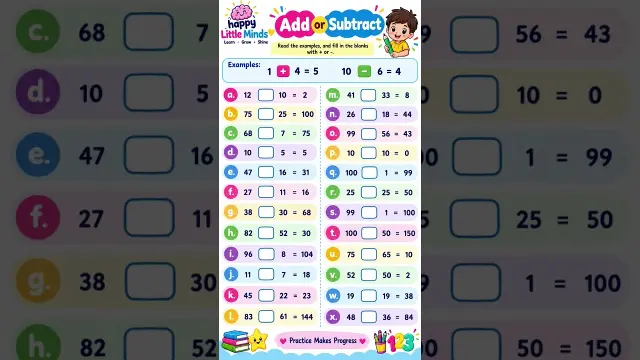 Fun Mathematical Practice Sessions for Young Children
 Comprehensive Basic Arithmetic One Shot Lecture for Test Preparation
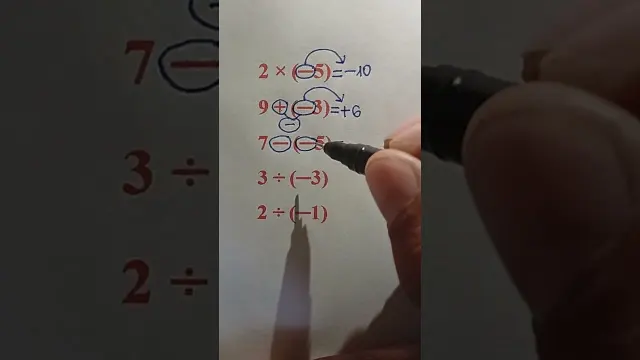 Step-by-Step Guide to Positive and Negative Numbers in Arithmetic
Get new #Basic Arithmetic ideas by email
Every Thursday: the week's best ideas, with the newest from #Basic Arithmetic.
Related tags
Basic Arithmetic: The Foundations of Math
What basic arithmetic is
Basic arithmetic is the part of mathematics that deals with numbers and the simplest calculations. It includes counting, comparing, adding, subtracting, multiplying, and dividing. These skills form the base for almost everything else in math, from measuring ingredients to understanding money, time, and everyday problem-solving.
Arithmetic has been used in some form for thousands of years, because people have always needed a way to count goods, share fairly, measure amounts, and keep records. Today, it remains one of the most useful kinds of math because it helps you make quick, practical sense of the world.
The four main operations
Read more
The core of basic arithmetic is often described as the four operations:
- Addition combines amounts.
- Subtraction finds the difference or removes part of a total.
- Multiplication is repeated addition or scaling up a number.
- Division splits a total into equal parts or shows how many groups fit into a set.
These operations are closely linked. If you understand one well, the others become easier to learn. For example, multiplication and division are related, just as addition and subtraction are related.
Number sense and simple methods
Before calculations feel natural, it helps to build number sense. This means understanding how numbers work, not just memorizing answers. You begin to notice patterns, compare quantities, estimate results, and spot when an answer seems too large or too small.
Helpful methods include:
- Counting objects or steps out loud
- Using fingers, drawings, or small groups of items
- Breaking numbers into parts, such as 8 as 5 and 3
- Estimating first, then checking the exact answer
- Practicing facts regularly in small amounts
Working with real-life examples can also make arithmetic clearer. You might add prices, subtract time, divide food equally, or multiply quantities in a recipe. When numbers are connected to something familiar, they are often easier to understand.
What beginners should know
If you are just starting, focus on accuracy before speed. It is better to solve a problem carefully than to rush and repeat mistakes. Learn the meaning of each operation and the language that goes with it, such as sum, difference, product, and quotient.
A few useful habits are:
- Write numbers neatly and line them up carefully
- Read the problem slowly before calculating
- Check your answer by using the opposite operation when possible
- Practice a little at a time rather than all at once
It is also normal to make mistakes while learning. Arithmetic becomes easier with repetition, and confidence grows as you recognize patterns.
Everyday uses
Basic arithmetic appears in many ordinary situations. You use it when you count change, divide a snack, compare distances, keep track of time, or adjust a recipe. Even simple planning, like budgeting or estimating how long something will take, depends on these skills.
Once you feel comfortable with the basics, you have a strong foundation for fractions, decimals, percentages, and more advanced math.
Videos come from YouTube and posts from Instagram; titles and summaries are our own. All rights belong to their creators.