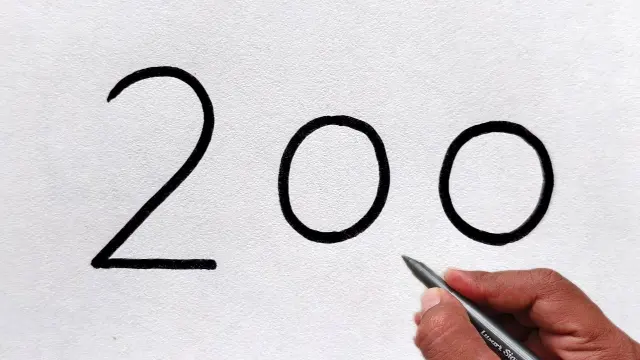
 Creative Number Art: Turning Number 200 Into a Parrot
#Bird Drawing
1 ideas
Creative Number Art: Turning Number 200 Into a Parrot
Get new #Bird Drawing ideas by email
Every Thursday: the week's best ideas, with the newest from #Bird Drawing.
Related tags
Bird Drawing Guide for Beginners
Bird drawing is the art of observing a bird’s shape, posture, and details and turning them into a clear image on paper. Birds have inspired drawing for centuries because they combine simple forms with endless variety: a round body, a small head, a beak, wings, tail feathers, legs, and feet, all arranged in ways that can look graceful, lively, or still. You can draw birds realistically, loosely, or in a decorative style, but the same basic principles help in every case.
Getting started with bird drawing
A good bird drawing usually begins with basic shapes. Try imagining the body as an oval or teardrop, the head as a circle, and the beak and tail as simple wedges or triangles. This keeps the proportions easier to manage before you add details. It also helps to think about the bird’s pose first. Is it perched, flying, standing, or turning its head? The pose gives the drawing its energy.
If you are a beginner, start with birds that have clear silhouettes, like a pigeon, sparrow, or robin. These are easier to simplify and study. Look closely at reference images or live birds if you can, but do not worry about copying every feather. Focus on the big shapes, then the smaller ones.
Read more
Understanding bird shapes
Birds vary a lot, but many share the same basic structure. The head usually sits close to the body, the neck may be short or barely visible, and the wings change shape depending on whether the bird is resting or in motion. The tail often helps balance the drawing and can be a useful guide for the overall direction of the body.
One of the most useful things to notice is the line of action: the main curve or angle that shows how the bird is moving or resting. A standing bird may have a vertical line of action, while a flying bird often has a strong horizontal one. This simple idea can make your drawing feel more natural.
Feathers, texture, and detail
Feathers can look complicated, but you do not need to draw each one individually. Group them into sections: head, chest, wing coverts, wing feathers, and tail. Use short directional marks to suggest texture rather than filling everything in. The direction of the marks matters more than the number of marks.
For a softer look, keep the edges gentle and avoid outlining every feather. For a more detailed drawing, vary the feather lengths and let some areas stay lighter and less defined. The beak and feet usually need cleaner, sharper lines because they help give the bird character.
Useful techniques and practice tips
Start with light sketch lines so you can adjust the proportions before committing. Drawing from simple shapes first makes it easier to correct mistakes. It also helps to practice different viewpoints: side view, front view, and three-quarter view. Each one teaches you something different about the bird’s form.
Try drawing the same bird several times in small sketches. This is often more helpful than trying to finish one perfect drawing. You can also practice by drawing birds in motion, such as stretching, preening, or taking off. These quick studies improve your sense of movement and balance.
Most of all, be patient with the process. Bird drawing improves as you learn to see shapes, spacing, and gesture. The more you observe, the more natural your birds will begin to look.
#Bird Drawing: frequently asked questions
How do I start a bird drawing if I have never drawn one before?
Begin by blocking in the big shapes before anything else: an oval or teardrop for the body, a circle for the head, and simple wedges for the beak and tail. Decide on the pose first, since a perched, flying, or turning bird carries a different energy, and sketch lightly so you can shift proportions as you go. Only once those shapes sit well together should you start adding feathers and detail.
Which kind of bird is easiest to draw as a beginner?
Pick a bird with a clear, simple silhouette, such as a pigeon, sparrow, or robin, because its form is easy to reduce to basic shapes. Watch how the head sits close to the body and how the tail balances the whole shape. Don't try to copy every feather from a reference; capture the large shapes first and work down to the smaller ones.
What supplies do I actually need for bird drawing?
A pencil that lets you sketch lightly and an eraser for adjusting proportions will take you a long way, and paper with a little tooth holds pencil marks nicely. If you want darker, sharper accents on the beak and feet, add a pen or a softer pencil for those crisp edges. Beyond that, a reference photo or a view of real birds matters more than fancy materials.
How do I draw feathers without it taking forever?
Treat the plumage as grouped sections — head, chest, wing coverts, flight feathers, tail — rather than individual feathers. Use short marks that follow the direction the feathers lie, because direction reads as texture far more than quantity does. Leave some areas soft and lightly defined, and save your cleanest, sharpest lines for the beak and feet, which give the bird its character.
What are the most common mistakes people make when drawing birds?
The usual culprits are outlining every feather, which flattens the bird, and rushing into detail before the underlying shapes and spacing are right. Losing the line of action is another common slip — that main curve or angle is what makes a bird look like it is resting or moving rather than stiff. Sketching the same bird several times in small studies fixes these habits faster than polishing one drawing.
Can I turn a number into a bird drawing for a fun project?
Yes — number art is a playful way to build a bird, since a numeral's curves and strokes can be adapted into a body, neck, and head with a beak and tail added on. It works best when you start from the numeral's existing shape and let the bird's proportions grow out of it rather than forcing the number into a fixed outline. It is a good exercise in seeing how simple forms can suggest a whole creature.
Videos come from YouTube and posts from Instagram; titles and summaries are our own. All rights belong to their creators.