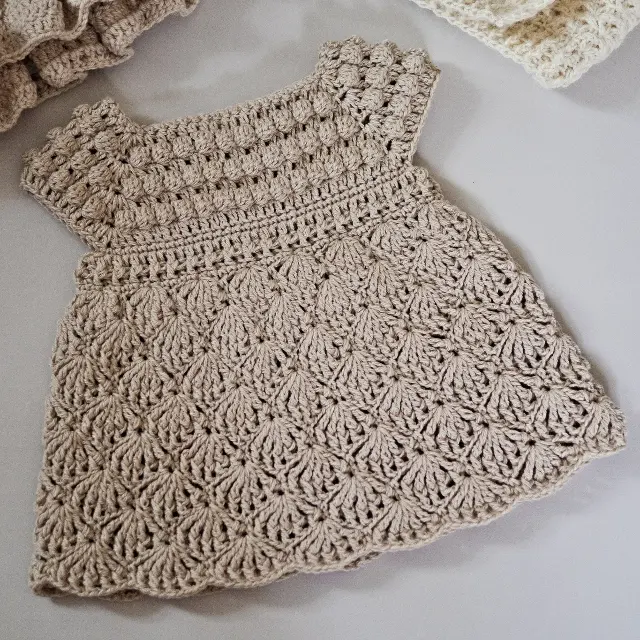
 Crochet Dress Pattern for Girls with Bobble Yoke and Flared Skirt
#Bobble Stitch
1 ideas
Crochet Dress Pattern for Girls with Bobble Yoke and Flared Skirt
Get new #Bobble Stitch ideas by email
Every Thursday: the week's best ideas, with the newest from #Bobble Stitch.
Related tags
Bobble Stitch Crochet: A Guide to Raised Texture
The bobble stitch is a crochet technique that turns a flat fabric into a field of small raised bumps. Each bobble is a tight cluster of tall stitches worked into a single stitch, then closed together at the top, so the excess yarn has nowhere to go but outward. The result is a dense little pillow of texture that stands proud of the surrounding rows and gives blankets, baby clothes and bags a soft, tactile surface.
How a bobble is made
Most bobbles are built from double crochet, though taller stitches give larger bumps. The usual method is to work several double crochets into the same stitch but stop before the final pull-through of each one, leaving the loops on the hook. When the last partial stitch is in place, one yarn over pulls through all the loops at once, closing the bundle. A single chain or stitch after it locks the bobble in position so it does not lean into its neighbour.
Bobbles are nearly always worked on the wrong side of the fabric. Because the closing loops sit on the back, the bump swells toward the front, and the right side stays smooth and rounded. If your bobbles look flat or sunken, the first thing to check is which side you were facing when you made them.
Read more
Bobble, popcorn, puff, cluster
These four are often confused, and the differences are small but real. A popcorn is a group of complete stitches joined only at the very top, which makes it rounder and looser. A puff stitch gathers long loops of yarn rather than finished stitches, giving a softer, squatter bump. A cluster joins partial stitches across two or more neighbouring stitches rather than crowding into one. None of them is difficult once you have made a few, and each has its own rhythm.
Choosing yarn and hook
Bobbles eat yarn. A single bobble can use several times the yarn of a normal stitch in the same space, so plan for more than a plain fabric of the same size would need. Smooth, well-twisted yarn shows the shape most clearly; heavy fuzz or halo blurs the outline. Work with a hook that gives you a firm fabric and keep your tension steady, because loose partial stitches produce sloppy, floppy bumps.
Practical tips for beginners
- Count carefully. Each bobble occupies the space of one stitch, and the chain that follows it is easy to lose.
- Place bobbles on a regular grid — every fourth stitch, every other row — until the spacing feels natural.
- Pull the closing loop snug, but not violently, or the bobble will pucker the fabric around it.
- Expect the back of the work to look messy. That is normal and not a mistake.
- Practise on a small swatch before committing to a large project, since bobble rows work up more slowly than plain ones.
Bobbles add weight and density, so they suit blankets, cushions, hats, yokes and trims better than garments that need drape. Start with a simple repeat of plain rows and bobble rows, and the texture will do the rest.
#Bobble Stitch: frequently asked questions
How do I make my first bobble stitch?
Work your bobble into a single stitch by making several tall stitches there but stopping before the last pull-through of each, so the loops stay on your hook. One final yarn over draws through all those loops at once, closing the bundle, and a short chain right after it holds the bobble upright. Practise the closing motion on a scrap swatch first, because that single pull is what gives the bump its shape.
What do I need to get started with bobble stitch?
You only need yarn, a hook matched to it, and a pattern that includes bobble rows. Choose a smooth, well-twisted yarn so the bumps read clearly, since fuzzy yarn blurs the outline, and buy more than a plain project of the same size would take because bobbles consume a lot of yarn. A hook that gives you a firm, steady fabric matters more than any special tool.
What is the difference between a bobble, a popcorn and a puff stitch?
A bobble gathers several partial tall stitches made into one stitch and closes them together at the top, giving a dense rounded bump. A popcorn joins complete stitches only at their very tops, so it sits rounder and looser, while a puff gathers long loops of yarn for a softer, squatter bump. They look similar from a distance but each has its own rhythm and its own effect on the fabric.
Why do my bobbles look flat or sunken instead of raised?
Bobbles are almost always worked on the wrong side of the fabric so the closing loops sit at the back and push the bump toward the front. If yours look flat, check which side you were facing when you made them, since working them on the right side flattens the effect. Loose tension can also let the bump collapse, so keep the partial stitches firm and pull the closing loop snug without yanking it.
What are good projects for bobble stitch, and how should I care for the finished piece?
Bobbles add weight and density, so they suit blankets, cushions, hats, yokes, trims and small bags far better than garments that need drape. The texture traps fluff and pilling, so shake or brush the bumps out gently and wash the piece the way its yarn label advises, laying it flat to dry so the raised stitches keep their shape. Expect the back of the work to stay textured and messy, which is normal rather than a fault.
What mistakes should a beginner watch out for?
The most common slip is losing the little chain that follows each bobble, which throws off the stitch count and pulls the pattern out of line, so count as you go. Placing bobbles on a regular, evenly spaced grid keeps the fabric from distorting, and consistent tension stops the bumps from going floppy. Pulling the closing loop too hard puckers the surrounding fabric, so aim for snug rather than tight.
Videos come from YouTube and posts from Instagram; titles and summaries are our own. All rights belong to their creators.