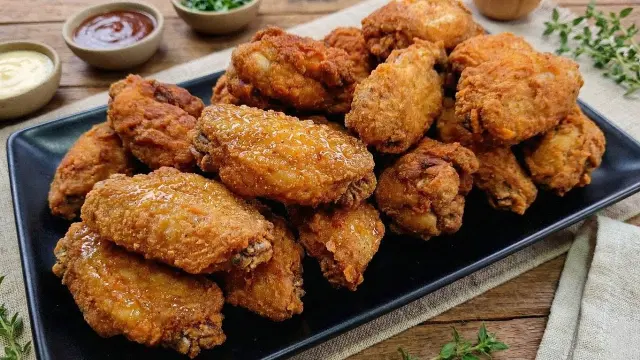
 Crispy Fried Wings With a Flour and Cornstarch Breading
#Breading
1 ideas
Crispy Fried Wings With a Flour and Cornstarch Breading
Get new #Breading ideas by email
Every Thursday: the week's best ideas, with the newest from #Breading.
Related tags
Breading: A Guide to Crisp, Golden Coating
Breading is the layer of crumbs, flour or a light batter that you press onto a piece of food before frying or baking it. It is one of the oldest tricks in the kitchen: a coating protects delicate ingredients from the heat, keeps moisture inside, and turns a plain cutlet or fillet into something with a crackling, golden surface. The idea appears in many food cultures in different forms, from breaded fish and veal cutlets in Europe to Japanese panko-coated pork and shrimp, and it remains popular because it works.
What breading actually does
When hot oil meets a coated piece of food, the coating dries out and browns while the food inside steams gently in its own moisture. The result is a contrast of textures: crisp outside, tender within. Breading also gives you a surface that holds seasoning well and can be flavoured with herbs, spices, grated cheese or citrus zest.
The classic three-step coating
Read more
Most breading follows the same sequence, often called the dry-wet-dry method:
- Dust the food lightly in seasoned flour. This dry layer gives the next stage something to grip.
- Dip it in beaten egg, buttermilk or another liquid wash.
- Press it into crumbs until fully covered, then shake off the excess.
Keep one hand for the dry stages and one for the wet stage, and your fingers will stay manageable. Let the coated pieces rest for a few minutes before cooking so the crumb layer settles and clings.
Kinds of crumbs and coatings
Fresh breadcrumbs are soft and give a rustic, craggy crust. Dried breadcrumbs are finer and brown quickly. Panko, the flaky Japanese crumb, stays light and shatteringly crisp and is excellent for foods that cook fast. Some cooks use crushed crackers, cornflakes or crushed nuts for extra texture, and a simple flour or cornstarch dredge alone can produce a thin, crisp shell.
Practical tips for beginners
Start with a dry surface: pat meat, fish or vegetables with paper towel, or the coating will slide off. Season every layer, not just the crumbs. Fry in moderately hot oil and don't crowd the pan, since a drop in temperature leaves breading greasy rather than crisp. Turn pieces gently and drain them on a rack rather than on paper so steam can escape underneath. If you prefer less oil, the same breaded pieces bake or air-fry well on a lightly oiled tray, and a brief rest after cooking helps the crust set.
Once you know the rhythm of flour, egg and crumb, you can bread almost anything with confidence.
#Breading: frequently asked questions
How do I start breading food if I have never done it before?
Begin with something flat and firm, like a chicken cutlet, a fish fillet or a thick slice of vegetable, since even coatings are easy to judge on a flat surface. Set out flour, a liquid wash and crumbs in separate dishes, then work left to right so the food moves through the stages in order. Once the rhythm feels natural, you can move on to awkward shapes and larger batches.
What do I actually need on hand to bread something?
At minimum you need a dry coating, a liquid to make it stick, and something to press on top — flour, beaten egg, and crumbs cover it. Shallow dishes wide enough to lay a piece flat, one hand kept dry and one wet, and a rack for resting the coated pieces make the job much easier. A tray lined with parchment keeps the finished pieces from sticking before they hit the pan.
Which kind of crumb should I choose?
The choice comes down to the texture you want and how long the food cooks. Soft fresh crumbs give a rustic, craggy crust, fine dried crumbs brown fast and suit quicker cooking, and flaky panko stays airy and crisp, which makes it forgiving for foods that finish in moments. Crushed crackers, cereal or nuts are worth trying when you want a coarser bite, and a plain flour or cornstarch dusting alone gives a thin, tight shell.
How do I keep the coating from falling off in the pan?
Start with a dry surface, because any moisture left on the food makes the coating slide rather than grip. Press the crumbs on firmly instead of sprinkling them, shake off only the loose excess, and let the pieces sit for a few minutes so the layer settles. Frying in oil that is properly hot and leaving space between pieces also helps the crust set quickly instead of drifting away.
Can I get a crisp result without deep frying?
Yes — the same coated pieces bake or air-fry well on a lightly oiled tray, and a brief rest after cooking lets the crust firm up. The key is to oil the surface of the crumbs lightly rather than the tray alone, and to leave gaps between pieces so steam can escape. Draining on a rack instead of paper also keeps the underside from going soft.
What are the most common mistakes people make when breading?
The usual culprits are a wet piece of food, unseasoned layers, and oil that has cooled because the pan is crowded — together they produce a coating that slips off and turns greasy. Another frequent slip is skipping the flour stage, which leaves the egg with nothing to hold on to. Seasoning the flour and crumbs as well as the food itself, and turning pieces gently rather than fussing with them, fixes most of it.
Videos come from YouTube and posts from Instagram; titles and summaries are our own. All rights belong to their creators.