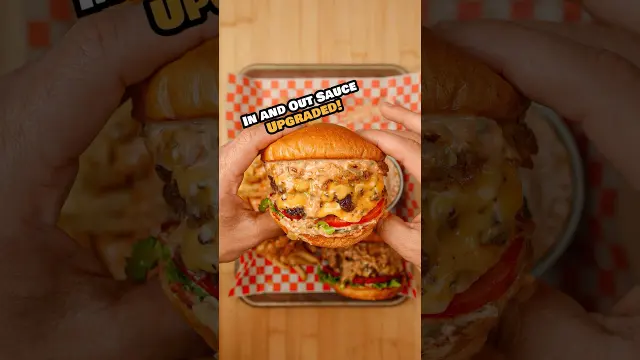
 Burger Sauce Inspired by In-N-Out, Made at Home
#Burgers
1 ideas
Burger Sauce Inspired by In-N-Out, Made at Home
Get new #Burgers ideas by email
Every Thursday: the week's best ideas, with the newest from #Burgers.
Related tags
The Complete Guide to Burgers: Styles, Techniques and Tips
A burger, in the everyday sense, is a cooked patty served inside a split bun: something to hold in two hands, built in layers, eaten without ceremony. It is one of the most widely cooked foods in the world precisely because it is forgiving. A good one depends less on fancy ingredients than on a few simple decisions made well.
Where it comes from
The burger belongs to a broader family of minced-meat dishes brought to North America by European immigrants, with the Hamburg steak as its closest ancestor. How the meat first ended up between two halves of bread is genuinely disputed, and several towns and restaurants claim the honour, so it is best told as a story with many authors. What is not in doubt is that the sandwich took hold in the twentieth century as cheap, fast, portable food, and that it spread from lunch counters to home kitchens to kitchens everywhere. Variations now exist in nearly every food culture, each adapting the bread, the meat and the condiments to what is local.
The main kinds
Read more
- The classic cheeseburger: a beef patty, a slice of cheese melted over it, pickles, onion, tomato, lettuce and a sauce.
- The smash burger: a ball of meat pressed flat onto a very hot surface, giving a thin patty with a crisp, browned crust.
- The thick pub-style burger: a coarser, taller patty, cooked more gently and often served with bacon or onion rings.
- Chicken burgers: a fillet or a minced chicken patty, usually treated with a lighter, sharper set of toppings.
- Plant-based burgers: patties built from beans, lentils, vegetables, grains or manufactured meat alternatives.
- Sliders and mini burgers: small versions served in groups, useful for feeding a crowd.
- Regional and fusion versions: patties seasoned with spices, chilli, herbs or sauces borrowed from a particular cuisine.
What beginners should know
The meat matters most. A blend with a decent proportion of fat gives a juicier, more flavoursome result than very lean mince. Handle it lightly: overworking the meat makes the texture dense and bready. Shape patties slightly wider than the bun, since they shrink as they cook, and press a shallow dimple into the centre to keep them from doming.
Season the outside just before cooking rather than mixing salt through the meat, and get your pan or grill properly hot before the patty goes on. Resist pressing down on it with a spatula, which squeezes out the juices. Turn it once and let it finish undisturbed. Cook ground meat all the way through, until no pink remains and the juices run clear, and keep raw and cooked meat separate as you work.
Building it well
Toast the cut sides of the bun: it keeps the bread from going soggy and adds warmth and texture. Balance is the whole art of the toppings. Something rich, like cheese or a creamy sauce; something sharp, like pickles or raw onion; something fresh, like lettuce or tomato; and something with bite. Too many wet ingredients make the whole thing collapse, so drain sliced tomatoes and keep sauces thin enough to spread but not to soak.
Sauces are where home cooks can play most freely: a base of mayonnaise or yoghurt, something acidic, something sweet, a little heat, and perhaps a chopped pickle or herb. Make it ahead and let it sit so the flavours settle.
Above all, cook burgers often. The technique is short to learn and rewards repetition more than precision.
#Burgers: frequently asked questions
How do I start making burgers at home if I've never made one before?
Start with the simplest version: a patty, a bun, and a couple of toppings you already like. Choose mince with some fat in it, shape the patties gently, and cook them on a properly hot pan until no pink remains. Once that basic shape works, you can add cheese, sauce or extra toppings one at a time.
What do I actually need in the kitchen to make burgers?
Far less than people expect: a hot pan or grill, a spatula, a bowl for mixing, and something to rest the cooked patties on. Good bread and decent mince matter more than any equipment. A sharp knife for toppings and a little patience to let the meat sit undisturbed will do the rest.
Which kind of burger should I choose to make?
It depends on the texture you want. A smash burger gives you a thin, crisp-edged patty and cooks fast, while a thick pub-style patty is juicier and more forgiving on timing. Chicken and plant-based versions follow the same layering logic but usually want lighter, sharper toppings.
How do I cook a burger so it stays juicy instead of drying out?
Handle the meat as little as possible and shape the patties wider than the bun, since they shrink. Season the outside just before cooking, get the pan very hot, and turn the patty only once. Never press it down with the spatula, because that pushes the juices straight out.
What are the most common mistakes when building a burger?
The usual culprits are an untoasted bun, too many wet toppings and an unbalanced stack. Toast the cut sides of the bread, drain sliced tomatoes, and aim for something rich, something sharp, something fresh and something with bite. Keep sauces spreadable rather than runny so the whole thing holds together.
How can I make burgers feel special for a gathering or a casual party?
Mini burgers and sliders are the easiest route, since small patties cook quickly and let people take several. Set the toppings out separately so everyone builds their own, and add one homemade sauce to make it feel considered. Making the sauce ahead and letting it sit means less work once people arrive.
Videos come from YouTube and posts from Instagram; titles and summaries are our own. All rights belong to their creators.