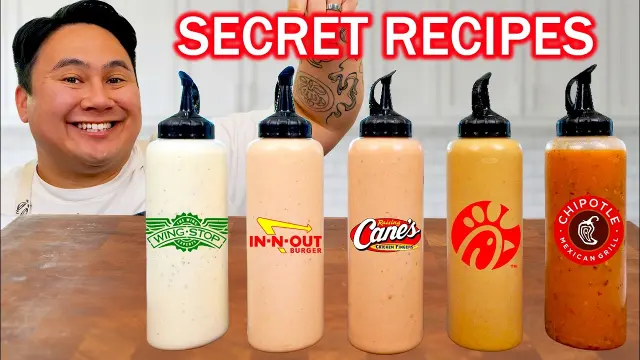
 Recreating Five Popular Fast Food Sauces at Home
#Burger Sauce
2 ideas
Recreating Five Popular Fast Food Sauces at Home
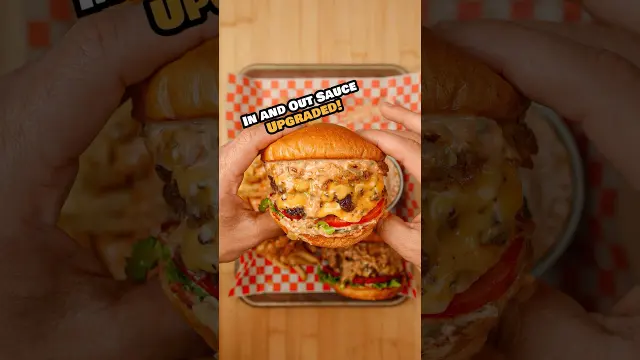 Burger Sauce Inspired by In-N-Out, Made at Home
Get new #Burger Sauce ideas by email
Every Thursday: the week's best ideas, with the newest from #Burger Sauce.
Related tags
Burger Sauce: A Guide to the Creamy, Tangy Classic
Burger sauce is the creamy, pale-pink condiment that turns a good burger into a memorable one. It is a mayonnaise-based sauce, loosened with something acidic, coloured with ketchup or tomato, sweetened lightly, and seasoned with spices and finely chopped pickles. The result is rich but sharp, sweet but savoury, and thick enough to cling to the inside of a bun rather than run off it.
It belongs to the American tradition of cold, creamy dressings. Its family tree runs through Russian dressing and Thousand Island dressing, both of which combine mayonnaise, tomato, and relish or chopped pickles in slightly different proportions. When the hamburger spread from a home kitchen curiosity to a national everyday food, sauce-makers began mixing their own house versions, and the genre known as "special sauce" or "secret sauce" took shape. Every version tells the same story in different accents: fat, acid, sweetness, and salt.
The main styles
The classic fast-food style is the most recognisable: mayonnaise and ketchup in roughly four-to-one proportion, a spoonful of yellow mustard, chopped pickles or sweet relish, and a pinch of onion powder or paprika. It comes out creamy, tangy, and slightly orange.
Read more
Thousand Island-leaning versions are sweeter and more textured, with more relish and sometimes a little chopped hard-boiled egg.
Smoky and spicy interpretations add smoked paprika, chipotle, hot sauce, horseradish, or a spoon of barbecue sauce. Lighter versions replace part of the mayonnaise with yogurt, buttermilk, or sour cream for a sharper, thinner sauce. Herb-forward versions fold in chives, dill, or parsley, which suits chicken and fish burgers especially well.
What beginners should know
You do not need a precise recipe, only an understanding of balance. Start with a good-quality mayonnaise, add ketchup, then taste before adding anything else. If the sauce feels heavy, add acid: pickle brine, vinegar, or lemon juice. If it tastes flat, it usually needs salt rather than more sugar. If it is too thin, more mayonnaise thickens it; if it is too thick, a spoon of pickle brine loosens it without dulling the flavour.
Chop pickles as finely as you can, or use relish, so the sauce spreads evenly and does not clog a squeeze bottle. Mix in a bowl with a whisk or fork, and make a small batch first: quantities are easy to double once you know what you like.
Let the sauce rest in the refrigerator for half an hour before serving. The flavours settle and the raw edge of the onion powder softens. Season it slightly more boldly than you would eat on its own, because bread and hot meat mute the taste; if you can, check it on a bite of the actual burger.
Using and storing it
Beyond burgers, it works as a spread for sandwiches and wraps, a dip for fries and roasted vegetables, a dressing for sturdy salads when thinned with a little water, or a sauce for grilled fish and vegetable patties.
Keep it in a clean, tightly closed jar in the refrigerator, use a clean spoon each time, and do not leave it sitting out at room temperature for long stretches. Because it is made from perishable ingredients, make modest batches and use them within a few days, and discard it if the smell or appearance changes.
#Burger Sauce: frequently asked questions
What do I actually need to make burger sauce at home?
A jar of good mayonnaise is the base, plus ketchup, something acidic like pickle brine or vinegar, and chopped pickles or relish. Mustard, onion powder, and paprika are the usual finishing touches, and a bowl with a whisk or fork is all the equipment required. Nothing needs cooking, so it comes together in minutes.
Which style of burger sauce should I choose?
Start with the classic creamy, tangy style built on mayonnaise and ketchup with pickles, since it suits almost any burger and is the easiest to adjust. If you prefer something sweeter and chunkier, lean toward a relish-heavy version, while smoked paprika, hot sauce, or horseradish take it in a smoky or spicy direction. Lighter versions swap part of the mayonnaise for yogurt or buttermilk when you want something sharper.
How do I fix a burger sauce that tastes wrong?
Taste as you go and adjust one thing at a time: if it feels heavy or cloying, add pickle brine, vinegar, or lemon juice, and if it tastes flat it usually wants salt rather than more sweetness. Texture is easy too, since extra mayonnaise thickens a runny sauce and a spoon of pickle brine loosens a stiff one without muting it.
How should I store burger sauce and how long does it keep?
Keep it in a clean, tightly closed jar in the refrigerator, spoon it out with a clean utensil, and don't leave it sitting out at room temperature. Because it is made from perishable ingredients, mix modest batches rather than a large one, use it within a few days, and throw it out if the smell or appearance changes.
What are the common mistakes people make with burger sauce?
Leaving the pickles in big chunks is the usual one, so chop them as finely as you can or use relish to keep the sauce spreadable and squeeze-bottle friendly. Another is serving it straight after mixing, when the flavours haven't settled and the onion powder still tastes raw. Finally, people under-season it, forgetting that bread and hot meat mute the flavour, so taste it on the actual burger rather than on its own.
Besides burgers, what can I use burger sauce for?
It works as a spread for sandwiches and wraps, a dip for fries and roasted vegetables, and a sauce for grilled fish or vegetable patties. Thinned with a splash of water it becomes a dressing for sturdy salads, which makes a small batch worth keeping on hand.
Videos come from YouTube and posts from Instagram; titles and summaries are our own. All rights belong to their creators.