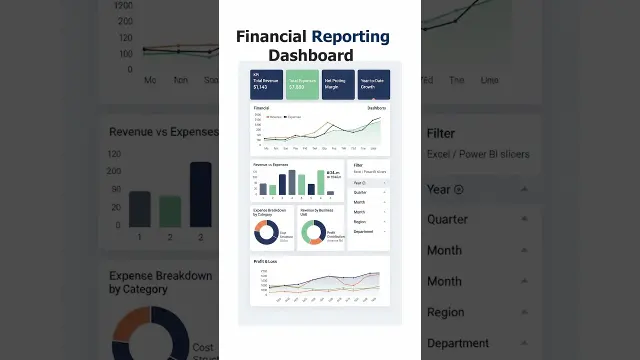
 Building a Complete Finance Dashboard in Excel for Reporting
#Business Analysis
2 ideas
Building a Complete Finance Dashboard in Excel for Reporting
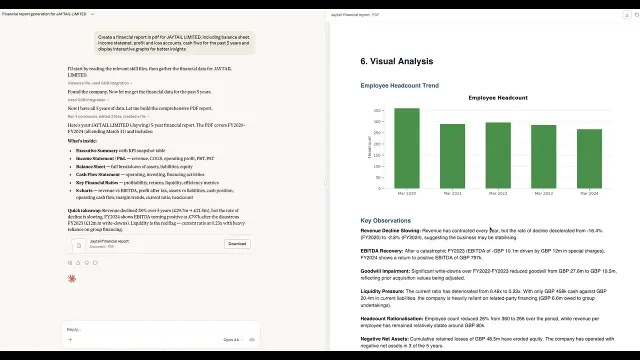 Pulling Company Financial Data Directly Inside Claude AI
Get new #Business Analysis ideas by email
Every Thursday: the week's best ideas, with the newest from #Business Analysis.
Related tags
Business Analysis Basics
Business analysis is the practice of understanding how a business works, what it needs, and how it can improve. It brings together information, goals, people, and processes so better decisions can be made. In simple terms, a business analyst helps turn a need or problem into clear requirements and practical solutions.
What business analysis means
At its core, business analysis is about asking good questions. What is the real problem? Who is affected? What does success look like? What resources are available? By looking carefully at these questions, you can move from vague concerns to clear action.
Business analysis is used in many settings: improving a process, designing a new service, planning a system change, or helping teams work more effectively. It can be done in small businesses or large organisations, and it is useful anywhere people need structure and clarity.
Read more
Common areas of focus
Business analysis often looks at:
- Processes: how work moves from one step to another
- Requirements: what people need a solution to do
- Stakeholders: who is involved, affected, or making decisions
- Data: what information shows about performance or behaviour
- Risks and constraints: what may limit options or cause problems
A good analysis does not just describe what is happening now. It also helps explain why it is happening and what could be improved.
Typical methods and tools
There are many ways to do business analysis, but some common approaches are simple and widely used:
- Interviews and conversations to understand needs
- Observation of how work is actually done
- Document review to understand current rules or processes
- Process mapping to show steps clearly
- SWOT-style thinking to compare strengths, weaknesses, opportunities, and threats
- Gap analysis to compare the current state with the desired one
You do not need complicated tools to begin. Clear notes, a diagram, a checklist, or a spreadsheet can often be enough to reveal patterns.
What beginners should know
If you are new to business analysis, start by learning to listen carefully and separate facts from assumptions. People often describe symptoms, not the root cause. For example, slow delivery might be caused by unclear approvals, missing information, or too many handoffs. Good analysis helps find the underlying issue.
It also helps to keep your language simple. Avoid making the problem sound larger or more technical than it is. Clear writing and careful questioning are more valuable than jargon.
Practical tips
- Define the problem before suggesting a solution.
- Write down what is known, what is assumed, and what still needs checking.
- Keep stakeholders involved so the final result matches real needs.
- Focus on outcomes, not just activities.
- Revisit the analysis if the situation changes.
Business analysis is ultimately about clarity. When you understand the need well, it becomes much easier to choose the right next step and create something that genuinely helps.
#Business Analysis: frequently asked questions
How do I get started in business analysis if I have no experience?
Start with the work already around you: pick a process you know well, such as how requests get approved or how a task moves between people, and map out the steps as they actually happen. Practise asking simple questions about what the real problem is, who is affected, and what a good outcome would look like. Listening carefully and writing clearly matter more at this stage than any tool or qualification.
What do I actually need to do business analysis well?
You need curiosity, clear writing, and the patience to separate what people assume from what is documented or observed. Basic tools such as notes, a simple diagram, a checklist, or a spreadsheet are usually enough to reveal patterns. Access to the people who do the work and make the decisions matters far more than software.
Which approach should I choose when analysing a problem?
Choose based on what you are trying to learn rather than on what sounds most sophisticated. Interviews and observation suit situations where the real workflow is unclear, document review helps when rules and processes are already written down, and process mapping or a current-versus-desired comparison helps when the gaps need to be shown to others. Often a mix of a couple of simple methods gives a clearer picture than one elaborate one.
What are the most common mistakes beginners make?
The biggest one is jumping to a solution before the problem is properly defined, which tends to fix a symptom rather than the cause. Another is treating assumptions as facts instead of noting what still needs checking, and a third is working away from the people involved so the analysis no longer matches real needs. Dressing things up in jargon also hides weak thinking rather than strengthening it.
How do I keep an analysis useful after the first version is done?
Treat it as something living rather than a one-off document, and revisit it whenever circumstances, people, or priorities shift. Keep stakeholders involved throughout so the findings stay grounded in what they actually experience. Focus on whether outcomes improved, not just on whether activities were completed.
Videos come from YouTube and posts from Instagram; titles and summaries are our own. All rights belong to their creators.