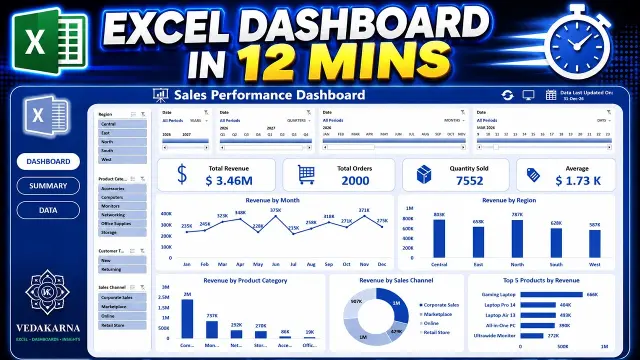
 Transform your sales data into an interactive Excel dashboard
#Business Reports
2 ideas
Transform your sales data into an interactive Excel dashboard
 Ten Excel dashboard design ideas to upgrade business reports
Get new #Business Reports ideas by email
Every Thursday: the week's best ideas, with the newest from #Business Reports.
Related tags
Business Reports: a Practical Guide
Business reports are structured documents that turn information into something useful for decision-making. They can summarize performance, explain trends, highlight problems, or support plans for the future. In many organisations, reports are part of everyday work: they help teams understand what is happening, what needs attention, and where action should be taken.
At their best, business reports are clear, balanced, and easy to act on. They do not simply collect facts. They organise facts so that a reader can quickly see the main point. A good report answers practical questions such as: What happened? Why did it happen? What does it mean? What should we do next?
What business reports are used for
Business reports are used in many areas, including sales, finance, operations, marketing, human resources, and project management. Some reports are regular and repeat at set intervals, such as weekly or monthly updates. Others are created for a specific purpose, such as reviewing a project, comparing options, or investigating a problem.
Read more
Common uses include:
- tracking progress against goals
- summarising results over time
- identifying risks or issues
- comparing performance across teams, products, or periods
- supporting decisions with facts instead of guesswork
Main types of business reports
There are many kinds of business reports, but most fall into a few broad groups.
- Informational reports present facts and data without much interpretation.
- Analytical reports examine a situation, explain causes, and suggest conclusions.
- Progress reports show how work is moving forward.
- Financial reports focus on money, costs, revenue, and profitability.
- Status reports give a quick update on ongoing tasks or projects.
- Recommendation reports present a problem and propose a course of action.
The right type depends on your purpose and audience. A senior manager may want a short summary with clear conclusions, while a project team may need more detail.
What makes a good report
A strong report is accurate, relevant, and well organised. It should be written for the reader, not for the writer. Keep the language simple and direct. Use headings so the reader can scan the document easily. Put the most important information near the top.
A useful report usually includes:
- a clear purpose
- a brief summary of the main points
- the key findings or data
- an explanation of what the information means
- a conclusion or recommendation, if needed
Practical tips for writing reports
If you are writing a business report, start by being clear about its purpose. Ask yourself what decision it should support. Then choose only the information that helps answer that question. Too much detail can hide the main message.
Keep these habits in mind:
- use plain language
- separate facts from opinions
- check numbers, names, and dates carefully
- keep charts and tables simple
- highlight patterns, not just raw data
- finish with a clear next step when appropriate
If you are new to report writing, focus first on structure. A simple report with a clear message is far more useful than a complicated one that is hard to follow. Over time, you will learn how to adapt the length, tone, and detail to suit different readers and situations.
#Business Reports: frequently asked questions
How do I start writing a business report when I don't know where to begin?
Start from the decision the report is meant to support, and write that purpose in one sentence before anything else. Once the purpose is clear, gather only the information that answers it, then sketch a simple outline with headings before you start drafting. Beginning with structure keeps a beginner's report short and readable rather than sprawling.
What should a business report include to be genuinely useful?
A workable report opens with its purpose, follows with a brief summary of the main points, then presents the findings and explains what they mean. It usually closes with a conclusion or a recommendation, so the reader knows what to do next. Facts and opinions should stay visibly separate, and the most important message belongs near the top.
How do I choose which type of business report to write?
Let your purpose and your reader decide. If you only need to pass on facts, an informational or status report is enough; if you need to explain causes and draw conclusions, an analytical or recommendation report fits better. A senior reader usually wants a short summary with clear conclusions, while a working team may need the fuller detail.
What are the most common mistakes people make in business reports?
The usual problem is too much detail, which buries the main message and leaves the reader unsure what matters. Others include writing for yourself rather than the reader, mixing opinion into data without saying so, and leaving out any next step. Cluttered charts and unchecked names, figures, or dates also undermine trust in an otherwise sound report.
Can I make my reports easier to read at a glance?
Yes, and the layout does much of the work. Clear headings let a reader scan the document, simple charts and tables highlight patterns instead of raw rows, and a summary near the top gives the headline before the detail. Dashboard-style visuals built from your existing spreadsheets are a practical way to turn routine reporting into something people actually read.
How can I get better at report writing over time?
Begin by mastering structure, since a simple report with one clear message beats a complicated one nobody can follow. Practise adapting length, tone, and detail to different readers and situations, and review your own reports after the fact to see what got used. Plain language and a clear next step are the habits worth keeping throughout.
Videos come from YouTube and posts from Instagram; titles and summaries are our own. All rights belong to their creators.