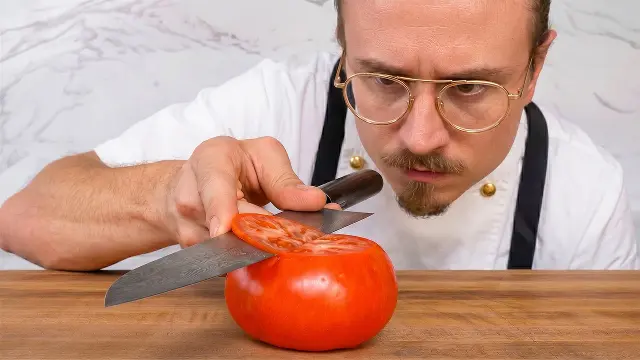
 Essential Knife Skills Every Home Cook Should Know
#Chef Knife
1 ideas
Essential Knife Skills Every Home Cook Should Know
Get new #Chef Knife ideas by email
Every Thursday: the week's best ideas, with the newest from #Chef Knife.
Related tags
Chef Knife: A Beginner's Guide to the Cook's Best Friend
Walk into any kitchen where food is taken seriously and you will almost always find the same tool within reach: a single, broad-bladed knife that does most of the work. The chef knife — sometimes called a cook's knife — is the generalist of the knife block. Its job is not one task but many, and that is exactly why it earns its place.
What makes it a chef knife
A chef knife is defined by proportions rather than by a single fixed shape. Its blade is long enough to handle a head of cabbage and short enough to trim a mushroom, typically with a gentle curve along the cutting edge. That curve matters more than beginners expect: it lets you rock the blade forward and back through herbs or onions without lifting the knife off the board. The wide heel near the handle gives you a stable spot for heavier chopping, while the narrower tip is where delicate work happens.
Most chef knives have a blade that runs the full length of the handle, a construction that adds balance and durability. Balance is worth paying attention to when you hold one: a good knife should feel like an extension of your hand rather than a weight you are carrying.
Read more
The main styles
The two families you are most likely to meet are Western and Japanese.
Western chef knives, descended from European kitchen traditions, tend to be heavier, with a thicker spine and a blade that curves generously. Japanese styles like the gyuto take a lighter approach, often with a thinner blade and a flatter profile toward the tip. Neither is better; they simply suit different hands, habits and cutting motions.
Blades are made from different steels too. Some hold an edge for a long time and resist wear, while others are easier to sharpen but need more frequent attention. Stainless steels are forgiving about moisture, while carbon steels can develop a patina and demand that you dry them promptly.
What beginners should know
Learn the grip before you learn speed. Hold the handle close to the blade, with your thumb and index finger resting on the sides of the bolster or blade — often called a pinch grip. It feels odd at first and then suddenly natural, and it gives you far more control than clutching the handle like a hammer.
Let the knife do the work. A sharp blade slices; a dull one skids and forces you to press. Keep your fingers curled on the hand holding the food, knuckles forward, so the flat of the blade can rest against them as a guide.
Cut on a surface that respects the edge — wood or soft plastic rather than glass or stone. Wash and dry the knife by hand, store it so the edge touches nothing hard, and hone it regularly. Sharpening, done properly or by a professional, restores an edge that honing can no longer revive.
Start with one good chef knife and learn it thoroughly. Most cooks find that a single blade they understand deeply outperforms a drawer full of tools they never quite master.
#Chef Knife: frequently asked questions
What actually makes a knife a chef knife rather than just a big kitchen knife?
It is defined by proportion and shape more than by one fixed pattern: a long-ish blade with a gentle curve along the edge, a wide heel near the handle and a narrower tip. That curve is the giveaway, because it lets you rock the blade through onions or herbs without lifting it off the board. The wide heel handles heavier chopping while the tip does the delicate work, which is why a single blade covers so many jobs.
Should a beginner choose a Western or a Japanese style chef knife?
Neither is the better choice — they suit different hands and cutting habits. Western styles feel heavier with a thicker spine and a generously curved edge, while Japanese styles such as the gyuto are lighter with a thinner blade and a flatter run toward the tip. Hold both if you can and pick the one that feels like an extension of your hand, since balance matters more than the label on the box.
How do I hold and use a chef knife without feeling clumsy?
Learn the grip before you chase speed. Pinch the blade just ahead of the handle with thumb and index finger on the sides of the bolster, keeping the rest of your hand on the handle — it feels strange briefly, then suddenly right, and it gives far more control than gripping it like a hammer. Let the blade do the slicing, and curl the fingers of your guiding hand with knuckles forward so the flat of the knife can ride against them.
How should I care for a chef knife so it stays sharp?
Cut on wood or soft plastic rather than glass or stone, and wash and dry the blade by hand instead of leaving it in a sink or a rack. Store it so the edge touches nothing hard, and hone it regularly to keep the edge aligned. When honing no longer brings it back, have it properly sharpened — by you if you have learned the skill, or by a professional.
What are the most common mistakes people make with their first chef knife?
Buying a set instead of learning one blade thoroughly is the big one — most cooks do better with a single knife they understand deeply than a drawer of tools they never master. Other frequent slips are pressing down with a dull edge instead of letting a sharp one slice, and cutting on hard surfaces that quietly ruin the edge. Skipping the pinch grip also costs control that beginners do not realise they are missing.
Do I need to worry about which steel the blade is made from?
It is worth a thought, because the trade-off is real: some steels hold an edge for a long time while others sharpen more easily but need more frequent attention. Stainless is forgiving about moisture, whereas carbon steel can develop a patina and asks you to dry it promptly. Match that to how much upkeep you honestly want to do.
Videos come from YouTube and posts from Instagram; titles and summaries are our own. All rights belong to their creators.