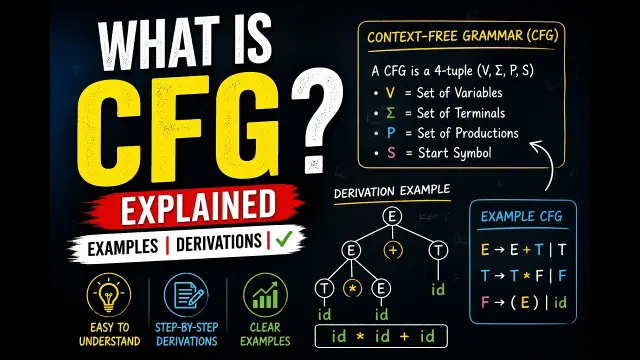
 Easy Explanation of Context Free Grammar with Clear Examples
#Context-Free Grammar
13 ideas
Easy Explanation of Context Free Grammar with Clear Examples
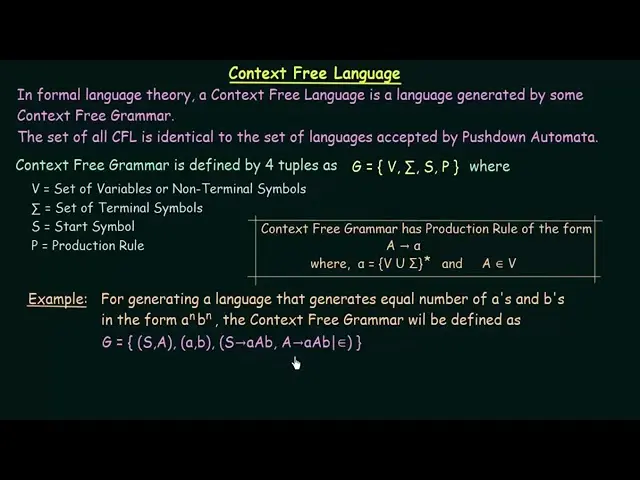 Understanding Context Free Languages and Grammars
 Mastering Context Free Grammars for Computer Science Exam Preparation
 Quick Introduction to Context Free Grammar in Compiler Design
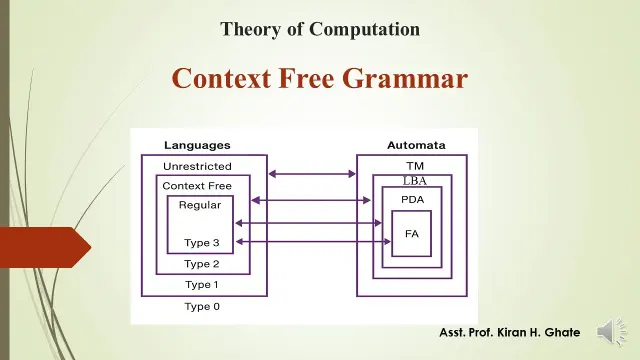 Detailed Explanation of Context Free Grammar with Examples
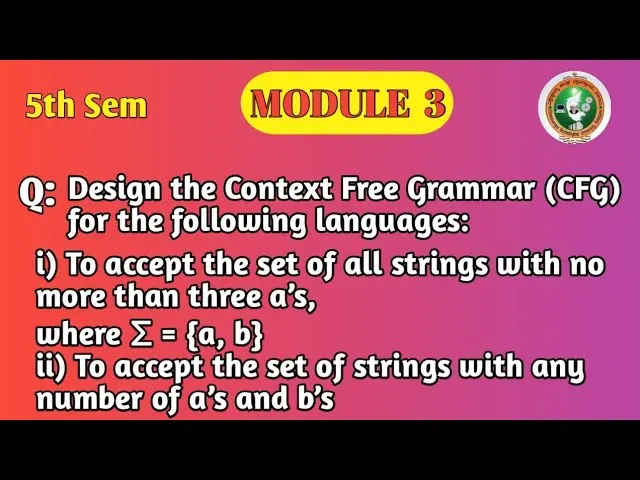 Designing Context Free Grammars for Specific Languages
 Introduction to Context Free Grammar in Compiler Design
 Context Free Grammars for Structuring Programming Languages
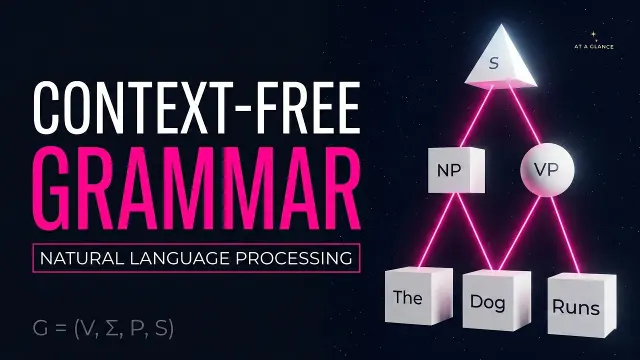 Introduction to Context Free Grammar in Natural Language Processing
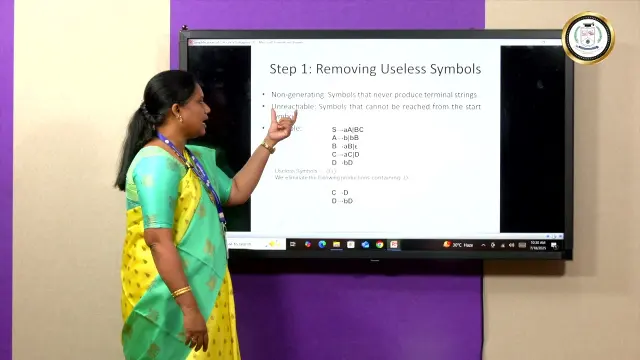 Simplification Techniques for Context Free Grammars
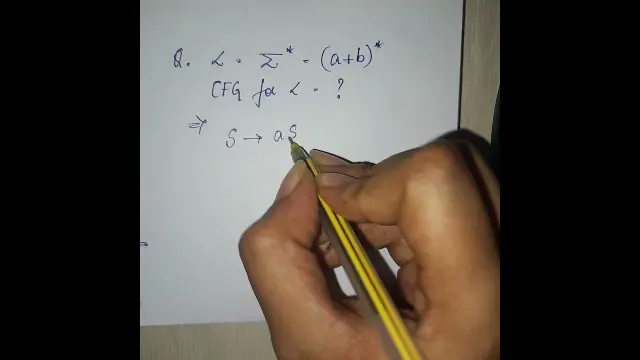 Context-Free Grammar for Regular Expression Star Operation
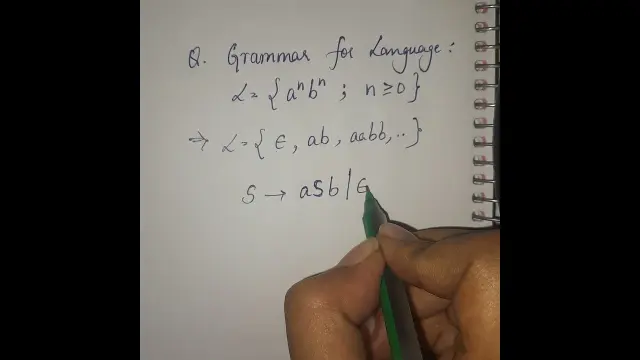 Constructing Context Free Grammar for An Bn Languages
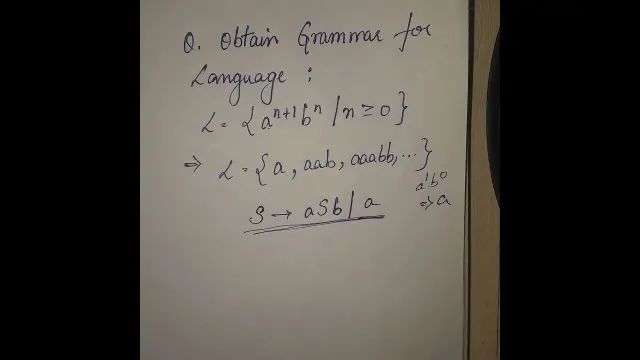 Grammar Construction for An plus One Bn Languages
Get new #Context-Free Grammar ideas by email
Every Thursday: the week's best ideas, with the newest from #Context-Free Grammar.
Related tags
Context-Free Grammar Explained
What a context-free grammar is
A context-free grammar is a simple formal system for describing how strings are built. It is used in mathematics, computer science, and language theory to define the structure of languages with clear rules. Unlike informal grammar in everyday speech, a context-free grammar works with symbols and production rules that can be applied step by step.
A context-free grammar usually has four parts: a set of symbols, a start symbol, a set of terminal symbols, and a set of replacement rules. The rules tell you how one symbol can be expanded into other symbols. Because each rule applies to one symbol at a time, the grammar is called context-free.
Where it is used
Read more
Context-free grammars are especially useful for describing nested or recursive structures. They are often used to model the syntax of programming languages, where expressions, statements, and blocks must fit together in precise ways. They also appear in linguistics, where they help describe sentence structure, and in formal language theory, where they are used to study what kinds of patterns can be recognized and generated.
They are well suited to structures with matching parts, such as parentheses, repeated embedded phrases, or hierarchies that can contain smaller versions of themselves.
Main ideas and forms
A grammar begins with the start symbol, then rewrites it using production rules until only terminal symbols remain. The final string is part of the language generated by the grammar.
Common examples include:
- simple repetition, such as one or more repeated units
- balanced structures, such as matching open and close symbols
- recursive patterns, where a rule refers back to the same nonterminal symbol
The power of a context-free grammar lies in recursion. This allows it to describe infinitely many strings with a finite set of rules.
What beginners should know
If you are learning context-free grammars, it helps to separate the ideas of generation and recognition. A grammar generates strings, while a parser or recognizer checks whether a string fits the grammar. You do not need to memorize many rules at once; it is often easier to work with a small grammar and trace how a string is produced.
A few practical tips:
- Start with the simplest possible grammar and test a few example strings.
- Watch for recursion, since it is the key feature of context-free grammars.
- Pay attention to the difference between terminal symbols, which appear in the final string, and nonterminal symbols, which are only used in the rules.
- Check whether the grammar produces exactly the strings you want, and not extra ones.
Why they matter
Context-free grammars give you a precise way to describe structure. They are helpful whenever order, grouping, and nesting matter more than simple sequence. Once you understand them, you have a foundation for parsing, language design, and the study of formal systems.
Videos come from YouTube and posts from Instagram; titles and summaries are our own. All rights belong to their creators.