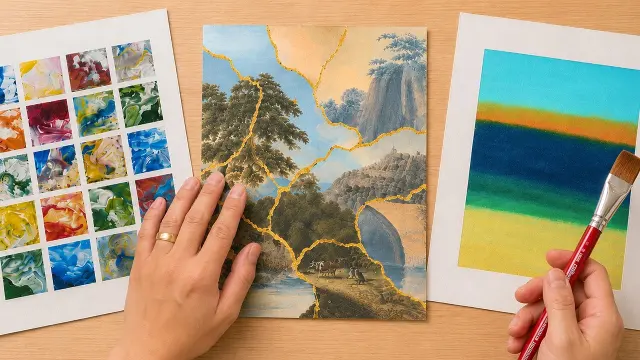
 Eight Creative and Easy Art Styles for Beginners
#Creative Projects
1 ideas
Eight Creative and Easy Art Styles for Beginners
Get new #Creative Projects ideas by email
Every Thursday: the week's best ideas, with the newest from #Creative Projects.
Related tags
Creative Projects: A Beginner's Guide to Making Things
A creative project is any piece of making you undertake for its own sake: a drawing, a knitted scarf, a shelf built from reclaimed wood, a batch of jam, a notebook of pressed flowers. What sets it apart from work is that the point is the doing. The object at the end matters, but the hours spent shaping it matter just as much.
Why people make things
Making something with your hands gives your attention a single, concrete place to rest. It is absorbing in a way that scrolling rarely is, and it produces evidence of your effort — a thing that did not exist before. For many people that combination is restful. Creative projects also build skill slowly and visibly, which is its own kind of satisfaction: the first attempts are clumsy, and the tenth is noticeably better.
The main kinds of project
Read more
Most creative projects fall into a few broad families, and it helps to know which one suits your temperament.
- Paper and drawing: sketching, watercolour, collage, printmaking. Cheap to begin, easy to put down and pick up.
- Textiles: knitting, crochet, sewing, embroidery, quilting. Portable, rhythmic, and forgiving of interruptions.
- Wood and repair: simple furniture, carving, upcycling old objects. Requires more space and a few tools.
- Home and garden: growing things, preserving food, dyeing, candle-making, small decorating jobs.
- Digital making: photography, design, animation, music recorded on a laptop. No materials, but a learning curve.
What beginners should know
Start smaller than you think you should. A project you can finish in a few evenings teaches you more than an ambitious one that stalls half done and sits in a corner reproaching you. Choose a first project with a clear end point.
Buy few materials at the start. It is tempting to equip yourself fully before you know whether you enjoy the craft; resist that. A basic set of tools and a modest amount of material will carry you through several projects, and you will understand what you actually need once you have made a few things.
Expect the first attempt to be imperfect, and treat it as information rather than failure. Nearly every craft has a stage where the work looks wrong before it looks right. Learning to push through that stage is the real skill.
Copy shamelessly while you learn. Following a pattern, a tutorial or an existing object is how technique gets into your hands. Your own style arrives later, on its own.
Keeping projects alive
Keep your materials where you can see them and reach them. A box in a cupboard is a project you will forget. Work in short sessions rather than waiting for a free afternoon. And keep a project that travels — knitting, a sketchbook, embroidery — for the odd twenty minutes away from home.
Finally, finish things, even imperfectly. A completed object, however rough, gives you a foothold for the next one. Unfinished work teaches very little.
#Creative Projects: frequently asked questions
How do I start a creative project if I have never made anything before?
Pick one small thing you can finish in a handful of sittings, with a clear end point, such as a simple sketch or a knitted square. Buy only a basic set of tools and a modest amount of material so you are not heavily invested before you know whether you enjoy the craft. Then begin, and let the first attempt be rough.
What supplies do I actually need to begin?
Less than you expect. A minimal kit of the core tools plus a little material will carry you through your first few projects, and using it teaches you what you genuinely need. Resist the urge to equip yourself fully in advance, since that spending usually happens before you know your own preferences.
How do I choose which kind of creative project suits me?
Think about your temperament and your circumstances rather than the finished object. Paper and drawing are cheap and easy to pick up and put down, textiles are portable and forgiving of interruptions, wood and repair want space and tools, and digital making needs no materials but asks for patience with a learning curve. Match the craft to the time and room you actually have, not the ones you wish you had.
Why does my work look wrong halfway through?
Almost every craft has an awkward middle stage where the piece looks worse than it did at the start, and that is normal rather than a sign you have failed. Treat it as information about the process and push through it, because learning to keep going at that point is the real skill being built. Copying a pattern, tutorial or existing object shamelessly while you learn also helps, since your own style arrives later on its own.
How do I stop projects from being abandoned?
Keep your materials somewhere you can see and reach them, because a box at the back of a cupboard is a project you will forget. Work in short sessions instead of waiting for a long free afternoon, and keep something portable on hand for odd spare minutes away from home. Then finish things even when they are imperfect, since a completed piece gives you a foothold for the next one.
What is a good creative project for a gift or a special occasion?
Small, finishable, personal things work best: a jar of preserve, a pressed flower notebook, a knitted accessory or a simple upcycled object. Choose something whose making you will enjoy, because the time spent is half the point, and pick a project with a clear end so it is genuinely done in time. Imperfections tend to read as handmade rather than as faults.
Videos come from YouTube and posts from Instagram; titles and summaries are our own. All rights belong to their creators.