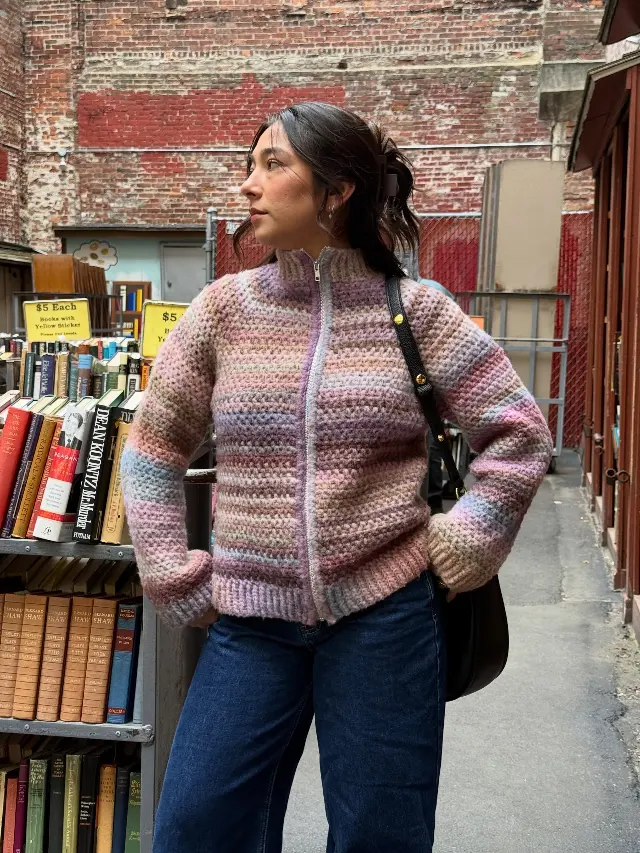
 Handmade crochet zip jacket with mock turtleneck design
#Crochet Jacket
1 ideas
Handmade crochet zip jacket with mock turtleneck design
Get new #Crochet Jacket ideas by email
Every Thursday: the week's best ideas, with the newest from #Crochet Jacket.
Related tags
Crochet Jacket: A Guide to Handmade Layering
A crochet jacket is an outer garment built stitch by stitch with a hook, rather than cut from woven cloth. That single fact shapes everything about it: the fabric is made to measure as you go, it stretches and moves in its own way, and the texture is part of the design. Jackets sit somewhere between a cardigan and a coat — light enough to wear indoors, structured enough to be the layer you reach for on a cool morning.
Where it comes from
Crochet grew out of European lacemaking traditions, where a hooked needle replaced bobbins and shuttles and made intricate fabric achievable with one tool and a ball of thread. For a long time it belonged to fine lace and home textiles. When thicker yarns and simpler, repeatable motifs became popular, crochet moved into clothing, and the jacket followed: first as loose, decorative outerwear, later as a practical everyday piece with shaping, pockets and closures. The craft has been handed down largely person to person, which is why so many crochet jackets carry a family pattern or a remembered technique.
The main kinds
Read more
- Cardigan-style jackets, worked in one piece from the neck down or in panels and seamed, usually with a simple button or tie closure.
- Zip jackets, where a front band of stitches is worked firmly enough to support a zipper, often with a mock turtleneck or stand collar.
- Motif jackets, assembled from squares, hexagons or circles that are joined into panels; the granny square is the best-known example.
- Kimono and boxy jackets, made from straight rectangles with little shaping, which suits beginners and drapes softly.
- Cropped and fitted jackets, which rely on accurate measurements and short rows or increases to shape the shoulders and waist.
Choosing yarn and hook
The yarn decides how the jacket behaves. Wool and wool blends hold shape and warmth; cotton gives crisp stitch definition and a cooler wear; acrylic is light and easy to wash but can stretch. A softer, drapier yarn suits loose silhouettes, while a firmer one holds structure at collars and button bands. Match the hook to the yarn label as a starting point, then swatch.
Tension matters more in a jacket than in a scarf. Work a swatch larger than the gauge given in your pattern, wash and dry it as you intend to treat the finished garment, and measure again. Small differences repeated across a whole jacket become a size or two.
Fitting and finishing
Measure a jacket you already like and compare it with the pattern's finished measurements rather than your body alone — ease is what makes a jacket wearable. Block the pieces before seaming so edges line up. Reinforce shoulder seams with a sturdy slip stitch or a strip of tape, and work button and zip bands at a tighter gauge so they do not gape.
Care
Crochet fabric stretches under its own weight, so dry jackets flat and folded rather than on a hanger. Follow the yarn's washing guidance, and store folded with the fastenings closed.
If you are starting out
Begin with a boxy, unshaped jacket in a smooth, light-coloured yarn, in a stitch pattern you can read easily. Learn to count stitches at the end of every row, mark your first and last stitch, and check the width against your measurements every few rows. A simple jacket finished well will teach you more than an ambitious one abandoned halfway.
#Crochet Jacket: frequently asked questions
How do I start a crochet jacket if I have never made a garment before?
Start with a boxy, unshaped jacket in a smooth light-coloured yarn and a simple repeatable stitch, since straight panels forgive small errors and the pale colour lets you see your stitches clearly. Before you begin the body, learn to mark your first and last stitch and to count at the end of each row, then check the width against your own measurements as you go. A modest jacket finished properly teaches you more than an ambitious one set aside.
What do I actually need before beginning a crochet jacket?
You need yarn, a hook matched to it, a tape measure, stitch markers and a pattern whose finished measurements you have compared with a jacket you already like. Add a larger swatch than the pattern asks for, washed and dried the way you intend to treat the finished piece, because the way the fabric behaves after washing matters more here than in a small accessory. Blocking tools and something sturdy for the shoulder seams will matter at the finishing stage.
Which style of crochet jacket should I choose?
Your choice should follow both the look you want and how much shaping you are ready to handle. Cardigans, motifs and kimono shapes are forgiving and drape softly, while zip jackets, cropped cuts and fitted silhouettes ask for accurate measurements and firmer fabric at the closures. Think about when you will wear it: a light lacy layer suits mild weather, a woollen one carries you through the cold.
How should I care for a crochet jacket so it keeps its shape?
Crochet fabric grows under its own weight, so dry the jacket flat and folded rather than hanging it, and store it folded with the buttons or zip closed. Always follow the washing guidance on the yarn you used, since wool, cotton and synthetic fibres behave very differently in water. Reshape the edges while damp and let them dry undisturbed.
What occasions suit a crochet jacket?
Because the fabric is textured and sits between a cardigan and a coat, it works as a soft layer over a dress for a garden gathering or a summer evening, and as an indoor layer in cooler months. A fine cotton version reads more formal, while a chunky woollen one belongs with jeans and everyday wear. Motif jackets often carry a bohemian, handmade feel that suits relaxed and creative events.
What mistakes should I avoid when making my first crochet jacket?
The most common slip is skipping a proper swatch, since a small difference in tension repeated across a whole garment becomes a jacket that fits nobody. Rushing the finishing is the next: block the pieces before joining so the edges line up, reinforce the shoulder seams, and work the button and zip bands at a firmer gauge so they do not gape. Choosing a soft, floppy yarn for a structured collar is another frequent disappointment.
Videos come from YouTube and posts from Instagram; titles and summaries are our own. All rights belong to their creators.