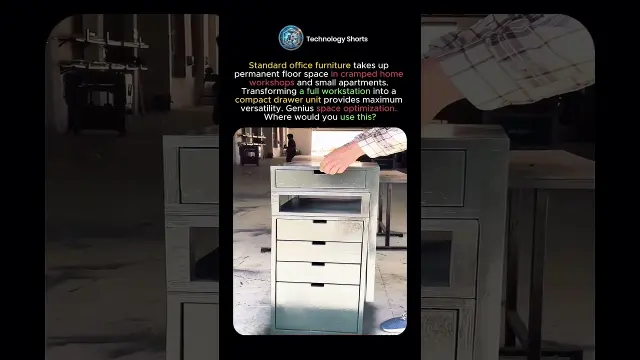
 Custom Folding Workbench And Retractable Desk Solution
#Custom Furniture
1 ideas
Custom Folding Workbench And Retractable Desk Solution
Get new #Custom Furniture ideas by email
Every Thursday: the week's best ideas, with the newest from #Custom Furniture.
Related tags
Custom Furniture: A Practical Guide to Made-to-Fit Pieces
Custom furniture is any piece made to order rather than picked from a shelf. Instead of adjusting your room to a standard size, you start with the room, the person or the purpose, and the piece is designed around it. The idea is old — furniture was made this way long before anything was mass-produced — but it has returned to ordinary homes for a simple reason: awkward corners, sloped ceilings, narrow hallways and small flats rarely suit what is available in shops.
What custom furniture covers
The range is broad. It includes built-in wardrobes and shelving that use every centimetre up to the ceiling, kitchen cabinetry shaped around a tricky layout, a desk cut to the height of the person who will sit at it, and freestanding pieces like tables, benches or beds made to unusual dimensions. There is also the middle ground: modular systems assembled from standard components but configured to your measurements, which is usually cheaper and faster than a fully bespoke build.
The main approaches
Read more
Fully bespoke means a designer or maker draws the piece for your space and builds it from scratch, often by hand. It offers the most freedom and the highest cost. Made-to-measure sits between bespoke and ready-made: the maker works from a fixed range of designs and adapts sizes, finishes and details. Flat-pack customisation is the most accessible route, where you choose dimensions and fittings within a manufacturer's system.
Materials matter as much as shape. Solid wood, plywood and veneered board behave differently over time, and the choice affects weight, price, how the piece ages and how easily it can be repaired. Ask what is underneath the surface finish, not just what it looks like.
What beginners should know
Start with measurements taken twice, including doorways, skirting boards and the swing of any opening the piece might block. Write down how you actually use the space rather than how you imagine using it: the number of coats, the size of the printer, the height you naturally reach for a mug.
Think about the future. A desk that rises and folds away suits a small flat today, but if your work changes, can it adapt? Custom pieces are harder to move and to resize than standard ones, so it helps to design for a little flexibility — adjustable shelves, removable inserts, simple fixings.
Ask about lead times, delivery access and who assembles the piece. Check how edges are finished, whether drawers run smoothly, and what happens if something needs repairing later.
Working with a maker
Bring photographs, measurements and a clear budget. Good makers ask questions about light, traffic through the room and what you will store, not only about style. Look at finished work where possible, read the terms, and get the specification in writing — dimensions, materials, fittings and finish. If a design feels over-complicated for what you need, say so; the best custom furniture tends to look simple and work quietly.
#Custom Furniture: frequently asked questions
How do I start planning a custom furniture piece?
Begin with the room rather than the design: note where doors swing, where skirting boards sit and how much clearance the space really has, and take each measurement more than once. Then write down how you actually use the room — what you need to store, what height feels comfortable to work at, what gets in your way. Bring those notes, along with photographs and a clear budget, when you first talk to a maker.
What should I have ready before contacting a maker?
Measurements, photos of the space and a sense of your budget are the essentials, because a maker can only design well around real constraints. It also helps to know the finish you like and what the piece must hold, whether that is coats, files, a printer or a stack of pans. Expect good makers to ask about light, traffic through the room and daily habits, not just about style.
Which type of custom furniture should I choose?
It depends on how unusual your space is and how much freedom you want. Fully bespoke gives the most control and suits awkward corners or sloped ceilings, made-to-measure adapts a fixed design to your dimensions, and modular systems configured within a manufacturer's range are the quickest and most affordable route. Materials deserve equal thought — solid wood, plywood and veneered board age and repair differently, so ask what sits under the finish.
How do I care for custom furniture so it lasts?
Care starts at the design stage: adjustable shelves, removable inserts and simple fixings make a piece easier to live with and to repair later. Ask the maker how the surface and edges are finished and what kind of cleaning that finish tolerates, since wood and veneer respond differently to moisture and heat. Regular dusting, avoiding standing water and keeping the piece away from direct heat will do most of the work.
What are common mistakes people make with custom furniture?
The most frequent one is designing for an imagined version of the room rather than the real one — too few measurements, or forgetting doorways, skirting boards and openings the piece might block. Another is over-complicating the design, which raises cost and rarely improves usefulness, and a third is ignoring the future, since custom pieces are harder to move or resize than standard ones. Get the specification in writing, including dimensions, materials, fittings and finish, and ask about lead times, delivery access and who assembles it.
Can custom furniture help in a small flat or awkward room?
Yes — that is usually why people choose it. Built-in wardrobes and shelving that run up to the ceiling, kitchen cabinetry shaped around a difficult layout and desks cut to the sitter's height all recover space that standard pieces waste. For a compact room, pieces that fold away or adapt, like a retractable desk or folding workbench, let one area serve more than one purpose.
Videos come from YouTube and posts from Instagram; titles and summaries are our own. All rights belong to their creators.