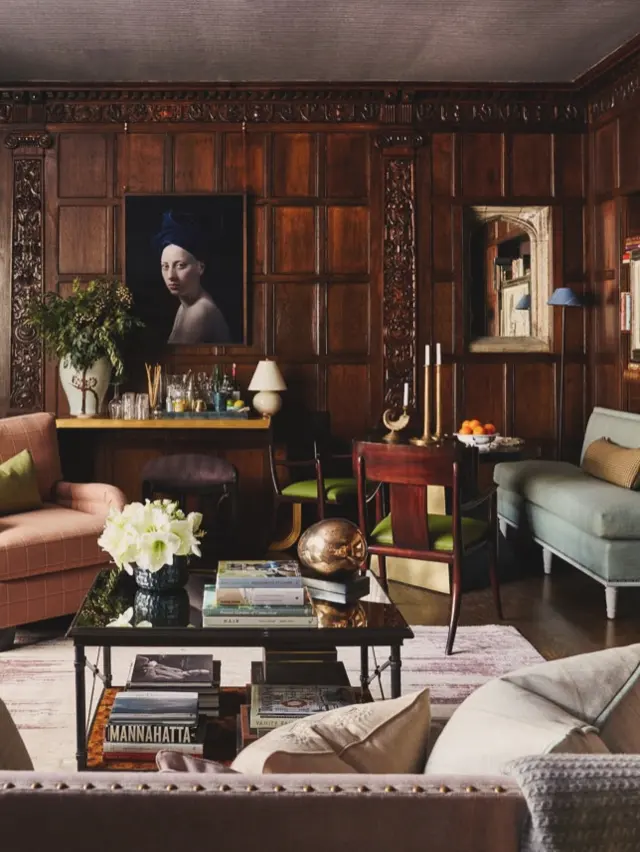
 How to build a moody interior without a full renovation
#Dark Colors
1 ideas
How to build a moody interior without a full renovation
Get new #Dark Colors ideas by email
Every Thursday: the week's best ideas, with the newest from #Dark Colors.
Related tags
Dark Colors: A Guide to Using Deep Shades With Confidence
Dark colors are the shades at the low end of the brightness scale — the near-blacks and deep, saturated tones that reflect little light. Some are dark neutrals, like charcoal, slate and espresso brown. Others keep a strong hue even at depth: burgundy, forest green, midnight blue, aubergine, oxblood. What they share is weight. A dark color holds its place in a composition, which is why it so often becomes the anchor everything else is arranged around.
Humans have made dark colors for a very long time, and much of that history comes from dyeing and pigment-making. Indigo produced deep blues, madder and cochineal gave rich reds, iron and tannin turned cloth and leather black-grey, and charcoal, umber and lamp black served painters and printers. Many of these were costly and slow to produce, so deep shades carried associations of formality and occasion. That inheritance still shapes how we read them: a dark garment usually feels more dressed, a dark room more deliberate.
Kinds of dark color, and what each does
- True black is the most graphic option and the least forgiving of poor texture; in cheap or flat materials it can look dull rather than deep.
- Near-blacks such as charcoal, ink and off-black keep the authority of black while reading softer and pairing more easily.
- Deep jewel tones bring color and shadow at once and flatter most palettes, especially when used one at a time.
- Dark earths — chocolate, moss, oxblood — feel warmer and more livable than cool blacks, and tend to age well in interiors.
Read more
Working with dark colors in a room
A common worry is that dark walls will make a space feel small. In practice the effect depends on light and finish: a room with good daylight and a soft, matte or eggshell surface can feel enveloping rather than cramped, while a glossy finish will bounce light and exaggerate imperfections in the wall. Paint a sample patch and look at it at several times of day before committing. Contrast matters too — pale trim, natural wood, linen and a single strong light source stop deep walls from turning into a flat block.
Wearing and making with them
Dark fabrics absorb light, so texture does the work that pattern does elsewhere: wool, velvet, corduroy, leather and slubby linen all show depth where smooth cotton can look flat. Near the face, a very dark tone can drain warmth from some complexions; a scarf, collar or neckline in a lighter shade solves it. When sewing, dyeing or crafting, test dark dye and paint on a scrap first, since deep colors often dry or cure differently from how they look wet, and wash dark pieces inside out in cool water to slow fading.
Beginners usually do best starting with one dark element — a wall, a coat, a single deep cushion — and building outward. Get the texture and the light right, and the color will take care of itself.
#Dark Colors: frequently asked questions
How do I start using dark colors if I'm nervous about overdoing it?
Start with a single dark element rather than a whole scheme — one painted wall, one deep-toned coat, one cushion — and build outward from there once you see how it behaves in your light. Living with one piece for a while tells you more than planning everything at once, and it keeps the change reversible if you change your mind.
Which kind of dark color should I choose?
It depends on the mood you want: true black is the most graphic and the least forgiving, while near-blacks and dark earths read softer and warmer and are easier to live with. If you want color and shadow together, a single deep jewel tone such as burgundy or forest green flatters almost any palette. Cool blacks suit crisp modern settings; warm darks tend to age better in rooms you spend a lot of time in.
Will dark walls make my room feel smaller?
Not necessarily — the effect comes down to daylight and finish rather than the color itself. A well-lit room with a matte or eggshell surface can feel enveloping, whereas a glossy finish bounces light and highlights every imperfection in the wall. Paint a sample patch and check it at different times of day before you commit.
How do I keep dark clothes and dark fabrics looking deep rather than faded?
Wash dark pieces inside out in cool water and let them dry away from strong sun, which is what dulls deep dye most quickly. Since dark fabric absorbs light, texture carries the interest — wool, velvet, corduroy and leather stay rich where smooth cloth goes flat. Near the face, a lighter scarf or collar keeps a very dark tone from draining warmth from the complexion.
What are common mistakes people make with dark colors?
Two stand out: choosing dark solely for drama without checking how the light hits the surface, and combining too many competing darks so the whole thing reads as a flat block. Pale trim, natural wood, linen or one strong light source gives deep tones something to sit against. When dyeing, painting or sewing, test on a scrap first, because deep colors often dry and cure differently from how they look wet.
Any ideas for using dark colors for a special occasion?
Deep shades have long carried a sense of formality, so they work naturally for evening events, celebrations and dressed tables. Pick one dark anchor — a tablecloth, a garment, a backdrop — and let texture and a little contrast do the rest instead of piling on more dark. That single anchor is what makes the lighter elements around it feel intentional rather than accidental.
Videos come from YouTube and posts from Instagram; titles and summaries are our own. All rights belong to their creators.