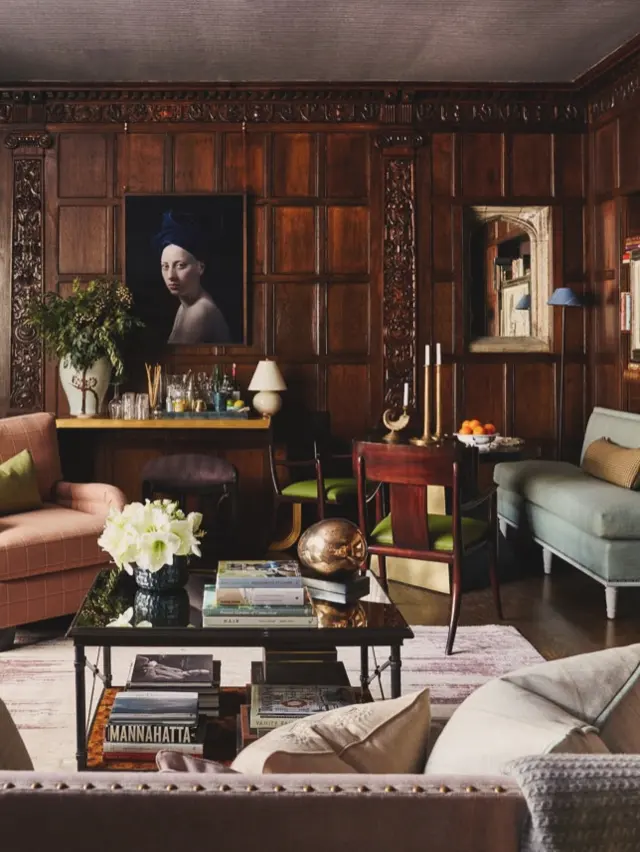
 How to build a moody interior without a full renovation
#Moody Interiors
1 ideas
How to build a moody interior without a full renovation
Get new #Moody Interiors ideas by email
Every Thursday: the week's best ideas, with the newest from #Moody Interiors.
Related tags
Moody Interiors: A Guide to Dark, Layered Rooms
Moody interiors are rooms that lean into shadow rather than away from it. Instead of chasing brightness at every turn, this style treats depth as a comfort: walls in deep green, charcoal or oxblood, lamps placed low, fabrics that absorb light rather than bounce it. The result is a space that feels enclosed and quiet, like a library at dusk or a hotel bar before the crowd arrives.
The idea is not new. Dark-painted rooms have a long history in Northern European and British domestic architecture, where long winters made warm, enclosing interiors practical as well as pleasurable. Older drawing rooms and studies often used saturated wall colours precisely because they made a space feel purposeful. What is often called moody today is a modern reading of that instinct, filtered through contemporary design's preference for relaxed, unpolished finishes.
What defines the look
Moody rooms are built on a few consistent choices. Colour tends to be deep and slightly desaturated rather than bright: forest and olive greens, ink blues, aubergine, terracotta browns, near-black. Light is layered and low, with several small sources rather than one bright ceiling fixture. Texture carries much of the visual interest, since a dark room compresses detail and rewards materials you want to touch.
Read more
Common variations include:
- The heritage study: dark walls, wood furniture, brass, leather, books.
- The soft moody bedroom: deep walls paired with generous linen, wool and a warm lamp.
- The modern dark kitchen: matte cabinetry in charcoal or green with stone counters and focused task lighting.
- The jewel-box bathroom: lacquered or tiled deep colour with mirrors and candlelight warmth.
Where beginners go wrong
The most frequent mistake is treating dark colour as an accent rather than a commitment. A single dark wall in an otherwise pale room can read as unfinished; colour carried across walls, trim, ceiling and sometimes cabinetry feels intentional and calm. Painting the ceiling and skirting the same shade as the walls softens the room's edges and makes the space feel taller rather than lower.
A second mistake is under-lighting. Dark rooms need more light sources, not fewer, but they should be warm, dimmable and placed at different heights — a floor lamp, a table lamp, a wall light, perhaps a picture light. Ambient glow at eye level does more for a moody room than overhead illumination.
Practical tips
Test paint on large sample boards and view them at night as well as in daylight, since deep colours shift dramatically with the light. Keep a little contrast in the room so the dark reads as rich rather than flat: a lighter rug, pale ceramic, an unlined linen curtain. Metals matter — brass and aged bronze warm a dark scheme, while chrome can feel cold. And allow the eye somewhere to rest: one pale or textured element per view keeps a moody room from becoming heavy.
Finally, remember that moody is a feeling, not a palette. A room in warm plaster, sand and shadow can be just as enveloping as one in near-black.
#Moody Interiors: frequently asked questions
How do I start a moody interior if I'm nervous about going dark?
Start by picking a deep, slightly muted shade you genuinely like and committing to it across a whole space rather than dabbing it on as an accent. Try the colour on large sample boards and look at them at night as well as in daylight, because deep tones change dramatically with the light. Once you see how the shade behaves after dark, the decision feels much less risky.
Do I need to paint the ceiling and trim as well as the walls?
Painting walls, trim, ceiling and sometimes cabinetry in the same shade is what makes a dark scheme feel deliberate rather than half-finished. Carrying the colour upward softens the room's edges and actually makes the ceiling read as higher, not lower. Leaving a lone dark wall surrounded by pale surfaces tends to look unresolved.
How much lighting does a dark room need?
More sources than a pale room, but each one softer and lower. Layer warm, dimmable light at different heights — a floor lamp, a table lamp, a wall light, perhaps a picture light — so the glow sits around eye level instead of coming from a single bright ceiling fixture. Ambient pools of light are what give the room its hush.
Which version of the look should I choose?
It depends on how the room is used and how much warmth you want from it. A study or reading room suits dark walls with wood, brass and leather; a bedroom softens the same depth with linen and wool; a kitchen leans modern with matte cabinetry and focused task light. Remember that moody is a feeling rather than a fixed palette — warm plaster and sand tones can be just as enveloping as near-black.
How do I keep a dark room from feeling flat or heavy?
Leave a little contrast in every view so the dark reads as rich: a lighter rug, a pale ceramic piece, an unlined linen curtain, or a textured surface that catches the light. Metals make a difference too, with brass and aged bronze warming a dark scheme where polished chrome can feel cold. Give the eye somewhere to rest and the room stays calm instead of closing in.
Can I get this look without renovating?
Yes — paint, lighting and textiles do most of the work, and none of them require building work. Repainting walls and trim, swapping a bright ceiling fixture for several low warm lamps, and adding light-absorbing fabrics such as wool or heavy linen will shift the atmosphere considerably. A lighter rug or a pale ceramic accent placed against the new depth completes the change.
Videos come from YouTube and posts from Instagram; titles and summaries are our own. All rights belong to their creators.