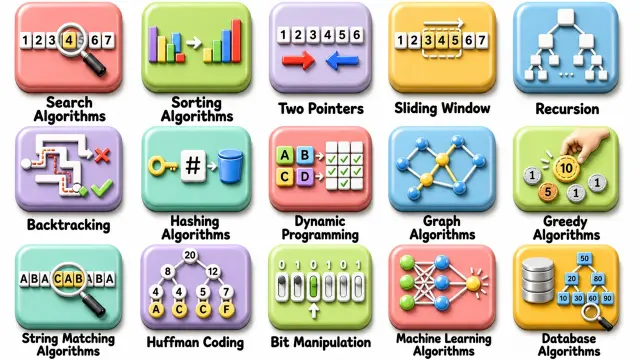
 A Complete Guide to Essential Programming Algorithms Explained Simply
#Data Structures
3 ideas
A Complete Guide to Essential Programming Algorithms Explained Simply
 Visual Crash Course on Core Data Structures and Algorithms
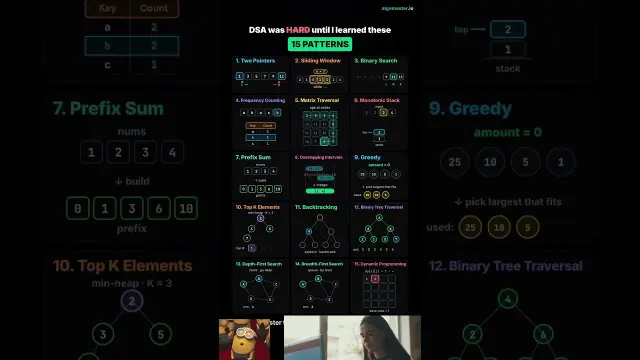 Fifteen Essential Problem Solving Patterns for Data Structures and Algorithms
Get new #Data Structures ideas by email
Every Thursday: the week's best ideas, with the newest from #Data Structures.
Related tags
Data Structures: A Simple Guide
Data structures are the ways you organize, store, and manage information so it can be used efficiently. They are a core part of programming and computer science because nearly every app, website, and digital system needs a sensible way to keep track of data. If you want to solve problems cleanly, data structures give you the framework for doing it.
What data structures are
At the simplest level, a data structure is a pattern for arranging data. Some are built for keeping items in order, some for fast lookup, some for repeated updates, and some for representing relationships between things. The right choice can make a program easier to read, faster to run, and simpler to maintain.
Data structures are often grouped into two broad types: linear and non-linear. Linear structures arrange items in a sequence, while non-linear structures allow branching or richer connections between elements.
Read more
Common types
Some of the most familiar data structures include:
- Arrays and lists, which store items in order
- Stacks, where the last item added is the first one removed
- Queues, where the first item added is the first one removed
- Linked lists, which connect items one by one
- Hash tables or maps, which are useful for looking things up by key
- Trees, which organize data in branches
- Graphs, which represent networks of connected points
Each one has strengths. For example, an array is useful when you need simple ordered access, while a hash table is often better when quick lookup matters. Trees and graphs are especially helpful when data has natural relationships, like folders, family connections, or routes.
How they are used
Data structures appear everywhere in programming. They can store user profiles, messages, menus, search results, shopping carts, and much more. They also help algorithms work properly. An algorithm is the step-by-step process for solving a problem, and the data structure is often the shape of the information that algorithm works on.
Choosing a suitable structure can reduce repeated work and make code easier to understand. When a data structure matches the problem well, you usually need less complicated logic.
What beginners should know
If you are learning data structures, focus on understanding the idea behind each one rather than memorizing definitions. Ask yourself:
- How is the data organized?
- How do I add, remove, or find an item?
- What is this structure good at?
- What trade-offs does it make?
It also helps to think about practical examples. A stack is easy to picture as a pile of plates. A queue is like waiting in line. A tree resembles a family tree or file system. These images make the logic much easier to remember.
Practical tips
Start with a few core structures and learn them deeply. Try to understand how they behave when data grows, how they handle ordering, and when they are a poor fit. Practice by solving small problems such as tracking items, counting frequencies, or navigating relationships.
When you choose a structure, think about the task first and the code second. Good programming is not only about making something work, but about making the data easy to manage.
Videos come from YouTube and posts from Instagram; titles and summaries are our own. All rights belong to their creators.