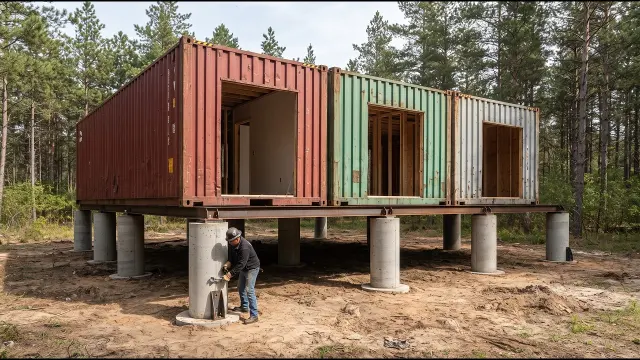
 Building a Three-Room Container House on Concrete Supports
#DIY Build
2 ideas
Building a Three-Room Container House on Concrete Supports
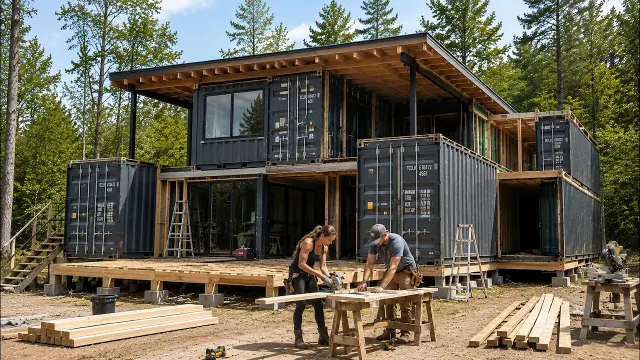 Couple Builds an Off-Grid Shipping Container Home From Scratch
Get new #DIY Build ideas by email
Every Thursday: the week's best ideas, with the newest from #DIY Build.
Related tags
DIY Building: Ideas, Skills, and Practical Basics
What DIY building means
DIY building is the practice of creating, assembling, repairing, or improving something yourself instead of hiring a professional to do every step. It can range from simple furniture and shelving to larger projects such as sheds, decks, partitions, or small structures. People are often drawn to DIY building because it can save money, make better use of space, and give you more control over the finished result.
At its heart, DIY building combines planning, measuring, cutting, fastening, and finishing. It also asks for patience. Good results usually come less from speed than from careful preparation and steady work.
Common kinds of DIY build projects
Read more
DIY building covers many types of work, and beginners often start small before moving on to more ambitious projects.
- Furniture and storage: shelves, benches, tables, wardrobes, and organizers
- Home improvements: wall panels, simple partitions, built-in storage, and repairs
- Outdoor projects: planters, gates, raised beds, sheds, and garden structures
- Decorative builds: display units, feature walls, and custom accents
- Structural projects: frames, small cabins, container conversions, or other larger builds, usually requiring more planning and care
The right project depends on your experience, tools, space, and confidence. A simple project can teach many of the same skills as a bigger one.
Skills that matter most
You do not need to be expert at everything to begin, but a few basics help a great deal.
- Measuring accurately: a small measuring mistake can affect the whole build
- Marking clearly: use simple, consistent marks before cutting or assembling
- Cutting carefully: choose the right tool for the material and take your time
- Fastening properly: screws, nails, brackets, glue, and joinery each have their place
- Checking level and square: this helps keep structures stable and neat
- Finishing well: sanding, sealing, painting, or varnishing can improve both appearance and durability
Planning before you start
A good DIY build starts with a clear plan. Sketch the project, list the materials, and think through each step before lifting a tool. It helps to measure the space more than once and check how the finished piece will be used. If the project must support weight, fit into a fixed opening, or handle weather, build those demands into the design from the start.
It is also wise to work with realistic expectations. A simple design is often stronger and easier to finish than a complicated one. When in doubt, choose the most practical solution.
Safety and good habits
DIY building should be careful as well as creative. Wear appropriate protection for your eyes, hands, and breathing when needed. Keep your workspace tidy so you can move safely and find tools quickly. Read instructions for any tools or materials you are not familiar with, and do not rush steps that affect safety or structure.
If a project involves electrical, plumbing, load-bearing, or other specialized work, make sure you understand your limits and get qualified help where necessary.
A few beginner-friendly tips
- Start with a small project and build confidence
- Practice on scrap material before making final cuts
- Dry-fit pieces before fastening them permanently
- Use good-quality measurements rather than guesswork
- Leave extra time for sanding, finishing, and corrections
DIY building is most rewarding when you treat it as a process of learning. Each project teaches you something useful for the next one, and even simple builds can make a space feel more personal, practical, and complete.
Videos come from YouTube and posts from Instagram; titles and summaries are our own. All rights belong to their creators.