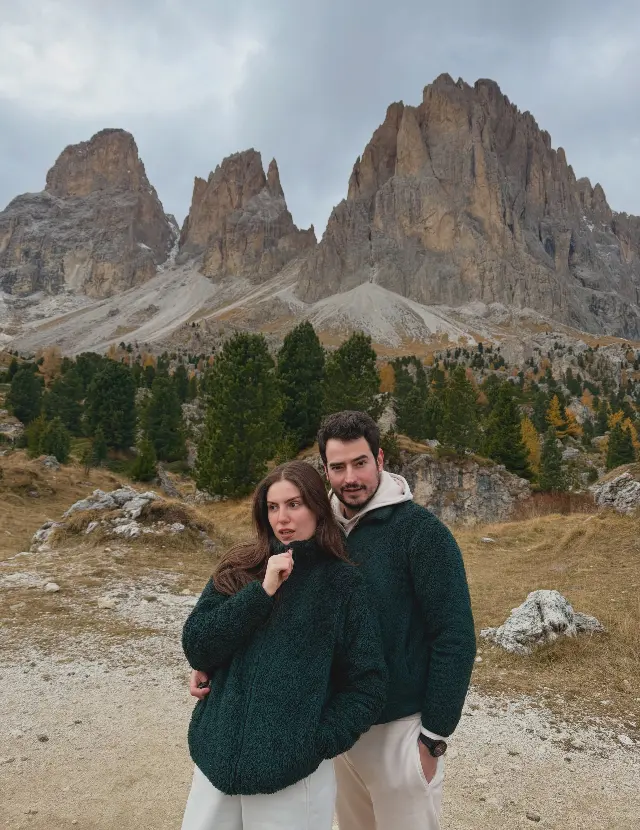
 Mountain Climbing and Nature in the Dolomites
#Dolomites
2 ideas
Mountain Climbing and Nature in the Dolomites
Get new #Dolomites ideas by email
Every Thursday: the week's best ideas, with the newest from #Dolomites.
Related tags
The Dolomites: A Guide to Italy's Pale Mountains
The Dolomites are a mountain range in the eastern Italian Alps, rising where the provinces of South Tyrol, Trentino and Belluno meet. What sets them apart is colour and shape: pale grey and cream walls, towers and pinnacles that take on a pink glow at sunrise and sunset. The Ladin word for that glow is enrosadira, and it is why the range is often called the Pale Mountains.
Where the rock comes from
The stone is dolomite, a carbonate mineral related to limestone but rich in magnesium. It began as coral reefs and marine deposits on the floor of an ancient tropical sea, then was lifted, folded and carved by water and ice over an immense stretch of time. The mineral takes its name from the French geologist Déodat de Dolomieu, who studied it in the late eighteenth century. Because dolomite tends to break away in sheer faces rather than soft slopes, the peaks read less like a single ridge than like a skyline of separate buildings. The range is inscribed on the UNESCO World Heritage list for its geology and landscape.
A meeting point of languages
Read more
Italian is spoken throughout, German is common in the northern valleys, and around the Sella massif many people speak Ladin, a Rhaeto-Romance language older than either. Farming, cheese-making and woodwork shaped these valleys long before tourism did, and they still set the rhythm of village life.
Ways to explore
- Hiking. Waymarked trails run from easy valley walks to multi-day crossings such as the Alta Via 1 and Alta Via 2, which traverse the range from north to south.
- Via ferrata. Protected climbing paths of cables, ladders and bridges, many of them installed during the First World War, when the front line ran through these mountains.
- Climbing. Long routes on dolomite walls, from roadside crags to big faces on the Tre Cime di Lavaredo and the Marmolada, the highest summit of the range.
- Skiing. In winter, linked lift circuits let you move from valley to valley on skis; the Sella Ronda is the best known.
- Scenic drives. Pass roads such as the Gardena and the Falzarego climb well above the tree line and are rewarding in their own right.
If you are going for the first time
Mountain weather turns quickly. Start early, carry a waterproof layer and enough water, and be willing to turn back if storms build. Book huts and rooms well ahead in high season, since the good ones fill up. Stay on marked paths, give wildlife room, and remember that rescue services are stretched and often volunteer-run.
Walk slowly, and give yourself one day with no objective at all: sit somewhere high and watch the light move across the rock as the sun drops. That is the part most people carry home.
#Dolomites: frequently asked questions
What makes the Dolomites different from other mountain ranges?
Their rock is dolomite, which breaks away in sheer walls and towers rather than soft slopes, so the skyline looks like a row of separate buildings instead of one continuous ridge. The pale grey and cream stone also catches the low sun and glows pink at the edges of the day, which is why they are known as the Pale Mountains.
How should a first-time visitor start planning a trip?
Pick one valley as a base rather than trying to cover the whole range, and choose your days around what you actually want to do — walking, climbing, driving the passes or skiing. Sort out accommodation and mountain hut places early, because the most appealing ones are taken well before the season begins.
What should I carry on a day out in the mountains?
Weather shifts fast here, so pack a waterproof shell and a warm layer even when the morning looks settled, plus enough water for longer than you expect to be out. Start early, and treat turning back as a normal decision rather than a failure when cloud or storms build.
Which way of exploring suits me best?
If you like walking, waymarked trails range from easy valley strolls to long north–south crossings, while those wanting exposure and adrenaline can take protected climbing paths of cables and ladders. Skiers get linked lift circuits between valleys in winter, and drivers get high pass roads that are rewarding on their own.
What are the common mistakes people make here?
The usual ones are underestimating how quickly the weather turns, setting off too late, and straying from marked paths in places where rescue is slow and largely volunteer-run. Another is filling every hour with an objective and never simply sitting somewhere high to watch the light change.
How can I visit without damaging the place?
Stay on marked trails, keep a respectful distance from wildlife, and treat the villages as working communities shaped by farming and craft rather than as scenery alone. Taking the landscape slowly and quietly is both the more rewarding way to see it and the gentler one.
Videos come from YouTube and posts from Instagram; titles and summaries are our own. All rights belong to their creators.