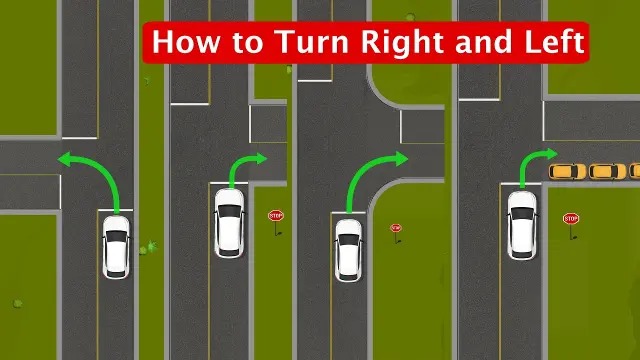
 Turning Right and Left Safely at Different Intersections
#Driving School
1 ideas
Turning Right and Left Safely at Different Intersections
Get new #Driving School ideas by email
Every Thursday: the week's best ideas, with the newest from #Driving School.
Related tags
Driving School: A Beginner's Guide to Learning to Drive
Learning to drive is one of those skills that changes daily life: it widens where you can work, how you travel, and how much independence you have. A driving school is the place where that skill is built properly, step by step, with someone beside you who knows what to watch for and how to correct it before it becomes a habit.
What driving school actually teaches
The obvious answer is how to operate a car, but the deeper work is judgement. A good course covers the controls and the rules of the road, then moves into the harder part: reading a situation before it becomes a problem. You learn to scan ahead, to judge speed and distance, to decide when there is a safe gap, and to recognise the moments when the right choice is simply to wait. Many schools also prepare students for the theory test and for the practical examination that follows, and some offer lessons on motorways, in bad weather, or at night once the basics are solid.
The usual shape of a course
Read more
Most schools begin with quieter roads, where a learner can get used to the clutch, the brakes and the steering without pressure, and only then move to busier streets and junctions. Lessons tend to be short at first, since concentration fades quickly when everything is new, and lengthen as confidence grows. Behind-the-wheel time is often paired with classroom or online theory work, because the two reinforce each other: a rule makes sense once you have met it in traffic.
Kinds of instruction
Beyond the standard car course, driving schools commonly offer lessons for automatic and manual transmission, refresher sessions for people returning to driving after years away, lessons for older drivers who want to feel more secure, and preparation for towing or for professional driving. Some instructors teach in a structured syllabus with a checklist of skills; others adapt each lesson to what the student needs that day. What matters more than the format is the fit between teacher and learner.
What beginners should know
Ask about the instructor's qualifications and whether the school is licensed, and try a single lesson before committing to a package. Come rested, wear comfortable flat shoes, and bring glasses if you need them for distance. Expect to feel clumsy at first: steering, mirrors and gears compete for attention until they become automatic, and that takes repetitions, not talent. Listen to corrections without arguing and ask for explanations when something feels unclear. Between lessons, study the theory and, if you can, practise in a safe off-road space with an experienced driver.
Finally, remember that the goal is not only to pass a test. It is to drive in a way that keeps you, your passengers and everyone around you safe for decades after the examiner has signed the form. Patience at the start pays off for a very long time.
A note on nerves
Anxiety is normal and not a sign that you are unsuited to driving. Tell your instructor how you feel, choose quiet routes on difficult days, and break big skills into small steps. Confidence usually arrives quietly, through repetition, rather than in a single breakthrough moment.
#Driving School: frequently asked questions
How do I choose a driving school that suits me?
Start by asking whether the school is licensed and what qualifications the instructors hold, since a good teacher matters more than a glossy brochure. Try a single lesson before committing to a package so you can judge whether the instructor's manner puts you at ease. The right fit is one where you feel able to ask questions and where corrections are explained rather than simply issued.
What should I do to prepare for my first lesson?
Come rested and wear comfortable flat shoes so you can feel the pedals properly, and bring glasses if you need them for distance. It also helps to look over the basics of the controls and road rules beforehand, so the lesson is not your first encounter with them. Expect to feel clumsy — steering, mirrors and gears compete for attention until repetition makes them automatic.
Should I learn in a manual or an automatic car?
It largely depends on what you expect to drive afterwards: an automatic is simpler to begin with because there is no clutch to manage, while a manual gives you more flexibility if you may drive a variety of vehicles. Many learners start on whichever they will use most and add the other later. Ask your instructor which suits your situation rather than assuming one is the 'proper' choice.
Is it normal to feel nervous about learning to drive?
Yes, and it is not a sign that you are unsuited to driving. Tell your instructor how you feel so lessons can be planned accordingly, choose quieter routes on difficult days, and break bigger skills into smaller steps. Confidence tends to arrive quietly through repetition rather than in one breakthrough moment.
What mistakes do beginners most often make?
A common one is treating the lesson as purely mechanical and neglecting the theory, when the two reinforce each other once you meet a rule in real traffic. Another is arguing with a correction instead of asking for an explanation of why it was made. Beginners also tend to focus narrowly on the car ahead rather than scanning further down the road, which is exactly the judgement a course is meant to build.
What will a driving course actually cover beyond operating the car?
The deeper work is judgement: scanning ahead, reading a situation before it becomes a problem, judging speed and distance, and recognising when the safest choice is to wait. Most courses begin on quiet roads and move to busier streets and junctions as confidence grows, with theory work alongside. Some schools also add motorway, night or bad-weather lessons once the basics are solid.
Videos come from YouTube and posts from Instagram; titles and summaries are our own. All rights belong to their creators.