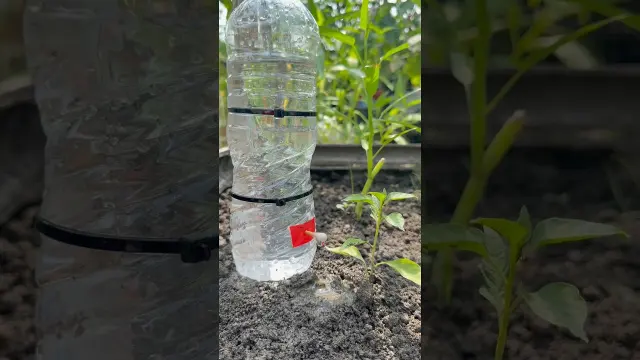
 Turn Waste Bottles Into a Simple Dry Season Drip System
#Dry Season
1 ideas
Turn Waste Bottles Into a Simple Dry Season Drip System
Get new #Dry Season ideas by email
Every Thursday: the week's best ideas, with the newest from #Dry Season.
Related tags
Dry Season Basics: Water Wisely, Garden Better
In much of the tropical and subtropical world, the year falls into two long halves: a wet one and a dry one. The dry season is the predictable stretch of months when the rain-bearing winds shift away and rainfall becomes scarce or stops altogether. It is a normal feature of a climate rather than an emergency — a drought is an unusually severe shortage, while the dry season arrives on the same rhythm year after year, and everything that lives through it has adapted to expect it.
What the dry season does to the land
The first signs are in the soil. Moisture evaporates from the surface, the ground hardens, and water that does fall runs off instead of soaking in. Plants slow their growth and many take a form of rest: trees in drier regions shed their leaves, grasses brown off, and perennials die back to their roots. In many cases that brown lawn is dormant, not dead — it will green again after the first rains. The air also turns dusty, and the gap between day and night temperatures widens.
Store water, then deliver it slowly
Read more
The simplest reliable strategy for the dry season is to catch water when you can and use it sparingly. Roofs gather a surprising amount from any shower, and a barrel or tank under a downpipe is the least complicated place to begin. For watering, gentleness beats volume: water deep, less often, and at the base of the plant rather than over the leaves, so the moisture reaches the roots instead of evaporating on the way. Watering early in the morning or late in the afternoon loses less to the sun. Slow delivery systems — a punctured bottle sunk beside a plant, a length of pipe, a homemade drip line fed from a container — let water soak in gradually and are easy to build from things already in the house.
Mulch, shade and shelter
Bare soil bakes. A layer of mulch over the surface keeps the soil cooler, slows evaporation and eventually breaks down into organic matter, so it earns its keep twice. Shade helps as well: a cloth screen, a taller companion plant or a wall on the sunny side all reduce how much water a plant loses.
Choosing what to grow
Grow what suits the season rather than fighting it. Hardy grains, quick leafy greens, okra, herbs from dry climates and sturdy perennials manage with little. Plant as the rains begin where possible, keep seedlings in shade while they establish, and group pots together indoors or on a sheltered balcony — clustered plants shade one another and hold humidity between them.
Around the home
- Cover stored water so insects cannot breed in it.
- Sweep paths instead of hosing them.
- Reuse washing water on mature plants and trees.
- Clear dry vegetation near the house, since dry ground carries fire easily.
- Check the roof for leaks before the rains return.
A rhythm, not a crisis
The dry season is best met with a little preparation rather than alarm. Learn to read the signs of your own patch — when the soil starts to harden, when the leaves drop — and each year you will handle it with a little more ease, until the first rain comes and the whole place wakes up again.
Videos come from YouTube and posts from Instagram; titles and summaries are our own. All rights belong to their creators.