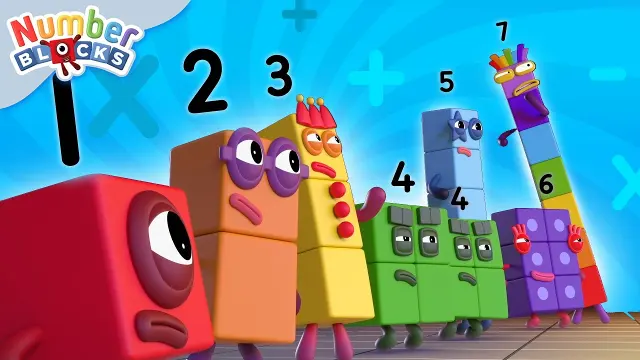
 Learn to Count for Kids Compilation with Numberblocks
#Early Numeracy
1 ideas
Learn to Count for Kids Compilation with Numberblocks
Get new #Early Numeracy ideas by email
Every Thursday: the week's best ideas, with the newest from #Early Numeracy.
Related tags
Early Numeracy for Young Children
What early numeracy means
Early numeracy is the foundation children build before and alongside learning formal mathematics. It includes noticing numbers, comparing amounts, recognising patterns, sorting objects, understanding size and position, and beginning to count with meaning. Long before a child can solve written sums, they are already developing the ideas that make later maths easier to understand.
You can think of early numeracy as everyday number sense. It grows through talking, playing, moving, sorting, counting, and handling real objects. Children usually learn these ideas gradually, through many small experiences rather than one big lesson.
The main skills involved
Read more
Early numeracy covers several connected ideas:
- Counting in a stable order, such as one, two, three
- Matching one object to one number word
- Recognising small quantities without counting every time
- Comparing groups as more, less, the same
- Understanding shapes, sizes, and simple position words
- Sorting by colour, shape, size, or use
- Seeing and copying patterns
- Beginning to understand addition and taking away in practical situations
These skills support later work with written numbers, sums, and problem-solving. A child who can count words by memory still needs time to understand what counting means, so patience matters.
How children learn it
Young children learn best through real-life experiences. You do not need formal lessons for every step. Everyday moments are full of numeracy opportunities, such as:
- Setting the table and counting plates
- Comparing who has more toys or fewer crackers
- Talking about one, two, and three steps
- Sorting socks, buttons, or blocks
- Looking for shapes in the home or outdoors
- Singing number rhymes and counting songs
- Playing board games with dice or counting spaces
- Measuring ingredients while cooking together
Repeated practice helps children notice patterns and connections. Keep the language simple and clear, and let the child touch, move, and see the objects while counting or sorting.
What beginners should know
At first, children may recite numbers like a rhyme without understanding quantity. That is normal. Real understanding develops with experience. Try to focus on meaning, not speed.
A few helpful ideas:
- Count slowly and point to each object once
- Ask “Which has more?” rather than only “What number is this?”
- Use small groups of objects at first
- Let children rearrange items to see that the number stays the same
- Repeat familiar games often
It also helps to remember that children develop at different paces. Some are ready for number words early; others first need more work with shapes, sorting, and comparison. All of these belong to early numeracy.
Practical tips for home and play
Keep activities short, playful, and relaxed. Children learn best when they feel curious and safe.
- Use everyday things for counting, such as stairs, cups, toys, or fruit
- Mix counting with movement, like jumping or clapping
- Read picture books that include numbers, patterns, or comparisons
- Invite your child to notice “first,” “next,” and “last”
- Encourage sorting and matching during tidy-up time
- Notice shapes and patterns in clothes, rooms, and nature
Most of all, talk about numbers in ordinary life. When numeracy is part of familiar routines, children begin to see maths as something useful, understandable, and enjoyable.
Videos come from YouTube and posts from Instagram; titles and summaries are our own. All rights belong to their creators.