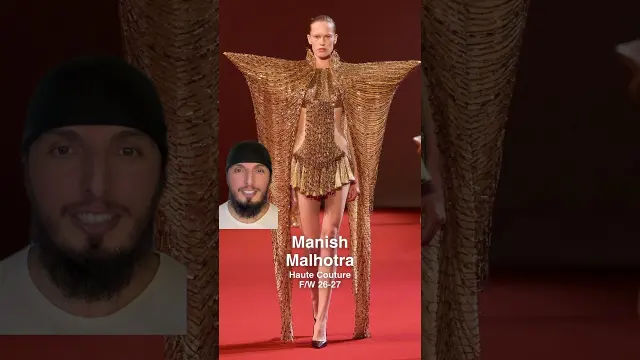
 Manish Malhotra Fall/Winter Haute Couture Collection
#Embroidery
3 ideas
Manish Malhotra Fall/Winter Haute Couture Collection
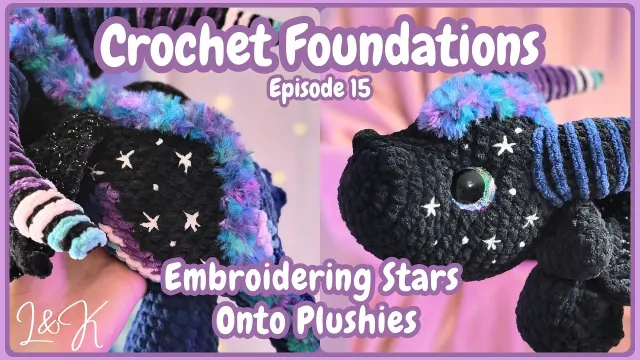 How I Embroider Stars Onto Plushies Crochet Foundations Episode
Get new #Embroidery ideas by email
Every Thursday: the week's best ideas, with the newest from #Embroidery.
Related tags
Embroidery: A Guide to Decorative Stitching
Embroidery is the art of decorating fabric with needle and thread. It has been used for centuries across many cultures to add pattern, texture, and meaning to clothing, household linens, ceremonial textiles, and keepsakes. At its simplest, embroidery can be a small monogram on a handkerchief. At its most elaborate, it can cover a garment or textile with intricate surfaces, raised details, and layered color.
What embroidery is
Embroidery is usually done by hand, though machines can also create stitched decoration. The basic idea is always the same: stitches are placed on the surface of fabric to form lines, shapes, flowers, lettering, borders, or images. Because the thread sits on top of the fabric, embroidery adds both visual interest and a tactile quality that printing cannot match.
Different traditions around the world have developed their own embroidery styles, motifs, and stitch methods. Some forms are delicate and precise, while others are bold, dense, and highly decorative. You may see embroidery used on blouses, jackets, dresses, table linens, cushions, bags, and heirloom pieces.
Read more
Common styles and types
There are many ways to approach embroidery, and beginners often start with a few basic categories:
- Surface embroidery: stitches are worked directly onto the fabric to draw lines, fill shapes, and build patterns.
- Counted-thread embroidery: stitches are made by counting threads in evenweave fabric, which helps create regular geometric designs.
- Crewel embroidery: traditionally worked with wool thread and often used for textured, flowing patterns.
- Whitework: embroidery done with white thread on white fabric, valued for its subtle texture and shadow.
- Appliqué with embroidery: pieces of fabric are attached and then outlined or decorated with stitches.
Many stitch names are shared across styles. Running stitch, backstitch, satin stitch, chain stitch, stem stitch, and French knots are among the most useful for starting out.
What you need to begin
You do not need a complicated setup to start embroidery. A basic kit usually includes:
- Fabric that is easy to stitch through and not too slippery
- Embroidery floss or thread
- A needle with an eye suited to your thread
- An embroidery hoop to keep the fabric taut
- Small scissors
- A simple pattern or design to trace
If you are new to embroidery, choose a design with clear shapes and not too many tiny details. Smooth cotton fabrics are often easier to learn on than very loose, stretchy, or very delicate materials.
Practical tips for beginners
Start with simple stitches and short sessions. It is easier to learn neat tension and smooth lines when you are relaxed. Keep your stitches even, but do not worry if they are not perfect at first; hand embroidery often looks charming because of its slight variations.
A few helpful habits:
- Use a hoop to reduce puckering.
- Cut manageable thread lengths to avoid tangling.
- Knot carefully or secure ends neatly on the back.
- Trace your design lightly so the lines are easy to follow.
- Practice each stitch on scrap fabric before starting your project.
Why embroidery remains loved
Embroidery is both decorative and personal. It lets you turn simple fabric into something expressive, whether you want a small handmade detail or a larger, more elaborate piece. Because it can be learned gradually, embroidery is especially rewarding for beginners: each finished stitch teaches you something new, and even the simplest project can feel meaningful when it is made by hand.
Videos come from YouTube and posts from Instagram; titles and summaries are our own. All rights belong to their creators.