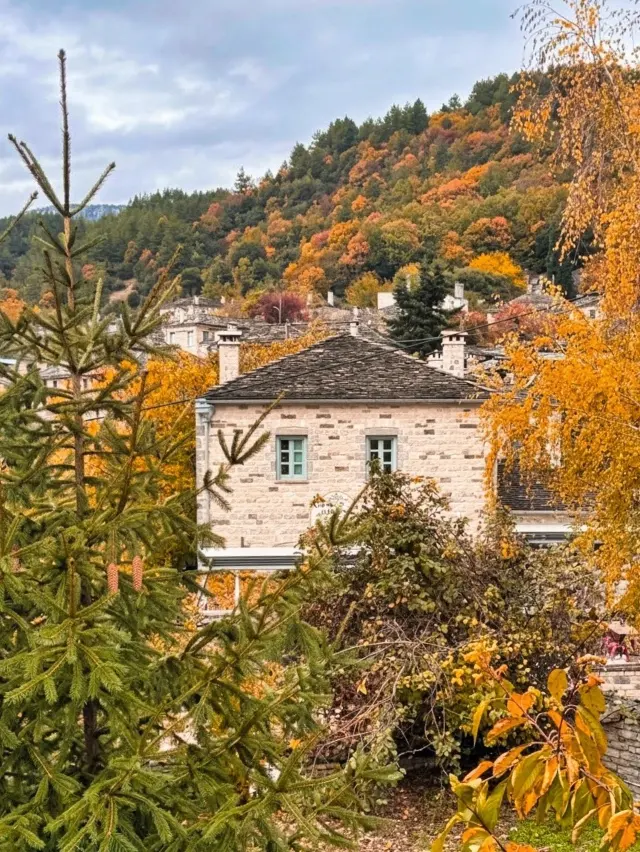
 Autumn in Papigko, the Stone Village of Epirus
#Epirus
1 ideas
Autumn in Papigko, the Stone Village of Epirus
Get new #Epirus ideas by email
Every Thursday: the week's best ideas, with the newest from #Epirus.
Related tags
Epirus, Greece: A Guide to the Mountain Region
Epirus is the region that covers the north-western corner of Greece, a land of mountains, forests and water rather than beaches and whitewashed walls. It sits against the Pindus range, the long spine of mountains that runs down the Greek mainland, and its character comes from that altitude: cool summers, hard winters, thick pine and beech woods, rivers that carve deep valleys and villages built from grey stone.
If you are new to the region, the plainest way to picture it is in three bands. Along the coast lie the towns and beaches facing the Ionian Sea, milder and more open to the world. Inland rise the mountains and the clusters of stone settlements that most travellers come for. Between the two sits Ioannina, the region's main city, on the shore of a lake, a historic centre of trade, learning and craft that still feels like the gateway to the mountains.
What draws people to Epirus
The Zagori villages are the best-known of the mountain settlements, a group of hamlets of slate roofs and arched stone bridges, connected by old footpaths that are still walked. Nearby is the Vikos gorge, one of the deepest in the world relative to its width, and around it a national park of forests and springs. The Pindus slopes give you marked hiking trails, mountain refuges and wild swimming in cold, clear water.
Read more
Epirus is also one of the oldest inhabited parts of Greece. The sanctuary of Dodona, in the hills near Ioannina, was an oracular site of great antiquity, and the region holds Roman and Byzantine remains as well as Ottoman-era town quarters and fortifications.
Music and food
Epirote music is one of the most distinctive in Greece: slow, ornamented clarinet playing, and in the north a tradition of polyphonic singing, where several voices weave in a way you will not hear elsewhere in the country. It is music for weddings, festivals and long evenings.
The cooking follows the landscape. Pies of every kind, thin sheets of pastry filled with greens, leeks or cheese; lamb and goat cooked slowly; beans and pulses; mushrooms and herbs from the woods; freshwater fish; mountain cheeses and yoghurt; and sweets made with honey and walnuts. Look for the small producers of dairy and wine in the villages.
Practical notes for a first visit
Bring proper walking shoes and a warm layer even in summer, as the mountains cool quickly. Village guesthouses are small, so book ahead if you plan to stay in the Zagori area. A car is the easiest way to move between settlements, and distances are longer than they look on a map because the roads climb. Go slowly: the pleasure of Epirus is in the walking, the stone paths and the long, quiet view.
#Epirus: frequently asked questions
What should I know before a first trip to Epirus?
Epirus is the mountainous north-western corner of Greece, shaped by the Pindus range rather than by beaches and whitewashed walls, so expect stone villages, forests, rivers and cool air. It helps to picture the region in layers — the Ionian coast, the lake city of Ioannina as a gateway, and the high villages inland — and to choose one of them as a base instead of trying to cover all of it. Going slowly is the point, since the pleasure is in the walking and the long, quiet views.
What should I pack for a trip to the Epirote mountains?
Bring proper walking shoes, because the villages are built of stone and the old footpaths are uneven and often steep. Add a warm layer and something waterproof even in summer, as the mountains cool quickly and weather turns fast at altitude. A small daypack for water and food is useful, since the settlements are small and spread out.
Which part of Epirus should I choose for a short stay?
If you want the landscape people associate with the region, base yourself in the Zagori villages, where slate roofs, arched stone bridges and the gorge walks are all close together. The coast is milder and easier if you prefer a relaxed pace, with Ioannina in between as a historic trading and craft town that works well as a first stop. Whichever you pick, resist adding a second area — the roads climb and travel eats into your time.
How do I get around the villages of Epirus?
A car is the easiest way to move between settlements, because public connections are limited and distances are longer than they look on a map. Village guesthouses are small, so book ahead if you plan to stay in the mountain areas, especially in the more popular villages. Leave slack in each day rather than scheduling tightly, since mountain roads reward a slow pace.
What is there to do in Epirus in autumn?
Autumn is a lovely time for the stone villages, when the beech and plane woods change colour and the walking trails are quiet. It is also the season for the region's food culture — pies, slow-cooked lamb and goat, mountain cheeses, mushrooms and honey-and-walnut sweets from small village producers. Pack for cold mornings and shorter daylight, and plan walks so you are back before the light goes.
What mistakes do first-time visitors to Epirus make?
The most common one is treating it as a beach region and arriving unprepared for altitude, so bring real walking shoes and a warm layer. Another is underestimating driving times between villages, which turns a relaxed day into a rushed one. Finally, many people skip the local table and the music — the slow clarinet playing and the northern polyphonic singing are as much part of the place as the mountains.
Videos come from YouTube and posts from Instagram; titles and summaries are our own. All rights belong to their creators.