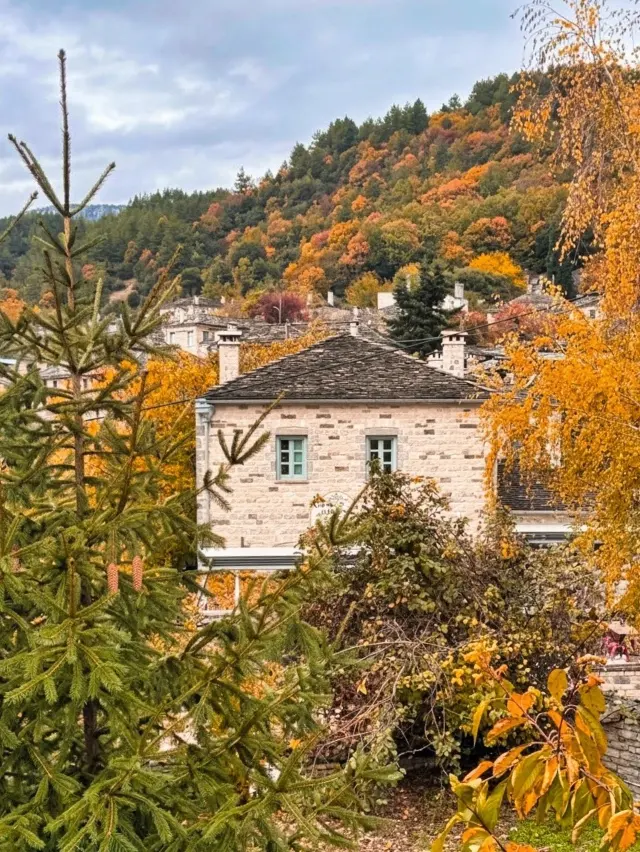
 Autumn in Papigko, the Stone Village of Epirus
#Mountain Village
1 ideas
Autumn in Papigko, the Stone Village of Epirus
Get new #Mountain Village ideas by email
Every Thursday: the week's best ideas, with the newest from #Mountain Village.
Related tags
Mountain Villages: A Guide to Life in the High Country
A mountain village is a small settlement built where the land rises, often above the valley floor and sometimes close to the treeline. What defines it is less a number of residents than a relationship with terrain: houses clustered on a slope for shelter, roads that switch back instead of running straight, and a way of life organised around the fact that weather arrives earlier and stays longer than it does below.
These villages exist on every inhabited continent, and their origins are usually practical. People settled where a spring gave reliable water, where a pass could be watched, or where a patch of ground was flat enough to build on and fertile enough to grow something. Many grew along transhumance routes, the paths herders followed between low winter pastures and high summer ones, and some began as seasonal shelters that slowly became permanent.
How mountain villages are built
Architecture in the high country tends to be shaped by what is close at hand. You will find thick stone walls that hold warmth, low doorways that lose less heat, steep roofs pitched to shed snow, and small windows set deep into the wall. Wooden balconies, slate tiles, timber galleries and whitewashed plaster all appear across different regions, each adapted to local material and climate. Houses are often packed tightly together, sharing walls, which saves heat and protects against wind.
Read more
Ways of living
The classic mountain economy combines small-scale farming with animals: goats or sheep on the rough ground, grain and vegetables on terraced plots, chestnuts, olives or fruit trees depending on the latitude. Terraces are among the most striking features of these landscapes, built and maintained by hand over generations to hold soil on steep ground. Craft and seasonal work have long supplemented this, and many villages today depend partly on visitors.
What to know if you visit
Go slowly. Distances that look short on a map take longer on foot, and altitude makes the difference noticeable. Weather changes quickly, so carry a layer even on a clear morning, and tell someone your route if you are walking beyond the village. Trails are often old paths between hamlets and are usually marked, but not always well.
Respect that these are lived-in places rather than scenery. Ask before photographing people, keep to paths through fields and terraces, close gates, and remember that water and waste services are often limited. Buy from local shops and stay in local guesthouses where you can; it is the most direct way to support the community that keeps the place standing.
The best thing about a mountain village is rarely a single sight. It is the quiet, the slow morning, the sound of bells moving across a slope, and the sense of a place that has worked out, over a long time, how to live where it sits.
#Mountain Village: frequently asked questions
What actually makes a settlement a mountain village?
It's less about population size than about how the place sits on the land — houses clustered on a slope for shelter, roads that switch back, and daily life shaped by weather that comes earlier and lasts longer than down in the valley. Many began for practical reasons: a reliable spring, a watchable pass, or a patch flat enough to build on and fertile enough to grow food.
How do I choose which mountain village to visit?
Start with what you want from the trip: a walkable base with guesthouses and shops, a quieter hamlet where you'll be mostly among residents, or somewhere known for craft, terraces or architecture. Check how you'd arrive and whether trails connect it to neighbouring hamlets, since some villages are lovely but hard to reach without your own transport. Season matters too — a place that's lively in summer can be very still once the passes close.
What should I pack or prepare before going?
Bring a warm layer even if the morning is clear, because weather up high turns quickly, and wear footwear you trust on rough, uneven paths. Plan for distances that look short on a map but take much longer on foot, especially with altitude. If you're walking beyond the village, tell someone your route before you set off.
What are the most common mistakes visitors make?
Treating the village as scenery rather than a lived-in place — photographing people without asking, cutting through fields and terraces instead of keeping to paths, or leaving gates open. Another is underestimating how limited water and waste services can be, and expecting city conveniences at short notice. Going too fast is the usual one: the point of these places is the slow morning, not a checklist of sights.
How can I visit in a way that helps the community?
Buy from local shops, eat and stay in local guesthouses, and hire local guides where they exist — money spent on the spot is the most direct support for the people maintaining the terraces, paths and buildings. Ask before photographing people, close gates behind you, and keep to marked routes so grazing ground and private plots aren't damaged. Small courtesies go a long way in a place where everyone notices.
Videos come from YouTube and posts from Instagram; titles and summaries are our own. All rights belong to their creators.